Advertise your Norwegian Buhund puppies, litters and stud dogs
Do you breed Norwegian Buhunds? List your kennel on caninebreeder.co.uk so pet, show and activity homes can find you. A free basic profile shows your kennel name, website, social media, location and categories. When a litter is planned, you can advertise Norwegian Buhund puppies for sale, promote your Norwegian Buhund stud dog, and set out the HCA, eye and hip results that careful buyers ask for. Add your listing today and reach Buhund enthusiasts across the UK.
No breeders are listed here yet, so the first profiles get the page to themselves.
- Free basic profile: your breeder or company name, website, social media, location, breeds and industries.
- Litters and stud dogs advertised in their own sections, never mixed with puppies for sale.
- Premium showcase for your services and prices, previous customers, awards, video, gallery and health certificates, with your phone and email shown to buyers.
- Sponsored articles about your breed or industry, written and published by our team.
- Featured placement at the top of this page, labelled as sponsored.
Is it free to advertise here?
Yes. A breeder profile and your litter and stud dog adverts are free. Premium profiles, featured placement and sponsored articles are optional paid extras; see pricing.
Do I need a licence to advertise puppies?
In England you need a dog breeding licence from your council if you breed three or more litters in 12 months or breed and sell dogs as a business, and Wales, Scotland and Northern Ireland have their own schemes. Licensed breeders show their licence number and issuing council on every advert. Puppies must be at least eight weeks old before they go to new homes.
Is my listing already here?
We add licensed breeders from councils' public registers. Search for your kennel name; if it is listed you can claim it and edit everything.
About the Norwegian Buhund
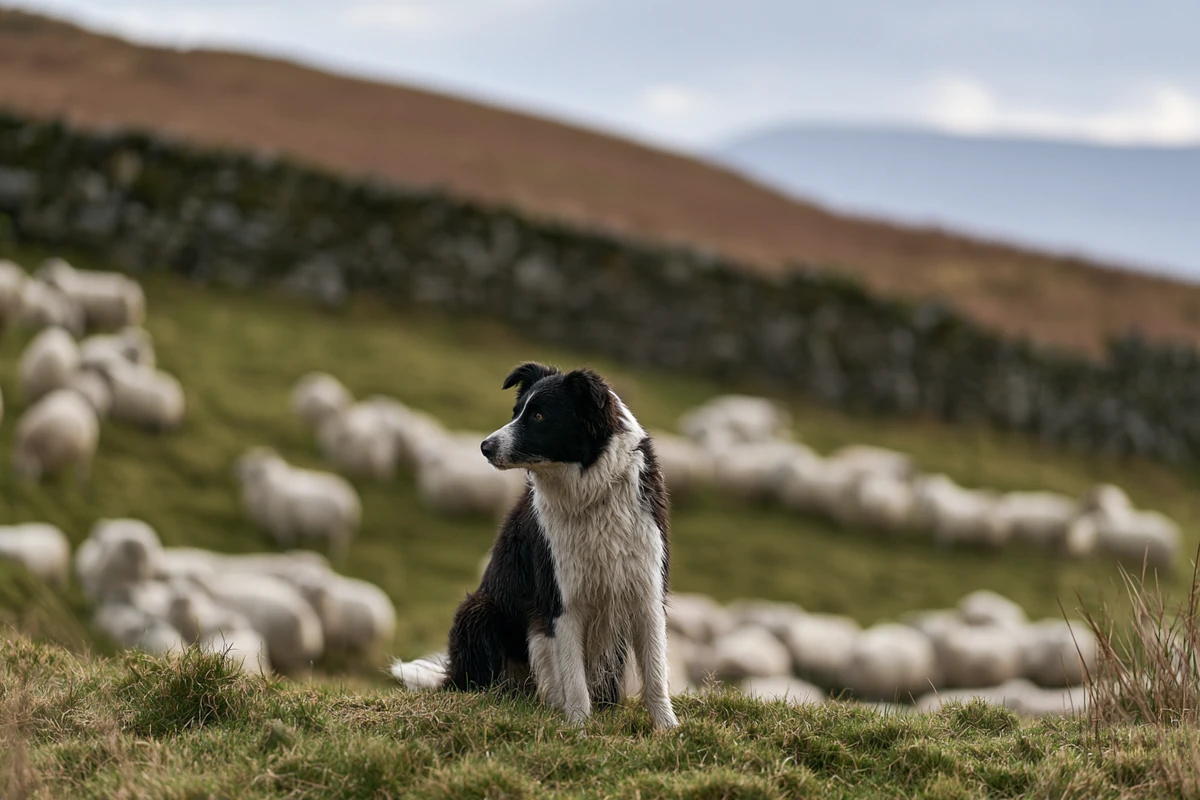
The Norwegian Buhund is a Nordic spitz from Norway, shown in the Pastoral group by the Royal Kennel Club (RKC). The RKC explains that "bu" is the Norwegian word for a homestead, and the breed's traditional work fits the name: herding sheep and guarding the farmyard. The RKC also notes that archaeologists found skeletons of dogs closely resembling the Buhund in a Viking grave. The FCI breed standard, translated by the Norwegian Kennel Club, records that the first Buhund standard was approved in Norway in 1926. In the UK, the Norwegian Buhund Club of the UK was formed in 1967.
Size and build
The Buhund is a lightly built, medium-sized dog with a square outline, a wedge-shaped head, pointed erect ears and a short, thick tail curled tightly over the back. The RKC breed standard gives an ideal height of 45 cm (18 in) for dogs, with bitches somewhat smaller and weight in proportion. It asks for a dog free from exaggeration and capable of hard work. Individual dogs can be larger or smaller than the ideal.
Coat and grooming
The Buhund has a double coat: a close, harsh but smooth outer coat over a soft, woolly undercoat. It is short on the head and front legs and longer on the chest, neck, shoulders, backs of the legs and underside of the tail. The standard accepts wheaten, black, red (not too dark) and wolf-sable, with small symmetrical white markings allowed. The RKC suggests grooming more than once a week and notes that the breed sheds. The breed club says Buhunds need less grooming than many breeds and are naturally clean.
Exercise
The RKC rates the Buhund as needing up to an hour of exercise a day and suitable for a small house with a small or medium garden, in town or country. The breed club stresses that Buhunds have plenty of stamina and need mental stimulation as well as walks, and it highlights agility, rally, obedience, barn hunt and therapy work.
Temperament and suitability
The standard describes the Buhund as fearless, brave and energetic. The Norwegian Buhund Club of the UK describes the breed as affectionate, lively and loyal, but warns that Buhunds can be headstrong and vocal, often barking to alert their owners. It adds that most are food-motivated, so reward-based training tends to work well. The RKC gives a lifespan of over 12 years.
Norwegian Buhund health tests
The RKC lists three health tests for the Norwegian Buhund, all at Best Practice level: a DNA test for hereditary cerebellar ataxia (HCA), an eye examination under the BVA/RKC/ISDS Eye Scheme, and hip scoring under the BVA/RKC Hip Dysplasia Scheme. At Good Practice level, it asks breeders to prioritise genetic diversity. HCA affects coordination, causing uncoordinated movement and head tremors, and signs can appear from about 12 weeks of age. It is inherited as an autosomal recessive condition, so carriers show no signs but can pass the gene on; mating a carrier only to a clear dog avoids producing puppies affected by HCA.
The Buhund is on the Eye Scheme's January 2026 list of breeds with known inherited eye disease, for hereditary cataract, and the RKC advises an eye examination within the 12 months before mating. A dog must be at least one year old to be hip scored under the BVA scheme, and lower scores are better; the breed club's code notes that hips are scored once in a dog's life. The club's 2021 international owner survey also recorded other eye conditions, digestive problems, hypothyroidism, epilepsy and cancer in a minority of dogs. The breed is in Breed Watch Category 1. Health testing lowers risk but cannot guarantee a healthy puppy.
Health tests and schemes for the Norwegian Buhund:
- DNA test for hereditary cerebellar ataxia (HCA) (RKC Best Practice)
- Eye testing using the BVA/RKC/ISDS Eye Scheme (RKC Best Practice)
- Hip testing (for hip dysplasia) using the BVA/RKC Hip Dysplasia Scheme (RKC Best Practice)
- Prioritising genetic diversity, for example by checking the inbreeding coefficient of a planned mating (RKC Good Practice)
- Breed Watch: Category 1
Choosing a Norwegian Buhund breeder
A careful Buhund breeder should be able to show you an HCA DNA result for both parents, or proof that a parent is hereditary clear, plus a current eye certificate and a hip score for each. The Norwegian Buhund Club of the UK's code of ethics asks members to use all three tests, not to mate two ataxia carriers together, and to register every pure-bred puppy with the RKC. It also says puppies should be microchipped and should not leave before eight weeks old, and that first-time owners should be told about the club.
The club describes the Buhund as unusual in the UK, so you may have to wait for a litter or travel to meet one. Expect a good breeder to ask about your daily routine, exercise plans and how you will manage a vocal, energetic dog. In England, anyone who breeds three or more litters within any 12 months and sells any of the puppies, or runs a business breeding and advertising dogs for sale, needs a council licence and must display the licence number in adverts. Our buyer safety guide covers the general checks.
Questions to ask a Norwegian Buhund breeder:
- Can I see the HCA DNA results, current eye certificates and hip scores for both parents?
- What is the inbreeding coefficient of this mating, and how does it compare with the breed average?
- Do you know of cataracts, ataxia or other health problems in close relatives?
- How old is the mother, and how many litters has she had?
- Will the puppy be RKC registered and microchipped, and do you hold a council breeding licence?
Norwegian Buhund questions
Is the Norwegian Buhund a good family dog?
It can be for an active household. The breed standard describes the Buhund as fearless, brave and energetic, and the Norwegian Buhund Club of the UK calls it affectionate and loyal. The club also warns that Buhunds can be headstrong and vocal, so they need consistent training and plenty to do.
How much exercise does a Norwegian Buhund need?
The RKC suggests up to an hour a day. The breed club adds that Buhunds have plenty of stamina and need mental stimulation, and it highlights agility, rally, obedience, barn hunt and therapy work.
Do Norwegian Buhunds shed?
Yes. The Buhund has a double coat with a soft, woolly undercoat, and the RKC notes that the breed sheds. It recommends grooming more than once a week, although the breed club says Buhunds need less grooming than many breeds and are naturally clean.
What health tests should a Buhund's parents have?
The RKC lists a DNA test for hereditary cerebellar ataxia (HCA), an eye examination under the BVA/RKC/ISDS Eye Scheme and hip scoring under the BVA/RKC Hip Dysplasia Scheme, and asks breeders to prioritise genetic diversity. The breed club's code requires an eye test within the 12 months before any mating.
More for Norwegian Buhund owners and breeders
- Norwegian Buhund: breeders
- Norwegian Buhund: puppies for sale
- Norwegian Buhund: stud dogs
- All Pastoral group breeds
Official sources
- Norwegian Buhund breed information - Royal Kennel Club
- Norwegian Buhund breed standard - Royal Kennel Club
- Breed Watch Category 1 - Royal Kennel Club
- DNA test - hereditary cerebellar ataxia (HCA) - Royal Kennel Club
- Norwegian Buhund HCA tested dogs list - Royal Kennel Club
- Eye screening scheme - Royal Kennel Club
- Hip dysplasia screening scheme - Royal Kennel Club
- Eye Scheme - British Veterinary Association
- Hip Dysplasia Scheme - British Veterinary Association
- Inbreeding coefficient calculator - Royal Kennel Club
- Health Test Results Finder - Royal Kennel Club
- Norwegian Buhund Club of the UK
- Code of Ethics - Norwegian Buhund Club of the UK
- Dog breeding licence (England) - GOV.UK