Breed dogs for diabetic alert dogs? Advertise here
Buyers and trainers use this page to find breeders whose lines do this work. List your kennel free, tick the industries your dogs work in, and advertise litters and stud dogs from proven working lines.
No breeders are listed here yet, so the first profiles get the page to themselves.
- Free basic profile: your breeder or company name, website, social media, location, breeds and industries.
- Litters and stud dogs advertised in their own sections, never mixed with puppies for sale.
- Premium showcase for your services and prices, previous customers, awards, video, gallery and health certificates, with your phone and email shown to buyers.
- Sponsored articles about your breed or industry, written and published by our team.
- Featured placement at the top of this page, labelled as sponsored.
Is it free to advertise here?
Yes. A breeder profile and your litter and stud dog adverts are free. Premium profiles, featured placement and sponsored articles are optional paid extras; see pricing.
Do I need a licence to advertise puppies?
In England you need a dog breeding licence from your council if you breed three or more litters in 12 months or breed and sell dogs as a business, and Wales, Scotland and Northern Ireland have their own schemes. Licensed breeders show their licence number and issuing council on every advert. Puppies must be at least eight weeks old before they go to new homes.
Is my listing already here?
We add licensed breeders from councils' public registers. Search for your kennel name; if it is listed you can claim it and edit everything.
About diabetic alert dogs
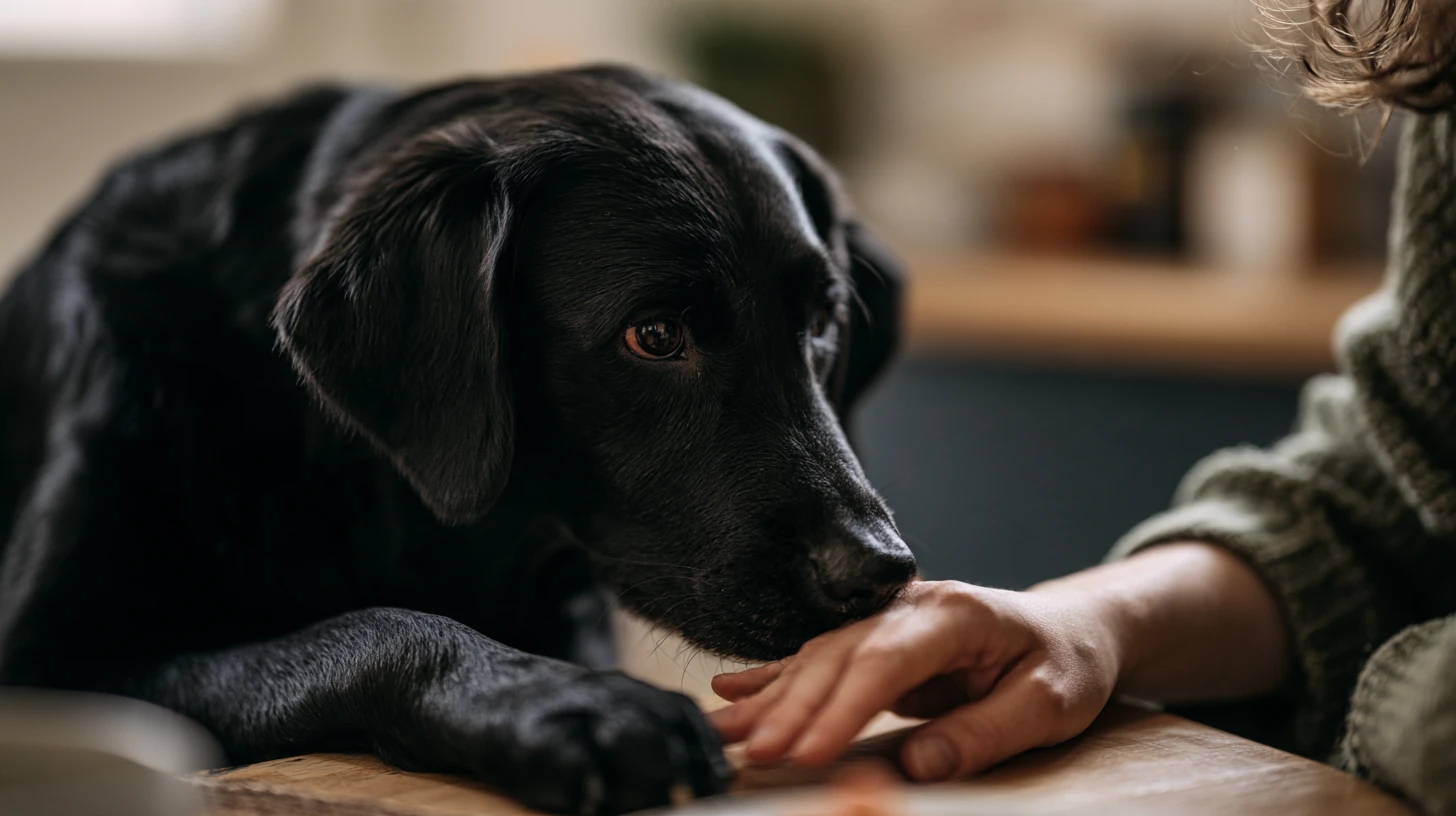
A diabetic alert dog is trained to notice the change in a person’s scent as blood sugar falls or rises, and to warn them before they feel it. Anyone looking for a diabetic alert dog in the UK should start with the charities that train and place them; breeders produce the scent-keen puppies some of those programmes draw on.
What this work involves
Dogs that detect low blood sugar work on odour. Medical Detection Dogs says its alert dogs pick up minute changes in a person’s own odour that are triggered by their condition, and a trained hypo alert dog learns to notice that change at home, at school or in a busy shop. It then gives a trained alert, such as staring, pawing, nudging or fetching the testing kit, and the person or a parent tests and treats.
The evidence is encouraging. In January 2019 the University of Bristol, working with Medical Detection Dogs, reported in PLOS One that 27 trained dogs alerted their owners to 83 per cent of the hypoglycaemic episodes recorded, and that effectiveness depended on the individual dog and its bond with its owner. Hypo Hounds says its dogs are currently beating continuous glucose monitors by approximately 15 minutes. Even so, a diabetes assistance dog is an extra layer of safety, not a replacement for testing.
Who trains and supplies these dogs in the UK
Hypo Hounds (registered charity 1165858), based near Maidstone in Kent, trains diabetic alert assistance dogs mainly for children with type 1 diabetes who have no hypo awareness, and occasionally adults with a clinical need. It introduced its own breeding and training programme in 2020 and recruits volunteer puppy parents to raise its puppies. Families must live within a two-hour drive of its training centre and commit to weekly training; the charity remains the dog’s owner, and the family pays for food, insurance and vet fees. It does not train pet dogs. Hypo Hounds is an Assistance Dogs UK (ADUK) candidate, working towards the accreditation that ADUK members hold.
Medical Detection Dogs (registered charity 1124533, and SC044434 in Scotland), based near Milton Keynes, is a full ADUK member. It has trained dogs for hypoglycaemia unawareness, but its current criteria limit this to people for whom continuous glucose monitoring or sensor-augmented pump therapy is not available, and it is not currently accepting applicants with type 1 diabetes who use any continuous glucose monitor unless they meet additional exceptional criteria. It offers charity-owned dogs and an applicant-owned route, where a person’s own young dog is trained to the same standard.
The supply model is charity training from selected sources. Medical Detection Dogs takes puppies from reputable breeders after researching lines, health checks and personality tests of the litter, runs a small breeding scheme and takes some dogs from rescue centres. A breeder’s part is to produce puppies a programme may choose to assess; training, matching and accreditation happen inside the charity.
Breeds and lines
Medical Detection Dogs says most of its dogs are Labradors, spaniels or crosses of these, with smaller numbers of other gundogs and Poodles, and that short-nosed breeds are generally unsuitable for odour work. For breeders, that points mainly to the Retriever (Labrador), the Retriever (Golden), the Spaniel (Cocker) and Labrador crosses.
When it assesses a litter, the charity looks for puppies that are eager to use their noses, confident and engaged with people. Medical Detection Dogs will not take on an applicant-owned dog with a history of strong herding, chasing or hunting tendencies: the balance sought is plenty of nose without too much prey drive.
What to ask a breeder
- Have puppies from your lines gone to an assistance dog charity, and which one?
- What health tests have the parents had? For Labradors, the Royal Kennel Club recommends the BVA/RKC hip and elbow schemes, the eye scheme and DNA tests including prcd-PRA and CNM.
- Are the parents from working, show or dual-purpose lines, and how settled is the dam at home?
- How is the litter socialised with children, household noise and handling?
- Would you let a charity assessor see the litter?
- Will you take a puppy back if it does not suit the programme?
Legal and welfare notes
A trained medical alert dog is an assistance dog, and the Equality Act 2010 requires service providers to make reasonable adjustments for disabled people who use one. The Equality and Human Rights Commission’s guidance for businesses names diabetes among the conditions assistance dogs help with and says no harness, jacket or ID book is legally required. Medical Detection Dogs requires detailed records of episodes and alerts, both during training and at each annual reaccreditation, so the dog’s accuracy can be monitored.
Frequently asked questions
Can I buy a trained diabetic alert dog from a breeder?
No. Trained dogs are placed by charities such as Hypo Hounds and Medical Detection Dogs. Breeders sell puppies, not trained alert dogs.
Does a hypo alert dog replace a glucose monitor?
No. Medical Detection Dogs states that an assistance dog is not a replacement for the usual treatment and management of a condition. Keep testing and using your monitor as your diabetes team advises.
Can my own dog be trained?
Hypo Hounds does not train pet dogs. Medical Detection Dogs’ applicant-owned route accepts dogs aged two or under (up to three if already alerting consistently), subject to strict criteria and its current limits on diabetes applications.
If your Labradors, Golden Retrievers, Cocker Spaniels or Labrador crosses have the nose and temperament for this work, or puppies from your litters have gone into assistance programmes, list your kennel on Canine Breeder so charities and families can find you.