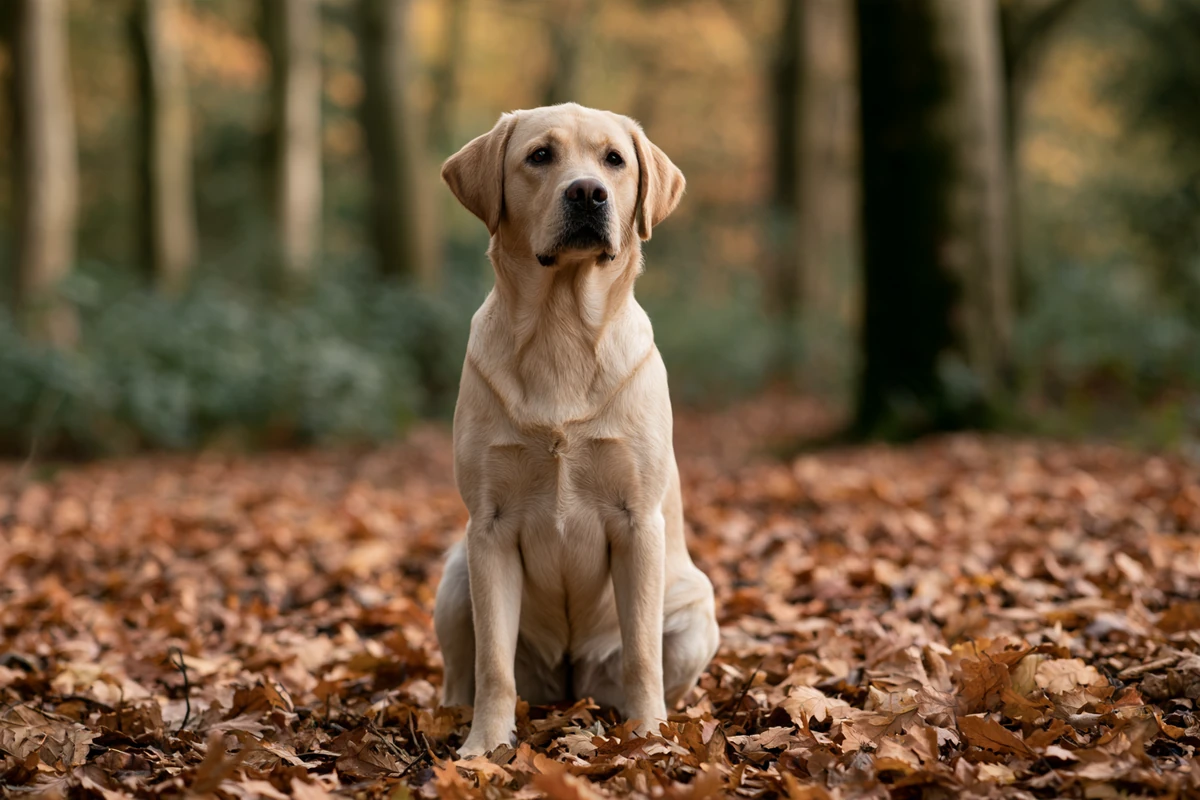

About the Golden Retriever
The Golden Retriever is a British gundog developed to retrieve shot game, and it belongs to the RKC Gundog group. The Royal Kennel Club (RKC) credits the first Lord Tweedmouth as its founder: a yellow dog bred from black Wavy Coated Retrievers was crossed with a Tweed Water Spaniel, and the litter produced four yellow puppies. Bloodhound and Irish Setter were added to the stock later. The Kennel Club recognised the breed in 1913 as the yellow or golden Retriever, and when the Golden Retriever Club was formed in 1920 the official name became Golden Retriever.
Size and build
The breed standard asks for a well-balanced, symmetrical and powerful dog with sound, level movement and a kind expression. Dogs stand 56–61 cm at the withers and bitches 51–56 cm. The standard also warns breeders and judges against any exaggeration that could harm health, welfare or soundness. The RKC classes the Golden as a large breed with a typical lifespan of over 10 years.
Coat, colour and grooming
The coat may be flat or wavy with good feathering, over a dense undercoat that resists water. Any shade of gold or cream is accepted, but not red or mahogany, and white is limited to a few hairs on the chest. Goldens shed, and the RKC suggests grooming more than once a week. The Golden Retriever Club is frank that the breed moults heavily and advises house-proud buyers to think carefully.
Exercise
The RKC recommends more than two hours of exercise a day and suggests a large house and garden, in town or country. Retrieving, training and gundog activities suit the breed's working background, and the club advises a garden with sturdy, well-fenced boundaries.
Temperament and suitability
The standard describes a kindly, friendly and confident dog that is biddable and intelligent, with a natural aptitude for work. Buyers should still remember that Goldens grow into large, strong dogs that need daily exercise, training and grooming. The club gives £1,800 or more as the price of a well-bred puppy that has been reared properly, and says owning one is a commitment that may run to 12–15 years. The RKC's Breed Watch concern for the breed is dogs being too fat, so careful feeding and regular exercise are part of good ownership.
Golden Retriever health tests
The RKC places the Golden Retriever in Breed Watch Category 2. The one point of concern it asks show judges to look out for is dogs being too fat, so keeping a Golden lean matters for pet owners as much as for exhibitors.
On its breed page the RKC lists four good practice checks before breeding: hip screening, elbow screening, an eye examination under the BVA/KC/ISDS Eye Scheme that includes gonioscopy for pectinate ligament abnormality (PLA), and a DNA test for the GR_PRA2 form of progressive retinal atrophy. As best practice it adds DNA tests for ichthyosis (ICT-A), a skin condition, and for GR_PRA1. The RKC's breed-specific DNA package covers ICT-A, GR_PRA1 and GR_PRA2 together with a DNA profile.
The Golden Retriever Club says eye certificates need renewing every year. Under the BVA/KC Hip Dysplasia Scheme and BVA/KC Elbow Dysplasia Scheme a dog must be at least a year old to be X-rayed. The BVA recommends breeding from dogs graded 0 for elbows, and from dogs whose hip scores sit under, or near, the breed median.
- Hip dysplasia: BVA/KC Hip Dysplasia Scheme (RKC good practice)
- Elbow dysplasia: BVA/KC Elbow Dysplasia Scheme (RKC good practice)
- Eye examination, including gonioscopy for PLA: BVA/KC/ISDS Eye Scheme (RKC good practice)
- DNA test for progressive retinal atrophy, GR_PRA2 (RKC good practice)
- DNA test for ichthyosis, ICT-A (RKC best practice)
- DNA test for progressive retinal atrophy, GR_PRA1 (RKC best practice)
- Breed Watch: Category 2 (too fat)
Choosing a Golden Retriever breeder
A responsible Golden Retriever breeder screens both parents before mating and will show you the certificates: hip scores, elbow grades, a current eye certificate that includes gonioscopy, and a GR_PRA2 DNA result, ideally with GR_PRA1 and ICT-A as well. The Golden Retriever Club's puppy advice tells buyers to ask to see the certificates for both sire and dam, and you can confirm results on the RKC Health Test Results Finder. Expect to see the puppies with their mother, and photographs of the sire if he lives elsewhere. The club suggests looking for very clean surroundings and happy, outgoing puppies, and says reputable breeders have puppies checked by a vet before sale. A good breeder will also ask about your home, working hours and family, provide the RKC paperwork, copies of health certificates and a diet sheet, and, as the club's code of ethics expects of members, help with rehoming if your circumstances change. In England, anyone who breeds three or more litters in 12 months and sells puppies, or runs a business breeding and advertising dogs for sale, needs a council licence.
- Can I see both parents' hip, elbow and current eye certificates, including gonioscopy?
- What are the parents' GR_PRA1, GR_PRA2 and ICT-A DNA results?
- What is the predicted COI for this litter?
- Are the puppies RKC registered, and have they been checked by a vet?
- Will you help rehome the dog if my circumstances change?
Golden Retriever questions
What health tests should Golden Retriever parents have?
The RKC lists hip and elbow screening, an eye examination under the BVA/KC/ISDS Eye Scheme including gonioscopy, and a GR_PRA2 DNA test as good practice. DNA tests for GR_PRA1 and ichthyosis (ICT-A) are listed as best practice. Results for registered dogs can be checked on the RKC Health Test Results Finder.
How much does a Golden Retriever puppy cost?
The Golden Retriever Club gives u00a31,800 or more as the price of a well-bred puppy that has been reared properly, and points out that buying the puppy is only the first expense of owning one.
Do Golden Retrievers shed a lot?
Yes. The RKC lists the breed as one that sheds and suggests grooming more than once a week, and the Golden Retriever Club warns that Goldens moult heavily and are not a good choice for house-proud owners.
What does Breed Watch Category 2 mean for Golden Retrievers?
Category 2 means the RKC has identified a point of concern for show judges to look out for. For the Golden Retriever that concern is dogs being too fat.
More for Golden Retriever owners and breeders
- Golden Retriever: breeders
- Golden Retriever: puppies for sale
- Golden Retriever: stud dogs
- All Gundog group breeds
- Allergen detection dogs for severe allergies
- Animal-assisted therapy and community dogs
- Assistance dogs for children with disabilities in the UK
- Assistance-dog breeding programmes and puppy supply
- Autism assistance dogs in the UK: how they are trained and where they come from
- Cardiac and PoTS alert dogs
- Competitive obedience dog breeds and breeders in the UK
- Court and witness support facility dogs
- Diabetic alert dogs
- Dogs for first-time owners
Official sources
- Golden Retriever breed information - The Royal Kennel Club
- Retriever (Golden) breed standard - The Royal Kennel Club
- Breed Watch: Retriever (Golden) Category 2 - The Royal Kennel Club
- Dog Health Test Results Finder - The Royal Kennel Club
- Inbreeding coefficient (COI) lookup - The Royal Kennel Club
- BVA/KC/ISDS Eye Scheme - British Veterinary Association
- BVA/KC Hip Dysplasia Scheme - British Veterinary Association
- BVA/KC Elbow Dysplasia Scheme - British Veterinary Association
- The Golden Retriever Club
- Health and breeding - The Golden Retriever Club
- Puppy advice - The Golden Retriever Club
- Code of ethics - The Golden Retriever Club
- Dog breeding licence (England) - GOV.UK
- The Animal Welfare (Licensing of Activities Involving Animals) (England) Regulations 2018