
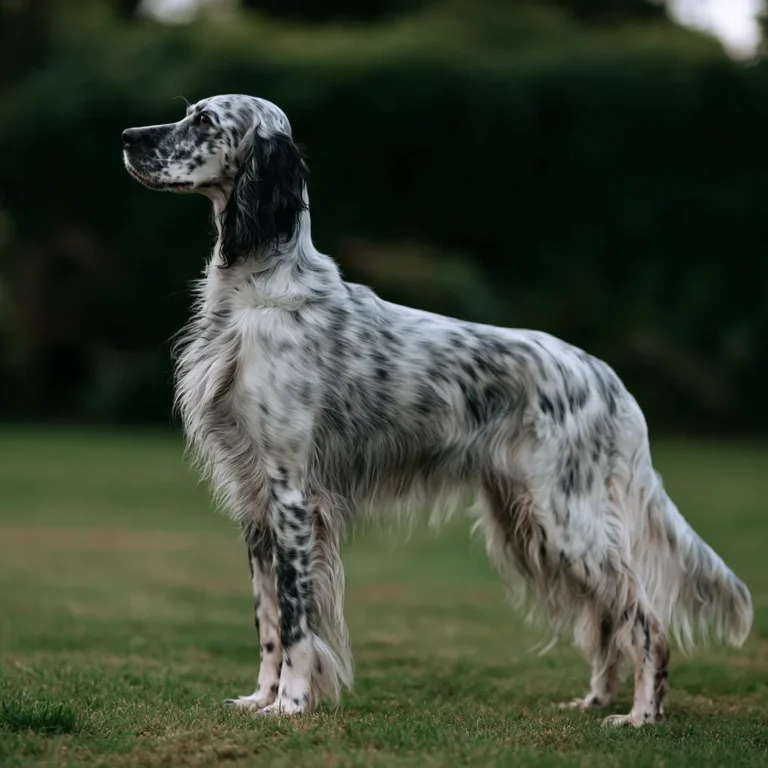
No English Setter stud dogs are listed right now
2 breeders list the English Setter. Ask them if they have a stud dog.
English Setter breeders
- English SetterSpecialities: not listed yet
Severnsett English Setters
Worcestershire - English SetterSpecialities: not listed yet
Wandsfell English Setters
Cambridgeshire

Do you breed the English Setter? Add a stud dog free.
Using an English Setter stud dog
This page lists English Setter stud dogs offered by UK owners. Before booking a mating, ask for the dog's hip score under the BVA/RKC Hip Dysplasia Scheme and check it on the RKC Health Test Results Finder; the BVA advises breeding from dogs scored below or close to the breed median. Ask for his BAER hearing result as well. If the dog was imported or sired by an imported dog, the English Setter Association asks for PRA4 and NCL DNA results. Confirm the stud is registered with The Royal Kennel Club without a breeding endorsement, or with the equivalent body abroad, and run the pairing through the RKC inbreeding coefficient calculator, aiming at or below the breed average. In a breed with so few registrations, the RKC's warning about overusing popular sires is especially relevant. Agree the fee and all stud terms in writing before the mating.
Health tests for an English Setter stud
The Royal Kennel Club's health guidance for the English Setter lists prioritising genetic diversity and hip scoring as Good Practice, and elbow grading and BAER hearing tests, including litter screening, as Best Practice. The RKC's DNA package for the breed covers PRA-rcd4. The breed is in Breed Watch Category 1, so no conformation concerns specific to it are flagged for show judges.
Seven English Setter breed clubs are represented on the Joint English Setter Clubs Health Committee. Its 2025 health statement says the committee does not agree with the RKC's current health standard for the breed. It treats hip scores for both parents as essential and recommends BAER testing, reporting that about 4.5% of setters are deaf in one ear and 0.5% in both. It asks that imported dogs used for breeding be DNA tested for PRA4 and NCL, conditions it says are not found in the UK population, and does not require elbow scoring because elbow dysplasia has never been common in the breed. The English Setter Association health page also covers atopic dermatitis, hypothyroidism and fertility problems, and "dead tail", a painful but short-lived limp tail that can follow bathing, swimming or cold rain.
- BVA/RKC Hip Dysplasia Scheme (RKC Good Practice; essential for both parents according to the breed clubs, which also accept Australian and European hip scores)
- BVA/RKC Elbow Dysplasia Scheme (RKC Best Practice; not required by the breed clubs)
- RKC BAER Scheme hearing test, including litter screening (RKC Best Practice; recommended by the breed clubs)
- DNA tests: PRA-rcd4 in the RKC breed package; PRA4 and NCL for imported breeding dogs (breed clubs)
- Genetic diversity: check the mating with the RKC inbreeding coefficient calculator (RKC Good Practice)
- Breed Watch: Category 1
More for English Setter owners and breeders
- English Setter: breeders
- English Setter: puppies for sale
- English Setter: stud dogs
- All Gundog group breeds
- Falconry and hawking dogs
- Field trial pointers and setters
Official sources
- English Setter breed information - The Royal Kennel Club
- English Setter breed standard - The Royal Kennel Club
- Vulnerable native breeds - The Royal Kennel Club
- Breed Watch Category 1 - The Royal Kennel Club
- English Setter DNA testing package - The Royal Kennel Club
- BAER hearing testing - The Royal Kennel Club
- Health Test Results Finder - The Royal Kennel Club
- Inbreeding coefficient calculators - The Royal Kennel Club
- Using your dog as a stud - The Royal Kennel Club
- BVA/RKC Hip Dysplasia Scheme
- BVA/RKC Elbow Dysplasia Scheme
- The English Setter Association
- English Setter Association - About the breed
- English Setter Association - Health
- English Setter Association - Code of ethics and puppy register
- The English Setter Club
- The English Setter Club - Health
- Joint English Setter breed clubs 2025 health statement
- Northern English Setter Society - Puppies
- Northern English Setter Society - Health
- English Setter Rescue Association - About the breed
- Dog breeding licence (England) - GOV.UK