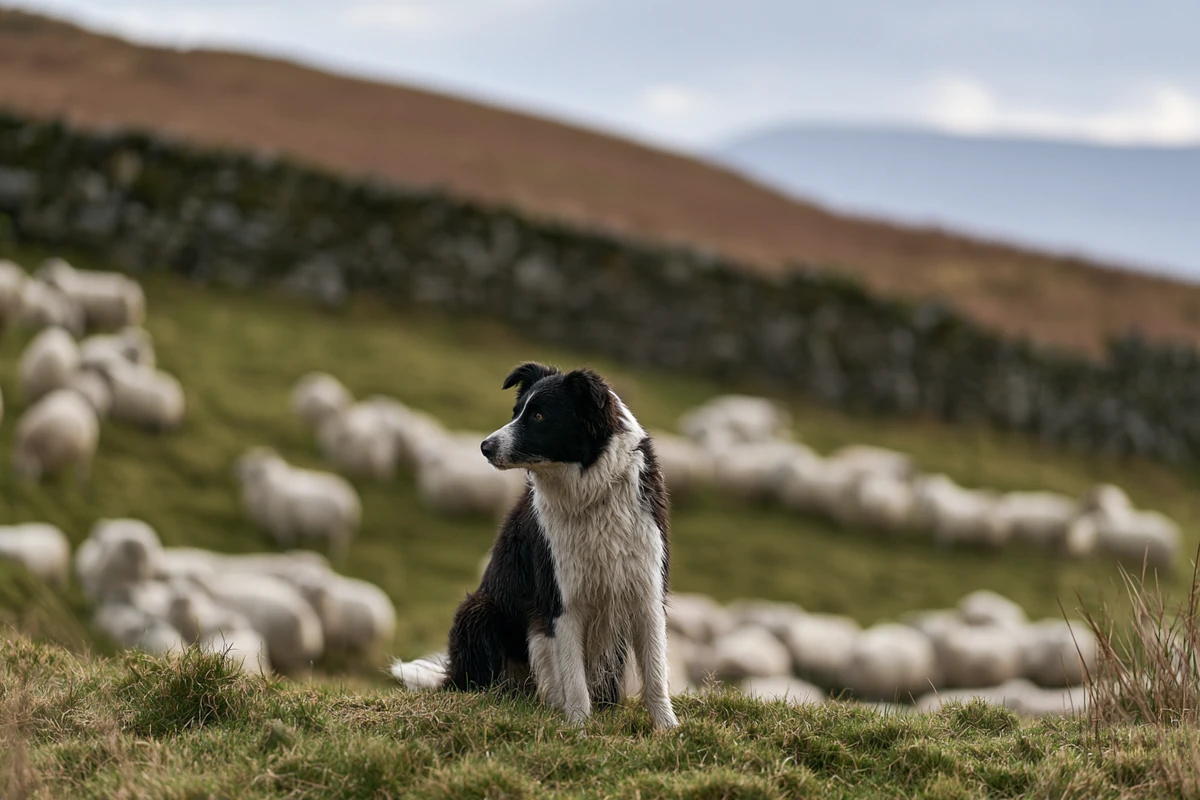
Advertise your Australian Shepherd puppies, litters and stud dogs
Do you breed Australian Shepherds? List your kennel on caninebreeder.co.uk and reach buyers looking for Australian Shepherd puppies for sale near them. The free basic profile shows your name, website, social media, location, breeds and industries. Litter and stud adverts cost nothing, so you can advertise Australian Shepherd puppies for sale whenever you have a litter and promote an Australian Shepherd stud dog. Upgrade to Premium to display health certificates, a gallery and direct contact details. Add your kennel or see our plans and prices.
No breeders are listed here yet, so the first profiles get the page to themselves.
- Free basic profile: your breeder or company name, website, social media, location, breeds and industries.
- Litters and stud dogs advertised in their own sections, never mixed with puppies for sale.
- Premium showcase for your services and prices, previous customers, awards, video, gallery and health certificates, with your phone and email shown to buyers.
- Sponsored articles about your breed or industry, written and published by our team.
- Featured placement at the top of this page, labelled as sponsored.
Is it free to advertise here?
Yes. A breeder profile and your litter and stud dog adverts are free. Premium profiles, featured placement and sponsored articles are optional paid extras; see pricing.
Do I need a licence to advertise puppies?
In England you need a dog breeding licence from your council if you breed three or more litters in 12 months or breed and sell dogs as a business, and Wales, Scotland and Northern Ireland have their own schemes. Licensed breeders show their licence number and issuing council on every advert. Puppies must be at least eight weeks old before they go to new homes.
Is my listing already here?
We add licensed breeders from councils' public registers. Search for your kennel name; if it is listed you can claim it and edit everything.
About the Australian Shepherd
Despite its name, the Australian Shepherd is an American breed. The Royal Kennel Club explains that it was developed in the United States as a ranch sheepdog, with roots in the Spanish sheepdogs that Basque shepherds brought with them when they emigrated in the 19th century. The RKC places it in the Pastoral group and notes that the working instinct remains strong, although the breed is now popular across canine activities, including the show ring.
Size and build. A medium-sized, muscular dog with moderate bone, slightly longer than tall. The breed standard gives a height of 51 to 58 cm for dogs and 46 to 53 cm for bitches. Some puppies are born with a natural bobtail. Docking was once customary, but section 6 of the Animal Welfare Act 2006 now makes it an offence in England and Wales except for certified working dogs of specified types, and the Australian Shepherd Club of the UK accepts every tail length.
Coat, colour and grooming. The coat is medium length, straight to slightly wavy and weather resistant, with an undercoat and a moderate mane that is heavier in dogs than in bitches. The standard allows blue merle, black, red merle and red, each with or without tan points, with white limited to set areas. The RKC suggests grooming more than once a week, and the club says the breed sheds all year and blows its coat seasonally, so expect hair around the house.
Exercise. The RKC lists more than two hours of exercise a day, a large house and garden, and a country setting. Herding, agility, obedience or other training gives the breed the mental work it needs.
Temperament and suitability. The standard describes a clever working dog with instincts both to herd and to guard, and an even disposition; it may be reserved at first but should never be shy or aggressive. The club's guidance for prospective owners warns that Aussies are not always easy to train, need firm, consistent and patient handling and early socialisation, may try to herd family members and other pets, and are a poor fit for people who are out for long hours. The RKC gives a typical lifespan of over 10 years.
Related breeds include the Miniature American Shepherd (developed in the US from smaller Aussies), the Border Collie and the Australian Cattle Dog. Browse Australian Shepherd breeders in the UK.
Australian Shepherd health tests
The Australian Shepherd is in Breed Watch Category 1, so the Royal Kennel Club has not flagged any breed-specific points of concern for show judges. Inherited conditions still occur. The Australian Shepherd Club of the UK covers hip and elbow dysplasia, eye conditions, epilepsy and cancer, and says some significant problems in the breed cannot yet be tested for. The breed can also carry the MDR1 mutation, which affects how certain medicines are cleared from the brain; the club advises owners of affected, carrier or untested dogs to give their vet a list of the drugs to avoid.
Since 1 January 2013 the RKC has not registered Australian Shepherd puppies from merle to merle matings, because a dog with two copies of the merle gene has a higher risk of blindness and deafness.
The RKC lists these for Australian Shepherd breeders:
- Good practice: DNA test for Collie eye anomaly/choroidal hypoplasia (CEA/CH)
- Best practice: DNA test for Hereditary cataracts (HC-HSF4)
- Best practice: DNA test for Multi-drug resistance (MDR1)
- Best practice: DNA test for Progressive retinal atrophy (prcd-PRA)
- Best practice: elbow testing under the BVA/KC Elbow Dysplasia Scheme
- Best practice: eye testing under the BVA/KC/ISDS Eye Scheme
- Best practice: hip testing under the BVA/KC Hip Dysplasia Scheme
Choosing an Australian Shepherd breeder
A responsible Australian Shepherd breeder will show you both parents' health results without hesitation. Under the club's code of ethics, members' breeding stock must be hip scored (no higher than 16) and elbow scored (no higher than 1), must hold a clear eye certificate from within 12 months of the mating, and must be DNA tested for HSF4, MDR1 and the other tests available to the breed. Members must not mate merle to merle, and should not breed from bitches under two or over eight. The club's puppy buyer advice says a good breeder will ask about you in return, and suggests asking for a written contract and whether the breeder will take a dog back. In England, a licensed breeder must show their council licence number in adverts.
Questions to ask:
- Can I see both parents' hip and elbow results and eye certificates?
- What are the parents' CEA/CH, HC-HSF4, MDR1 and prcd-PRA results?
- Is either parent merle, and what colour is the other?
- Has the litter been eye tested?
- Will you take the dog back if needed?
Australian Shepherd questions
Is the Australian Shepherd actually from Australia?
No. The Royal Kennel Club explains that the breed was developed in America as a ranch sheepdog, with roots in Spanish sheepdogs taken there by Basque shepherds in the 19th century.
Do Australian Shepherds shed a lot?
Yes. The RKC lists the breed as shedding and suggests grooming more than once a week. The Australian Shepherd Club of the UK says Aussies shed through the year and blow their coat seasonally.
What is MDR1 and why does it matter?
MDR1 is a gene mutation that stops certain medicines being carried out of the brain properly, so they can build up. The Australian Shepherd Club of the UK says dogs with one or two copies can be sensitive to these drugs. A DNA test, usually from a mouth swab, shows a dog's status, and owners should share the result with their vet.
Can two merle Australian Shepherds be bred together?
The Royal Kennel Club will not register puppies born on or after 1 January 2013 from a merle to merle mating, because dogs with two copies of the merle gene have a higher risk of blindness and deafness. The Australian Shepherd Club of the UK also bars its breeders from merle to merle matings.
More for Australian Shepherd owners and breeders
- Australian Shepherd: breeders
- Australian Shepherd: puppies for sale
- Australian Shepherd: stud dogs
- All Pastoral group breeds
- Disc dog
- Treibball
Official sources
- Australian Shepherd breed information (Royal Kennel Club)
- Australian Shepherd breed standard (Royal Kennel Club)
- Australian Shepherd Club of the UK
- Australian Shepherd health (Australian Shepherd Club of the UK)
- MDR1 (Australian Shepherd Club of the UK)
- Buying an Australian Shepherd puppy (Australian Shepherd Club of the UK)
- Code of ethics (Australian Shepherd Club of the UK)
- 10 points to consider before getting an Aussie (Australian Shepherd Club of the UK)
- Colours and tails (Australian Shepherd Club of the UK)
- BVA/KC Hip Dysplasia Scheme
- BVA/KC Elbow Dysplasia Scheme
- BVA/KC/ISDS Eye Scheme
- What is merle? (Royal Kennel Club)
- Health Test Results Finder (Royal Kennel Club)
- Inbreeding coefficient calculator (Royal Kennel Club)
- Registering your puppies (Royal Kennel Club)
- Animal Welfare Act 2006, section 6: docking of dogs' tails (legislation.gov.uk)
- Dog breeding licence in England (GOV.UK)