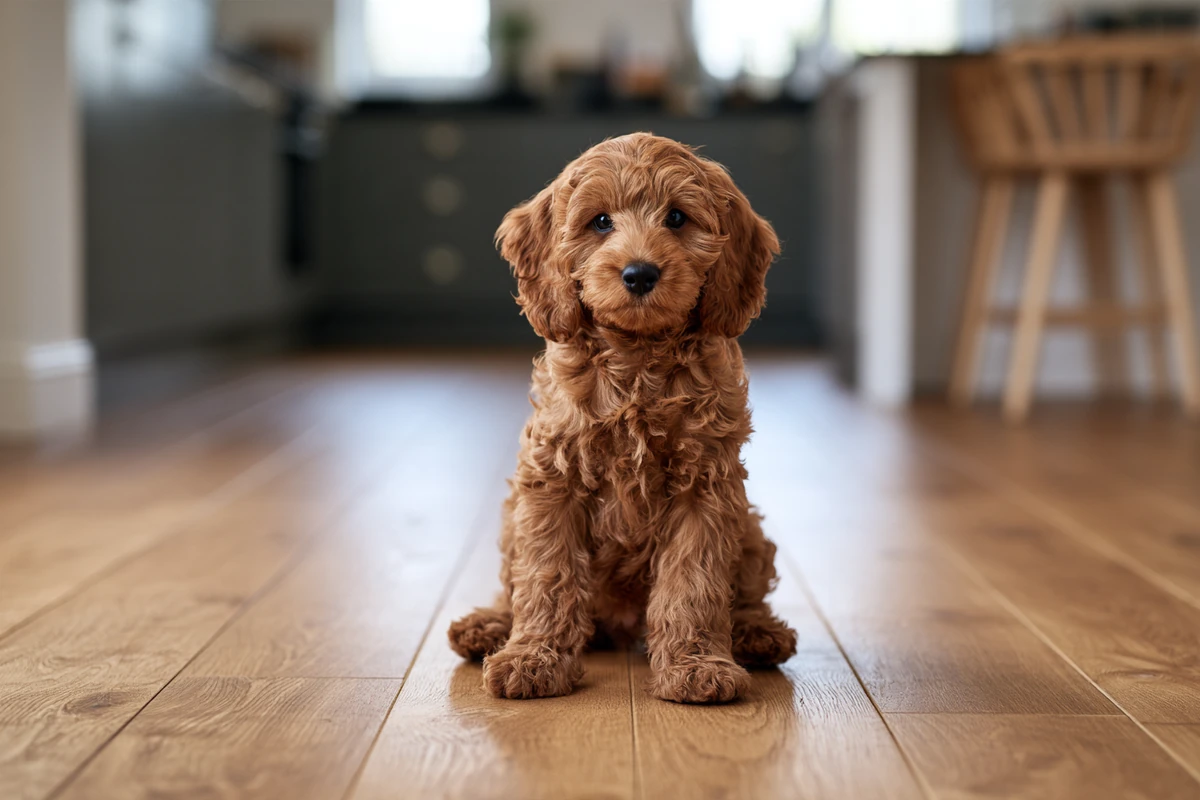
Advertise your Doxiepoo puppies, litters and stud dogs
Breeding Doxiepoos? List your kennel on caninebreeder.co.uk, an independent UK breeder directory, to advertise Doxiepoo puppies for sale and promote your Doxiepoo stud dog, or the Dachshund or Poodle stud you use for Doxiepoo litters. Your listing can show the health results buyers ask about, such as IVDD grades, PRA DNA tests and eye certificates, alongside your council licence number and upcoming litters, so interested families can get in touch with you directly.
No breeders are listed here yet, so the first profiles get the page to themselves.
- Free basic profile: your breeder or company name, website, social media, location, breeds and industries.
- Litters and stud dogs advertised in their own sections, never mixed with puppies for sale.
- Premium showcase for your services and prices, previous customers, awards, video, gallery and health certificates, with your phone and email shown to buyers.
- Sponsored articles about your breed or industry, written and published by our team.
- Featured placement at the top of this page, labelled as sponsored.
Is it free to advertise here?
Yes. A breeder profile and your litter and stud dog adverts are free. Premium profiles, featured placement and sponsored articles are optional paid extras; see pricing.
Do I need a licence to advertise puppies?
In England you need a dog breeding licence from your council if you breed three or more litters in 12 months or breed and sell dogs as a business, and Wales, Scotland and Northern Ireland have their own schemes. Licensed breeders show their licence number and issuing council on every advert. Puppies must be at least eight weeks old before they go to new homes.
Is my listing already here?
We add licensed breeders from councils' public registers. Search for your kennel name; if it is listed you can claim it and edit everything.
About the Doxiepoo
The Doxiepoo is a crossbreed between a Dachshund and a Poodle, also sold as a Doxiedoodle or Dachshundpoo. It is not a breed recognised by The Royal Kennel Club (RKC), so there is no breed standard or Breed Watch listing for it, and the RKC points out that crossbreed puppies can inherit their parents' traits in many combinations. This guide uses the Miniature Smooth Haired Dachshund and the Toy Poodle as the reference parents. Other Dachshund varieties and Poodle sizes have their own RKC size guidance and health listings, so check those pages if a litter uses them.
Dachshund (Miniature Smooth Haired). The Dachshund comes from Germany, where it is known as the Teckel and is still used to track wounded game and to go to ground after badger and rabbit. In the UK there are two sizes and three coat types; the miniature has an ideal weight of 4.5 kg and a maximum of 5 kg. It belongs to the Hound group. The standard describes an intelligent, lively, courageous and good-tempered dog with a moderately long, compact body and a dense, short, smooth coat.
Poodle (Toy). The RKC describes the Poodle as a water retriever developed in Germany for duck hunters. The Toy was produced by scaling down the Standard Poodle, measures under 28 cm at the shoulder and sits in the Utility group. Its standard asks for a dense coat of harsh texture and a cheerful, good-tempered nature, and the RKC lists it as a breed that does not shed.
Coat and grooming. The RKC lists the Miniature Smooth Haired Dachshund as a shedding breed needing grooming once a week, and the Toy Poodle as non-shedding with grooming every day. A Doxiepoo's coat could fall anywhere between the two, so be ready for regular brushing and possibly clipping.
Exercise and lifestyle. The RKC suggests up to an hour of exercise a day for both parent breeds and gives each a lifespan of over 12 years. The Dachshund's long back matters: the breed is prone to intervertebral disc disease (IVDD), and the RKC notes that the risk is shaped by factors such as diet and exercise as well as by genes.
Suitability. A Doxiepoo may suit someone who wants a small, lively dog and is ready for the grooming and back care described above.
Doxiepoo health tests
The Doxiepoo has no RKC health tests of its own because it is not a recognised breed, so look for the tests the RKC lists for each parent.
For the Miniature Smooth Haired Dachshund, the Good Practice test is spinal X-ray screening under the RKC IVDD scheme, run in partnership with Dachshund Health UK. Dogs are screened once, between 24 and 48 months old, and graded 0 to 3 by the number of disc calcifications; the scheme is for RKC-registered Dachshunds. A 2018 breed council survey quoted by the RKC reported IVDD in 29.9% of Miniature Smooth Haired Dachshunds over three years old. Best Practice adds the PRA (cord1) DNA test and an eye examination. The RKC will not register Dachshund puppies from two dapple parents because of risks to sight and hearing.
For the Toy Poodle, the Good Practice test is the prcd-PRA DNA test, with eye and hip screening as Best Practice. The RKC describes both forms of PRA as recessive: a dog develops the disease only if it inherits two copies of the same faulty gene, one from each parent.
- RKC/Dachshund Health UK IVDD screening scheme: Dachshund parent (Good Practice)
- DNA test for PRA (cord1): Dachshund parent (Best Practice)
- DNA test for prcd-PRA: Poodle parent (Good Practice)
- BVA/KC/ISDS Eye Scheme: both parents (Best Practice)
- BVA/KC Hip Dysplasia Scheme: Poodle parent (Best Practice)
- Breed Watch: Miniature Smooth Haired Dachshund Category 2 (points of concern include being too thin, eye irritation, poor rear movement and inadequate ground clearance); Toy Poodle Category 1
Choosing a Doxiepoo breeder
A good Doxiepoo breeder chooses the parents for health and temperament first. Expect to see the Dachshund parent's IVDD grade and PRA (cord1) result, the Poodle parent's prcd-PRA result, and eye examination certificates for both, with a hip score for the Poodle where one has been done. Results for RKC-registered parents can be checked on the RKC Health Test Results Finder. The breeder should never pair two dapple dogs, as the RKC links the dapple gene to impaired sight and hearing, and should be able to tell you how the puppies are being raised.
The RKC advises crossbreed buyers to see the mother with her puppies and to ask about the father and the health tests both parents have had. In England, a breeder who runs a business breeding and advertising dogs, or who breeds three or more litters in 12 months and sells puppies, must hold a council licence and show its number in adverts. Puppies must be microchipped and registered by eight weeks old, and under Lucy's Law a puppy under six months old in England must be bought directly from its breeder or adopted from a rescue centre, not from a third-party seller.
- Can I see the puppies with their mother where they were born?
- What is the Dachshund parent's IVDD grade, and when was it screened?
- Has the Dachshund parent been DNA tested for PRA (cord1), the Poodle parent for prcd-PRA, and have both been eye examined?
- Is either parent dapple?
- Are you licensed by your council, and what is your licence number?
Doxiepoo questions
Is the Doxiepoo recognised by the Royal Kennel Club?
No. The Doxiepoo is a Dachshund and Poodle crossbreed, so it has no RKC breed standard or Breed Watch category and cannot be placed on the RKC Breed Register. Crossbreeds can join the RKC Activity Register for activities such as agility, obedience and rally.
Can a Doxiepoo have back problems like a Dachshund?
The Dachshund is prone to intervertebral disc disease (IVDD), and the RKC makes spinal screening under its IVDD scheme a Good Practice test for the Miniature Smooth Haired variety. How much of that risk a Doxiepoo inherits cannot be predicted, so ask for the Dachshund parent's IVDD grade and talk to your vet about diet and exercise, which the RKC counts among the non-genetic factors that influence the condition.
Does a Doxiepoo shed?
It depends on the coat the puppy inherits. The RKC lists the Miniature Smooth Haired Dachshund as a breed that sheds and the Toy Poodle as one that does not, and a crossbreed's coat cannot be predicted with certainty. Meeting the parents gives the best idea of what to expect.
How big will a Doxiepoo get?
There is no standard for the Doxiepoo. The RKC gives the Miniature Smooth Haired Dachshund an ideal weight of 4.5 kg with a maximum of 5 kg, and the Toy Poodle a height of under 28 cm at the shoulder. Individual dogs can be larger or smaller than their breed standard, so ask which Dachshund variety and Poodle size the parents are and meet them if you can.
More for Doxiepoo owners and breeders
Official sources
- Dachshund (Miniature Smooth Haired) breed information - Royal Kennel Club
- Poodle (Toy) breed information - Royal Kennel Club
- Dachshund (Miniature Smooth Haired) breed standard - Royal Kennel Club
- Poodle (Toy) breed standard - Royal Kennel Club
- Breed Watch: Dachshund (Miniature Smooth Haired) Category 2 - Royal Kennel Club
- What is a crossbreed dog? - Royal Kennel Club
- IVDD Scheme for Dachshunds - Royal Kennel Club
- DNA test - PRA (cord1) - Royal Kennel Club
- DNA test - prcd-PRA - Royal Kennel Club
- BVA/KC/ISDS Eye Screening Scheme - Royal Kennel Club
- Hereditary Eye Disease Scheme (BVA/KC/ISDS) - British Veterinary Association
- Hip Dysplasia Scheme - British Veterinary Association
- Dachshund Health UK
- Health testing and screening - Dachshund Health UK
- Health Test Results Finder - Royal Kennel Club
- Inbreeding calculators (COIs) - Royal Kennel Club
- Activity Register - Royal Kennel Club
- Dog breeding licence (England) - GOV.UK