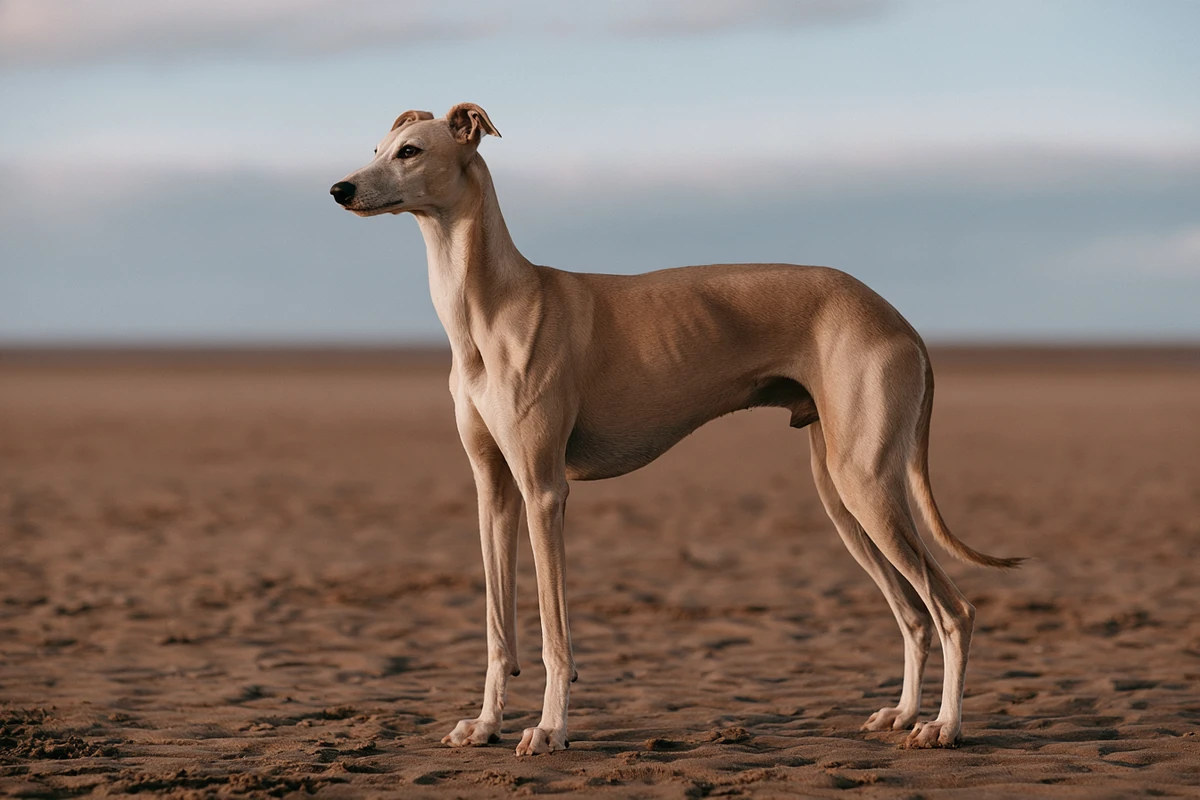
Advertise your Finnish Spitz puppies, litters and stud dogs
Do you breed Finnish Spitz? caninebreeder.co.uk helps UK breeders list their kennel, advertise Finnish Spitz puppies for sale and promote a Finnish Spitz stud dog to owners looking for a suitable mate. A free basic profile shows your kennel name, location, website, social links and breeds, and a Premium profile adds contact details, services and prices, a gallery and health certificates. In a breed this rare, buyers may search for months, so being easy to find matters. List your kennel or compare plans.
No breeders are listed here yet, so the first profiles get the page to themselves.
- Free basic profile: your breeder or company name, website, social media, location, breeds and industries.
- Litters and stud dogs advertised in their own sections, never mixed with puppies for sale.
- Premium showcase for your services and prices, previous customers, awards, video, gallery and health certificates, with your phone and email shown to buyers.
- Sponsored articles about your breed or industry, written and published by our team.
- Featured placement at the top of this page, labelled as sponsored.
Is it free to advertise here?
Yes. A breeder profile and your litter and stud dog adverts are free. Premium profiles, featured placement and sponsored articles are optional paid extras; see pricing.
Do I need a licence to advertise puppies?
In England you need a dog breeding licence from your council if you breed three or more litters in 12 months or breed and sell dogs as a business, and Wales, Scotland and Northern Ireland have their own schemes. Licensed breeders show their licence number and issuing council on every advert. Puppies must be at least eight weeks old before they go to new homes.
Is my listing already here?
We add licensed breeders from councils' public registers. Search for your kennel name; if it is listed you can claim it and edit everything.
About the Finnish Spitz
The Finnish Spitz is a spitz-type hunting dog that The Royal Kennel Club (RKC) places in the Hound group. According to the Finnish Spitz Society (UK), it comes from remote northern and eastern Finland, was entered on the Finnish Kennel Club's register in 1892 and was proclaimed Finland's national dog in 1979. The RKC says it was first used to track elk and bear, and now uses the same barking method on game birds, calling from below a bird sitting in a tree so the hunter can find it in dense forest. In Finland its main quarry is the capercaillie, a large grouse, says the UK Society.
Size and build. The breed standard describes a compact, almost square hunting dog with medium bone. Dogs stand 43-50 cm (17-20 in) at the withers and bitches 39-45 cm (15½-18 in), and the standard gives a weight of 14-16 kg (31-35 lb). Males are noticeably larger and carry more coat. The RKC classes the breed as small to medium, with a life expectancy of over 10 years.
Coat and grooming. A stand-off outer coat covers a short, soft, dense undercoat. The colour is reddish brown or red gold on the back, with lighter shading on the underparts, and the standard forbids any trimming, whiskers included. The RKC suggests grooming more than once a week and notes that the breed sheds. The UK Society says the coat usually moults twice a year, when a light daily comb removes the loose hair.
Exercise and home. The RKC lists up to an hour of exercise a day and says the breed can suit a small house with a small to medium garden, in town or country.
Temperament and barking. The standard describes a dog that is alert, lively and friendly but independent, keen to hunt and brave but cautious. The breed was developed to bark, and both the UK Society and the Finnish Spitz Club of America warn that it is vocal. The UK Society advises gentle but firm handling from puppyhood to stop mindless barking; the American club adds that the breed matures slowly and responds better to praise than to correction.
How many are bred. RKC registrations ranged from 1 to 17 a year between 2016 and 2025, with 4 in 2025. See also our guide to rare and breed-preservation breeders.
Finnish Spitz health tests
The RKC's health standard for the Finnish Spitz has one Good Practice item: prioritising genetic diversity. No BVA/KC canine health schemes are listed for the breed, and the RKC has no breed-specific DNA testing package for it at present, although individual DNA tests are offered. The Finnish Spitz does not appear on the January 2026 list of breeds with known inherited eye disease published for the BVA/RKC/ISDS Eye Scheme.
In a breed that registers so few dogs, genetic diversity is the pressing issue. The RKC asks breeders to produce puppies with a coefficient of inbreeding (COI) no higher than the breed average, and preferably lower still; the average shown by its calculators is worked out each June. Because a heavily used stud dog can narrow a small gene pool quickly, the RKC also asks stud owners to limit how often their dog is used.
In 2012 the Finnish Spitz Club and the Finnish Spitz Society sent a health survey questionnaire to their members through their Joint Judges Sub-Committee. The absence of formal schemes does not mean the breed is free of health problems. Ask breeders what veterinary checks the parents have had and how long their relatives lived, and look up recorded results on the RKC Health Test Results Finder.
- RKC Good Practice: prioritising genetic diversity (compare the mating's COI with the breed average using the RKC inbreeding coefficient calculator)
- RKC Best Practice: no additional schemes or tests listed
- BVA/KC canine health schemes: none listed by the RKC for this breed
- RKC breed-specific DNA testing package: none currently offered
- Breed Watch: Category 1 (no breed-specific points of concern identified for judges)
Choosing a Finnish Spitz breeder
Finnish Spitz litters are infrequent in the UK, so expect to find a breeder first and then wait for a puppy. The Finnish Spitz Society (UK) publishes a list of breeders who, as members, are expected to follow its code of ethics, with a column showing who has a litter born, planned or expected; it stresses that it cannot recommend a particular breeder. It suggests visiting an owner or breeder at home, or meeting people and their dogs at one of the Society's shows.
A careful breeder will be open about the barking, the independent nature and the seasonal moults, and will ask about your neighbours, routine and other pets. They should be able to tell you the COI of the mating and why they chose the pairing. In England, a licensed breeder may not sell a puppy under eight weeks old or show one to buyers without its mother, and a licence is needed by anyone who breeds three or more litters in 12 months and sells any of the puppies, or who runs a business breeding and advertising dogs. Puppies must be microchipped and registered on a database by eight weeks.
- What is the COI of this mating, and how does it compare with the Finnish Spitz breed average?
- What veterinary or health checks have both parents had, and can I see the paperwork?
- How much do your dogs bark at home, and how have you taught them to settle?
- How are the puppies being socialised with visitors, household noise, children and other animals?
- Will you take the dog back or help rehome it at any age if my circumstances change?
Finnish Spitz questions
Do Finnish Spitz bark a lot?
Yes. The breed was developed to find game and bark steadily to lead the hunter to it, and breed clubs in the UK and the USA both describe it as vocal. The Finnish Spitz Society (UK) recommends gentle but firm handling from puppyhood so the dog does not bark mindlessly, and the Finnish Spitz Club of America points out that barking can cause trouble with close neighbours unless the dog learns that barking without reason is not allowed.
How much grooming does a Finnish Spitz need?
The RKC suggests grooming more than once a week and notes that the breed sheds. The breed standard forbids trimming, whiskers included. The Finnish Spitz Society (UK) says the coat usually moults twice a year, when a light daily comb helps clear the loose hair.
Why is the Finnish Spitz in the Hound group?
The RKC's Hound group covers breeds originally used for hunting. Although the Finnish Spitz has the typical spitz look, with a wedge-shaped head, a compact body and a tightly curled tail, it was bred as a hunting dog, first for elk and bear and now mainly for game birds.
How hard is it to find a Finnish Spitz puppy in the UK?
It can take time. RKC registrations for the breed ranged from 1 to 17 a year between 2016 and 2025, with 4 in 2025. Contact breeders and breed clubs early and be prepared to join a waiting list.
More for Finnish Spitz owners and breeders
- Finnish Spitz: breeders
- Finnish Spitz: puppies for sale
- Finnish Spitz: stud dogs
- All Hound group breeds
Official sources
- Finnish Spitz breed information (The Royal Kennel Club)
- Finnish Spitz breed standard (The Royal Kennel Club)
- Breed Watch Category 1 explained (The Royal Kennel Club)
- The Royal Kennel Club Health Standard
- Inbreeding coefficient calculator (The Royal Kennel Club)
- Inbreeding calculators explained (The Royal Kennel Club)
- Manage and maintain genetic diversity (The Royal Kennel Club)
- Health Test Results Finder (The Royal Kennel Club)
- Breeding for health framework (The Royal Kennel Club)
- Using your dog as stud (The Royal Kennel Club)
- About the Finnish Spitz (Finnish Spitz Society UK)
- UK breeders list (Finnish Spitz Society UK)
- Finnish Spitz health survey (Finnish Spitz Society UK)
- About the Finnish Spitz (Finnish Spitz Club of America)
- Dog breeding licence in England (GOV.UK)
- Selling puppies: Schedule 6, Animal Welfare (Licensing of Activities Involving Animals) (England) Regulations 2018