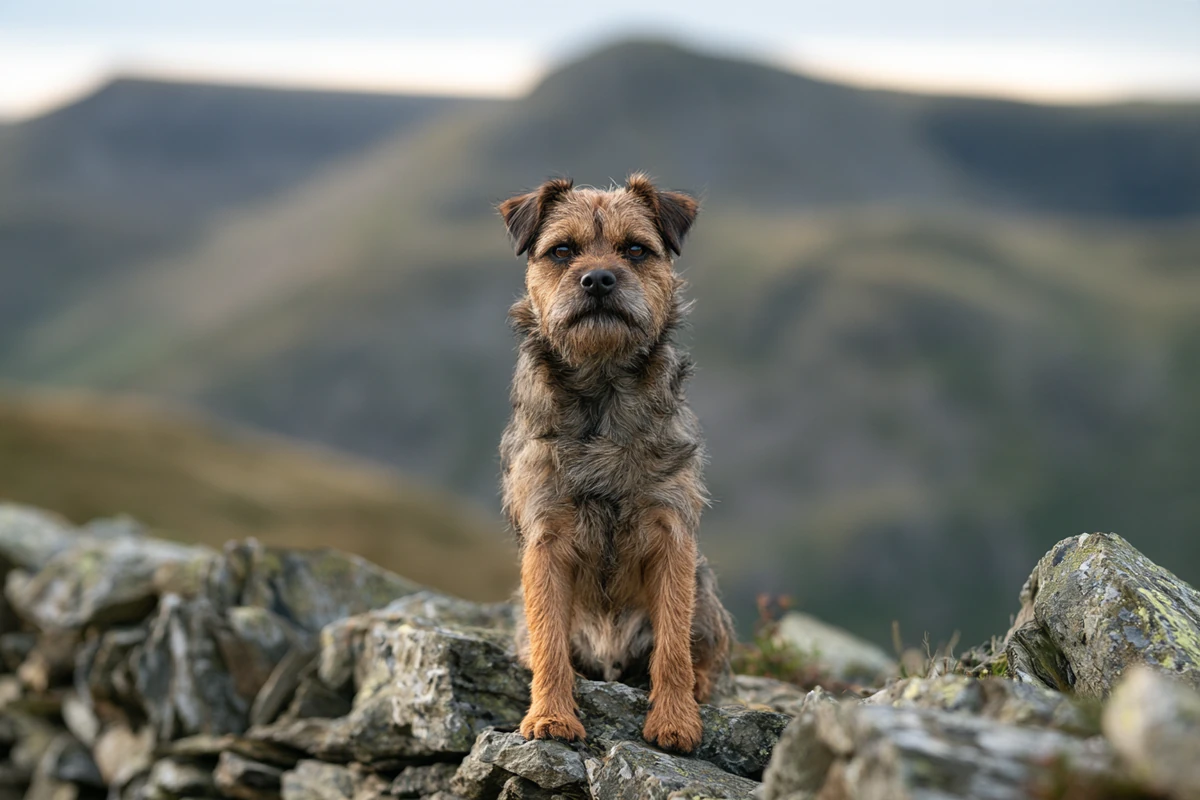
Advertise your Irish Terrier puppies, litters and stud dogs
Do you breed Irish Terriers? List your kennel on caninebreeder.co.uk so buyers searching for Irish Terrier puppies for sale, and owners looking for an Irish Terrier stud dog, can find you. You can advertise Irish Terrier puppies for sale, planned litters and stud dogs, and share your HFH DNA results. A basic listing shows your kennel name, location, website, social media and categories. Paid plans unlock more showcase features. Add your listing or see pricing.
No breeders are listed here yet, so the first profiles get the page to themselves.
- Free basic profile: your breeder or company name, website, social media, location, breeds and industries.
- Litters and stud dogs advertised in their own sections, never mixed with puppies for sale.
- Premium showcase for your services and prices, previous customers, awards, video, gallery and health certificates, with your phone and email shown to buyers.
- Sponsored articles about your breed or industry, written and published by our team.
- Featured placement at the top of this page, labelled as sponsored.
Is it free to advertise here?
Yes. A breeder profile and your litter and stud dog adverts are free. Premium profiles, featured placement and sponsored articles are optional paid extras; see pricing.
Do I need a licence to advertise puppies?
In England you need a dog breeding licence from your council if you breed three or more litters in 12 months or breed and sell dogs as a business, and Wales, Scotland and Northern Ireland have their own schemes. Licensed breeders show their licence number and issuing council on every advert. Puppies must be at least eight weeks old before they go to new homes.
Is my listing already here?
We add licensed breeders from councils' public registers. Search for your kennel name; if it is listed you can claim it and edit everything.
About the Irish Terrier
The Irish Terrier is a red-coated terrier with a racy, streamlined build, placed by The Royal Kennel Club (RKC) in the Terrier group. The Irish Terrier Association, a UK breed club formed in 1911, describes sporting terriers kept in Ireland for generations and bred for work rather than looks. The RKC records that the breed was first shown in 1870, when most exhibits were black and tan, black, grey or brindle. A bright red bitch named Poppy, whose offspring all shared her colour, proved influential, and selective breeding made red the breed's hallmark. Recognised as a pedigree breed in 1879, it was the earliest native Irish terrier breed accepted by The Kennel Club. The Association notes that the first Irish Terrier Club, formed that year, led early efforts to end ear cropping on show dogs.
Today the breed is on the RKC's At Watch list of British and Irish native breeds, for breeds with 300 to 450 registrations a year. There were 308 Irish Terrier puppies registered in 2025; our vulnerable native breeds page covers related breeds.
Size and build. The breed standard asks for an active, lively, wiry dog, substantial but never clumsy, with a graceful, racy outline. The ideal height is 48 cm (19 in) for dogs and 46 cm (18 in) for bitches. The RKC classes it as a small breed.
Coat and grooming. The outer coat is harsh and wiry with a broken look, lying straight and flat over a softer undercoat, and the leg hair is dense and crisp. The colour is solid, from red and red wheaten to yellow-red; a little white on the chest is allowed. The RKC suggests grooming more than once a week and says the breed sheds; the Association advises a weekly brush and stripping roughly twice a year.
Exercise and home. The RKC suggests up to an hour of exercise a day and says the breed can live in a small house with a small to medium garden, in town or country. It gives a lifespan of over 12 years.
Temperament. The standard describes a plucky, even reckless character and a dog that becomes deeply devoted to its owners. It is good-tempered, especially with people, but can be too quick to object when other dogs interfere with it. Compare other Terrier group breeders, including the Kerry Blue Terrier, Soft Coated Wheaten Terrier and Glen of Imaal Terrier.
Irish Terrier health tests
For the Irish Terrier, the RKC's pre-breeding screening lists prioritising genetic diversity as Good Practice and a DNA test for hereditary footpad hyperkeratosis (HFH) as Best Practice, and asks responsible breeders to complete both. HFH, also called corny feet, makes the footpads thicken and harden. The RKC explains that the cracks which form are painful and can become infected, and that nails grow faster and turn misshapen and crumbly. It is autosomal recessive, so a carrier shows no signs but can pass the gene on. The Irish Terrier Association says owners usually first spot signs at four to five months. Its breeding table shows that a carrier or affected dog mated to a clear partner produces no affected puppies, while carrier-to-carrier matings carry that risk and should be avoided.
The breed is in Breed Watch Category 2; the point of concern listed for judges is cracked or corny pads. The Association also publishes notes on cystinuria, a urinary stone condition that in this breed occurs only in males that have not been neutered. It reports that researchers at the University of Bern now think the condition is not caused by a single gene, so a reliable DNA test is unlikely.
- DNA test for hereditary footpad hyperkeratosis (HFH): RKC Best Practice. Recorded results appear on the Health Test Results Finder.
- Prioritising genetic diversity: RKC Good Practice. Check the inbreeding coefficient of any planned mating.
- Breed Watch Category 2: cracked and/or corny pads.
- RKC At Watch native breed (300 to 450 registrations a year).
Choosing an Irish Terrier breeder
A responsible Irish Terrier breeder should show you the HFH DNA results for both parents and explain how the pairing avoids producing affected puppies, and you can check recorded results yourself on the RKC Health Test Results Finder. The Irish Terrier Association suggests seeing the litter on more than one visit where possible, because puppies change a great deal before you choose at around seven to eight weeks. Always ask to see the mother with the puppies, and expect them to be kept somewhere clean, warm, light and airy. A good breeder will ask about your garden and fencing, how long the puppy will be left alone, and any children or other dogs at home; that last point matters in a breed whose standard warns it may not welcome interference from other dogs. At collection you should receive the RKC registration certificate, microchip details and a puppy pack covering feeding, worming, vaccinations and exercise, and many breeders will ask you to sign a sale contract. Other breed clubs are listed in the RKC's club finder. Our buyer safety guide explains how to spot puppy farms and deposit scams.
- What are the HFH DNA results for the sire and dam, and are they recorded with the RKC?
- What is the inbreeding coefficient for this mating, and how does it compare with the breed average?
- How do your adult dogs get on with other dogs, and how have the puppies been socialised?
- Who strips your dogs' coats, and can you show me how it is done?
- Will you take the dog back or help to rehome it if my circumstances change?
Irish Terrier questions
Is the Irish Terrier a rare breed?
It is not classed as vulnerable, but it is on the RKC's At Watch list of native breeds, which covers breeds with between 300 and 450 registrations a year. There were 308 Irish Terrier puppies registered in 2025, and the Irish Terrier Association says buyers may have to join a waiting list.
What health tests should an Irish Terrier puppy's parents have?
The RKC lists a DNA test for hereditary footpad hyperkeratosis (HFH) as Best Practice and prioritising genetic diversity as Good Practice. Ask to see both parents' HFH results and the inbreeding coefficient for the litter. You can check recorded results on the RKC Health Test Results Finder.
How much grooming does an Irish Terrier need?
The coat is harsh and wiry. The RKC suggests grooming more than once a week and says the breed sheds, and the Irish Terrier Association advises a weekly brush plus stripping about twice a year.
Are Irish Terriers good with other dogs?
The breed standard describes the Irish Terrier as good-tempered, especially with people, but possibly too ready to take offence when other dogs interfere with it. Early socialisation, supervised introductions and a frank talk with the breeder about their own dogs will help you decide whether the breed suits your household.
More for Irish Terrier owners and breeders
- Irish Terrier: breeders
- Irish Terrier: puppies for sale
- Irish Terrier: stud dogs
- All Terrier group breeds
Official sources
- Irish Terrier breed information - The Royal Kennel Club
- Irish Terrier breed standard - The Royal Kennel Club
- Irish Terrier Breed Watch Category 2 - The Royal Kennel Club
- DNA test - HFH (hereditary footpad hyperkeratosis) - The Royal Kennel Club
- Vulnerable native breeds (including the At Watch list) - The Royal Kennel Club
- Manage and maintain genetic diversity - The Royal Kennel Club
- Health Test Results Finder - The Royal Kennel Club
- Inbreeding coefficient calculator - The Royal Kennel Club
- Find a club - The Royal Kennel Club
- The Irish Terrier Association
- The early years to the present day - Irish Terrier Association
- Hyperkeratosis (HFH) - Irish Terrier Association
- Cystinuria - Irish Terrier Association
- Buying your puppy - Irish Terrier Association
- General facts - Irish Terrier Association