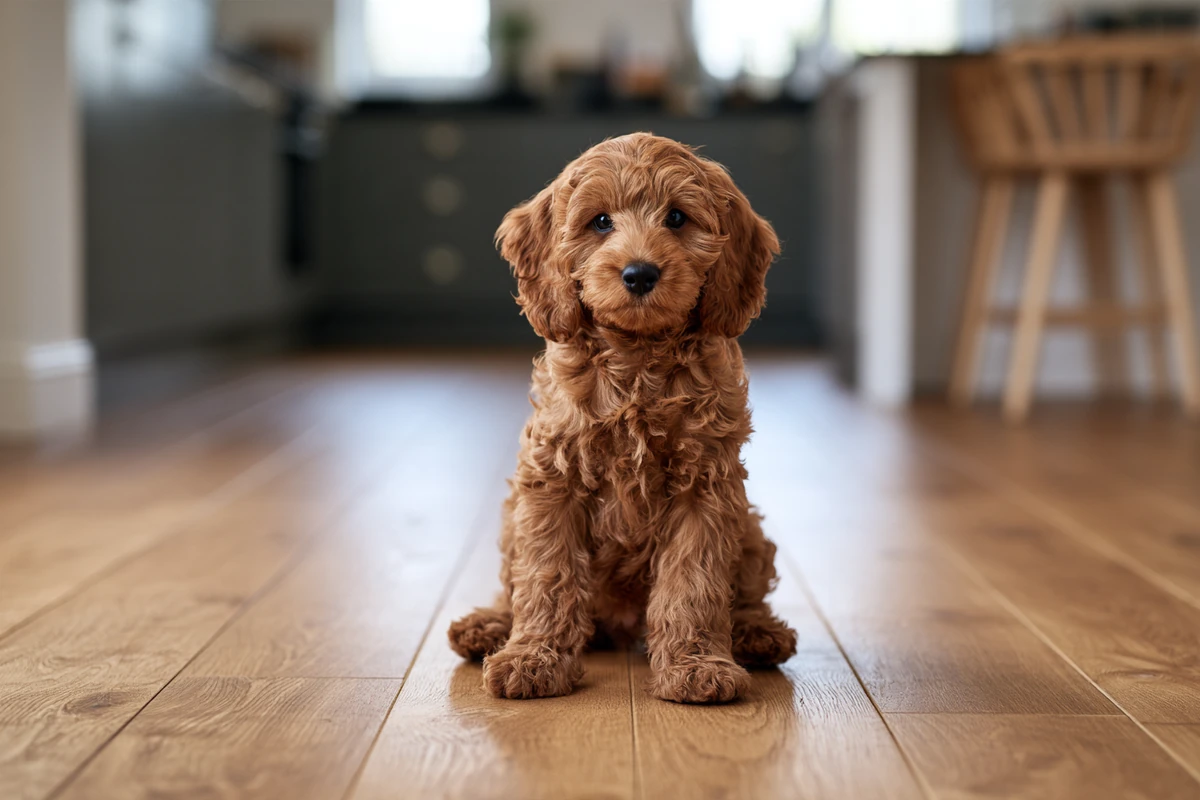
Advertise your Labradoodle puppies, litters and stud dogs
Do you breed Labradoodles? List your kennel on caninebreeder.co.uk so buyers searching for Labradoodle puppies for sale can find you. When a litter is due you can advertise Labradoodle puppies for sale, and if you own a Labrador, Poodle or Labradoodle stud dog you can list him with his health test results. Buyers of this crossbreed want to know which parents are behind a litter, so name both and show their test results. Add your kennel.
No breeders are listed here yet, so the first profiles get the page to themselves.
- Free basic profile: your breeder or company name, website, social media, location, breeds and industries.
- Litters and stud dogs advertised in their own sections, never mixed with puppies for sale.
- Premium showcase for your services and prices, previous customers, awards, video, gallery and health certificates, with your phone and email shown to buyers.
- Sponsored articles about your breed or industry, written and published by our team.
- Featured placement at the top of this page, labelled as sponsored.
Is it free to advertise here?
Yes. A breeder profile and your litter and stud dog adverts are free. Premium profiles, featured placement and sponsored articles are optional paid extras; see pricing.
Do I need a licence to advertise puppies?
In England you need a dog breeding licence from your council if you breed three or more litters in 12 months or breed and sell dogs as a business, and Wales, Scotland and Northern Ireland have their own schemes. Licensed breeders show their licence number and issuing council on every advert. Puppies must be at least eight weeks old before they go to new homes.
Is my listing already here?
We add licensed breeders from councils' public registers. Search for your kennel name; if it is listed you can claim it and edit everything.
About the Labradoodle
The Labradoodle is a cross between a Labrador Retriever and a Poodle. The Royal Kennel Club (RKC) does not recognise it as a breed, so there is no breed standard setting out its size, coat or colour. The RKC points out that a crossbreed's inherited traits can combine in many ways, so the parents are the best guide.
Origin and purpose
The cross became widely known after 1989, when Wally Conron, breeding manager at the Royal Guide Dogs Association of Australia (now Guide Dogs Victoria), mated a Labrador with a Standard Poodle. He hoped to produce a guide dog for a blind woman in Hawaii whose husband was allergic to dogs. ABC News reports that only one of the three puppies in that first litter proved suitable.
Both parent breeds were bred to retrieve. The RKC traces the Labrador to Newfoundland, where dogs helped fishermen recover nets and lost lines; some were taken to England, where sportsmen valued their retrieving ability. The Poodle was developed in Germany as a water retriever for duck hunters, and the RKC recognises three sizes: Standard, Miniature and Toy.
Size
The Labrador standard gives an ideal height at the withers of 56 to 57 cm for dogs and 55 to 56 cm for bitches, and the RKC classes the breed as large. A Standard Poodle must be over 38 cm and is classed as medium. A Labradoodle with a Standard Poodle parent is therefore likely to be a medium to large dog. If a litter is described as a Miniature or Medium Labradoodle, ask which Poodle variety is in the pedigree.
Coat and grooming
The Labrador's short, dense coat sheds, and the RKC suggests grooming once a week. The Poodle's coat is dense and curly, does not moult and needs grooming every day. A Labradoodle can inherit anything between the two, and no breeder can promise what a puppy's adult coat will be like.
Exercise, temperament and suitability
The RKC suggests more than two hours of exercise a day for a Labrador and up to an hour for a Standard Poodle, so plan for an active dog. The Labrador standard describes a keen, biddable dog with a kindly nature, and the Poodle standard a good-tempered one. The RKC suggests a large house and garden for both. An individual dog's temperament still depends on its parents, early socialisation and training.
Labradoodle health tests
The Labradoodle has no RKC health list of its own because it is not a recognised breed. The RKC's advice to anyone buying a crossbreed is to ask what breed-related health tests both parents have had. In practice, the Labrador parent should have the tests the RKC sets out for Labradors, and the Poodle parent the tests for its own size variety.
Several of these DNA tests are for autosomal recessive conditions: a puppy is only affected if it inherits a faulty copy of the gene from each parent, while a dog with a single copy shows no signs but is a carrier. The prcd-PRA test, for a form of progressive retinal atrophy that begins with night blindness and progresses to total blindness, is on the RKC lists for both Labradors and Poodles, so both parents should have a result. Hip and eye screening also appear on both lists. The BVA hip and elbow schemes only accept dogs aged one year or older; hip scores run from 0 to 106, and the lower the score the better. Screening reduces risk but cannot rule out every inherited problem.
Labrador parent (RKC Good Practice)
- DNA test: centronuclear myopathy (CNM)
- DNA test: exercise-induced collapse (EIC)
- DNA test: macular corneal dystrophy (MCD)
- DNA test: progressive retinal atrophy (prcd-PRA)
- DNA test: skeletal dysplasia (SD2)
- DNA test: Stargardt disease (STGD)
- BVA/RKC Hip Dysplasia Scheme
- BVA/RKC Elbow Dysplasia Scheme
- BVA/RKC/ISDS Eye Scheme
Labrador parent (RKC Best Practice)
- DNA test: hereditary nasal parakeratosis (HNPK)
Standard Poodle parent (RKC Best Practice)
- DNA test: progressive retinal atrophy (prcd-PRA)
- DNA test: progressive retinal atrophy (PRA rcd4)
- DNA test: von Willebrand disease type 1 (vWD1)
- BVA/RKC/ISDS Eye Scheme
- BVA/RKC Hip Dysplasia Scheme
If a Miniature Poodle is used (RKC Best Practice): DNA tests for osteochondrodysplasia (OC) and prcd-PRA, plus the BVA/RKC/ISDS Eye Scheme and the BVA/RKC Hip Dysplasia Scheme.
Breed Watch: the Labrador is Category 2 (judges are asked to watch for dogs that are significantly overweight or whose legs are too short for the depth and length of the body); the Standard and Miniature Poodles are Category 1. The Labradoodle has no category of its own.
Choosing a Labradoodle breeder
A good Labradoodle breeder can tell you exactly which Labrador and which Poodle were mated, and why that pairing was chosen. You should see the puppies with their mother where they were raised, and be given details of the father even if he lives elsewhere, as the RKC advises for crossbreeds. Ask for health test certificates for both parents that match the Labrador and Poodle lists on this page; a general vet check is not the same thing. Where a parent is on the RKC Breed or Activity Register, you can check its results yourself on the RKC Health Test Results Finder.
Be cautious about firm promises on coat, shedding or allergies. An experienced breeder can describe the range of coats earlier litters have produced, but cannot guarantee how one puppy will turn out. By law, puppies must be microchipped and registered on a database by eight weeks old. In England, anyone who breeds three or more litters in 12 months and sells any of the puppies, or who runs a business breeding and advertising dogs for sale, needs a licence from the local council and must show the licence number in adverts.
- Which Labrador and which Poodle variety are the parents, and may I see their health test certificates?
- Can I meet the mother with her puppies, and how old is she?
- What coat types have earlier litters from these parents had, and how much grooming did they need?
- How have the puppies been socialised, and what paperwork comes home with them?
- Will you take the dog back if I can no longer keep it?
Labradoodle questions
Is the Labradoodle recognised by The Royal Kennel Club?
No. The Labradoodle is a crossbreed, so it has no breed standard and cannot be placed on the RKC Breed Register. It can be registered on the RKC Activity Register, which is open to crossbreeds and lets dogs take part in RKC-licensed agility, flyball, heelwork to music, obedience, rally and working trials.
Are Labradoodles hypoallergenic?
No breeder can guarantee it. The RKC lists the Labrador as a breed that sheds and the Poodle as one that does not, and a Labradoodle can inherit any mix of the two coats. Even in the well-known first litter of 1989, only one of the three puppies proved suitable for the allergic household it was bred for. If allergies are a concern, spend time with the parents and adult dogs from the same breeder before you commit.
How much exercise does a Labradoodle need?
The RKC suggests more than two hours a day for a Labrador and up to an hour for a Standard Poodle. A Labradoodle bred from these two is likely to need a good amount of daily activity, and both parent breeds were originally used to retrieve.
Which health tests should a Labradoodle's parents have?
The Labrador parent should have the tests the RKC lists for Labradors: DNA tests for CNM, EIC, MCD, prcd-PRA, SD2 and STGD, hip and elbow scores and an eye examination, with a DNA test for HNPK as a further Best Practice test. The Standard Poodle parent should have DNA tests for prcd-PRA, PRA rcd4 and vWD1, plus hip and eye screening.
More for Labradoodle owners and breeders
- Labradoodle: breeders
- Labradoodle: puppies for sale
- Labradoodle: stud dogs
- All Crossbreeds breeds
- Poodle crosses and designer crossbreeds
Official sources
- Retriever (Labrador) breed information - The Royal Kennel Club
- Retriever (Labrador) breed standard - The Royal Kennel Club
- Poodle (Standard) breed information - The Royal Kennel Club
- Poodle (Standard) breed standard - The Royal Kennel Club
- Poodle (Miniature) breed information - The Royal Kennel Club
- Retriever (Labrador) - Breed Watch Category 2 - The Royal Kennel Club
- What is a crossbreed dog? - The Royal Kennel Club
- Activity Register - The Royal Kennel Club
- Health Test Results Finder - The Royal Kennel Club
- Inbreeding calculators (COIs) - The Royal Kennel Club
- BVA Hip Dysplasia Scheme
- BVA Elbow Dysplasia Scheme
- BVA Eye Scheme