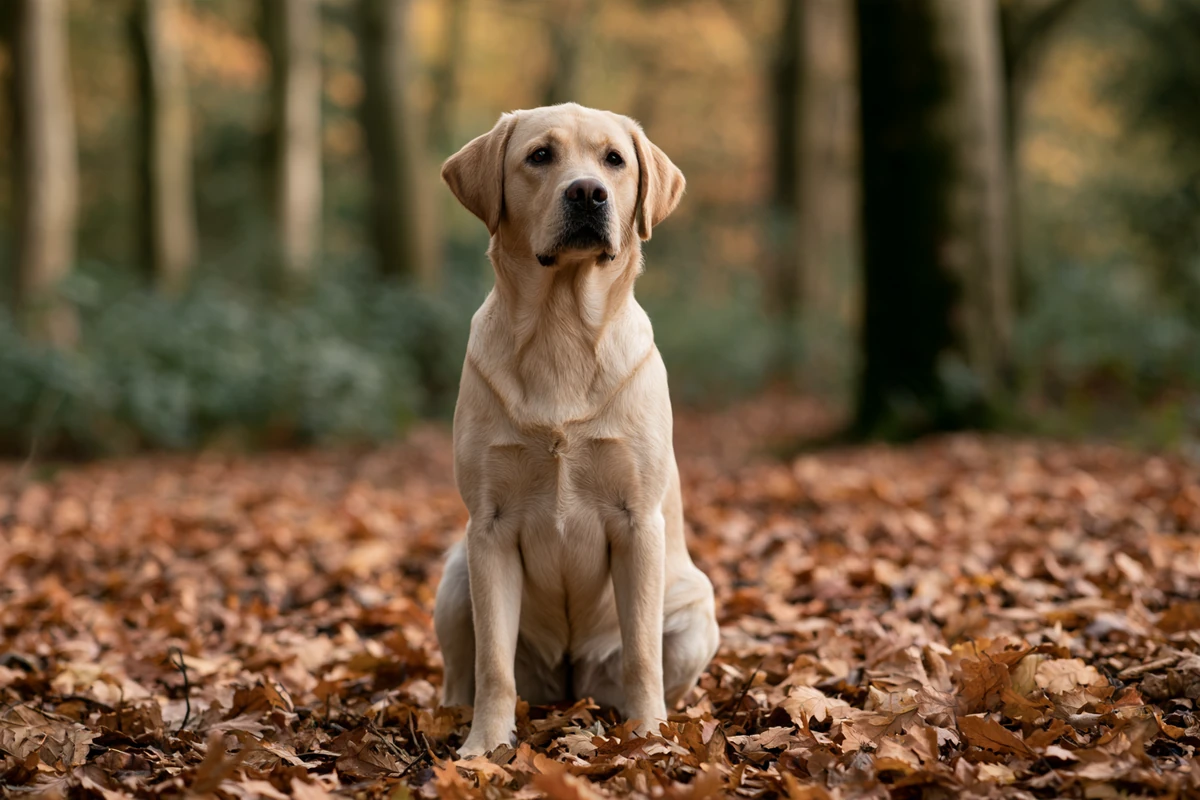
Advertise your Nova Scotia Duck Tolling Retriever puppies, litters and stud dogs
Do you breed Nova Scotia Duck Tolling Retrievers? List your kennel on caninebreeder.co.uk so people looking for a working, show or family Toller can find you. A free basic profile shows your kennel name, website, social media, location and categories. From there you can advertise Nova Scotia Duck Tolling Retriever puppies for sale, promote your Toller stud dog, and set out the DNA and screening results that buyers ask about. Add your listing or see pricing for extra profile features.
No breeders are listed here yet, so the first profiles get the page to themselves.
- Free basic profile: your breeder or company name, website, social media, location, breeds and industries.
- Litters and stud dogs advertised in their own sections, never mixed with puppies for sale.
- Premium showcase for your services and prices, previous customers, awards, video, gallery and health certificates, with your phone and email shown to buyers.
- Sponsored articles about your breed or industry, written and published by our team.
- Featured placement at the top of this page, labelled as sponsored.
Is it free to advertise here?
Yes. A breeder profile and your litter and stud dog adverts are free. Premium profiles, featured placement and sponsored articles are optional paid extras; see pricing.
Do I need a licence to advertise puppies?
In England you need a dog breeding licence from your council if you breed three or more litters in 12 months or breed and sell dogs as a business, and Wales, Scotland and Northern Ireland have their own schemes. Licensed breeders show their licence number and issuing council on every advert. Puppies must be at least eight weeks old before they go to new homes.
Is my listing already here?
We add licensed breeders from councils' public registers. Search for your kennel name; if it is listed you can claim it and edit everything.
About the Nova Scotia Duck Tolling Retriever
The Nova Scotia Duck Tolling Retriever, usually shortened to Toller, is a Canadian breed shown in the Royal Kennel Club (RKC) Gundog group. The RKC breed profile says Tollers only reached Britain in 1988, which makes the breed a comparatively recent arrival here. The Nova Scotia Duck Tolling Retriever Club of UK places its development in Yarmouth County, Nova Scotia, and records that the Canadian Kennel Club recognised it under its present name in 1945.
Origin and purpose
To toll is to lure. A working Toller races about and plays at the water's edge where wildfowl out on the water can see it, and the birds, drawn in by curiosity, come within range of the guns. The RKC notes that its lively tail is thought to play a part. Once birds are shot, the dog retrieves them, and the RKC credits its webbed feet for its strong swimming. The breed standard also asks for a coat that repels water.
Size and coat
The breed standard describes a compact, powerful, medium-sized dog. The ideal height at the withers is 48 to 51 cm for dogs and 45 to 48 cm for bitches. The double coat is straight and of medium length, with a softer, dense undercoat and feathering at the throat, behind the ears, on the rear thighs and on the tail. Any shade of red or orange is allowed, and white markings on the tail tip, feet or chest, or as a blaze on the face, are usual. The coat sheds, and the RKC suggests grooming more than once a week.
Exercise and lifestyle
The RKC puts the Toller's exercise needs at up to an hour a day and considers it suited to a small house with a small or medium garden, in town or country. It places the breed's lifespan in its "under 10 years" band. The RKC also notes that Tollers do well in agility, flyball, tracking and obedience.
Temperament and suitability
The standard describes a kind, confident and playful dog whose intelligence makes it easy to train, and the RKC sees the breed as an enthusiastic companion for an active family. It is better matched to owners who enjoy regular training and shared activities than to a household wanting a quiet, low-input pet. Browse other gundog breeders to compare related breeds.
Nova Scotia Duck Tolling Retriever health tests
The RKC places the Toller in Breed Watch Category 1, so no breed-specific points of concern have been flagged for show judges beyond those the breed standard already covers.
Under the RKC health standard, the Good Practice tests are the minimum a breeder should complete before breeding, and Best Practice means completing both lists below. For this breed the Good Practice list also includes prioritising genetic diversity, which the RKC's inbreeding coefficient calculator can help with. Results for registered dogs are published on the Health Test Results Finder.
The UK breed club's health page describes further conditions seen in Tollers. Autoimmune diseases, among them steroid responsive meningitis arteritis (SRMA) and immune mediated polyarthritis (IMPA), have no DNA test. Hypothyroidism has none either, and the only test linked to Addison's disease covers the juvenile form, so a clear JADD result does not rule the adult condition out. The club advises against breeding from affected dogs, and it reports that mast cell tumours are diagnosed more often in Tollers than in dogs generally. No test result can guarantee a healthy puppy, so ask breeders what they know about these conditions in their lines.
Good Practice
- Prioritising genetic diversity
- DNA test for Degenerative myelopathy (DM)
- DNA test for Progressive retinal atrophy (prcd-PRA)
Best Practice (in addition)
- DNA test for Collie eye anomaly/choroidal hypoplasia (CEA/CH)
- DNA test for Degenerative encephalopathy (DE)
- DNA test for Juvenile Addison's disease (JADD)
- Eye testing using the BVA/KC/ISDS Eye Scheme
- Elbow testing using the BVA/KC Elbow Dysplasia Scheme
- Hip testing using the BVA/KC Hip Dysplasia Scheme
Choosing a Nova Scotia Duck Tolling Retriever breeder
A careful Toller breeder should be able to show you results for both parents covering the RKC Good Practice DNA tests (DM and prcd-PRA), and ideally the Best Practice set as well: DNA results for CEA/CH, DE and JADD, a current eye certificate, and hip and elbow results. Many of these can be checked independently on the RKC Health Test Results Finder. The UK breed club's guidance on contacting a breeder suggests looking for puppies reared in the house, meeting at least the dam, and asking whether the breeder is a club member signed up to its code of ethics, and if not, why not. The club also expects breeders to be willing to discuss autoimmune problems in their lines.
A good breeder will have plenty of questions for you too, about your lifestyle, your experience and what you hope to do with a Toller, and the club warns that a wait of over a year is not unusual. Read our buyer safety guide before paying any deposit.
- Can I see the DNA and screening certificates for both parents?
- Have any relatives had autoimmune or thyroid problems, and how have you taken that into account?
- What is the inbreeding coefficient for this mating?
- Will the puppy be RKC registered and transferred to me on collection, and are there any endorsements?
- What socialisation have the puppies had, and what support do you offer afterwards?
Nova Scotia Duck Tolling Retriever questions
What does tolling mean?
To toll means to lure. A tolling dog plays energetically at the water's edge, and wildfowl out on the water come closer out of curiosity until they are within range of the guns. The Toller then retrieves the shot birds, often from the water.
How much exercise does a Toller need?
The Royal Kennel Club suggests up to an hour a day. It also notes that the breed does well in agility, flyball, tracking and obedience, which can add training and mental work to daily walks.
Which health tests should a Toller's parents have?
The RKC's Good Practice list is DNA tests for degenerative myelopathy (DM) and prcd-PRA, together with prioritising genetic diversity. Best Practice adds DNA tests for CEA/CH, DE and JADD, plus the BVA/KC/ISDS Eye Scheme and the BVA/KC hip and elbow dysplasia schemes.
Will I have to wait for a Toller puppy?
Often, yes. The UK breed club says demand for puppies currently well exceeds supply and that a wait of more than a year is not unusual, so contact breeders well before you hope to bring a puppy home.
More for Nova Scotia Duck Tolling Retriever owners and breeders
- Nova Scotia Duck Tolling Retriever: breeders
- Nova Scotia Duck Tolling Retriever: puppies for sale
- Nova Scotia Duck Tolling Retriever: stud dogs
- All Gundog group breeds
Official sources
- Retriever (Nova Scotia Duck Tolling) breed information - Royal Kennel Club
- Retriever (Nova Scotia Duck Tolling) breed standard - Royal Kennel Club
- Breed Watch Category 1 - Royal Kennel Club
- The Royal Kennel Club health standard
- Health Test Results Finder - Royal Kennel Club
- Inbreeding coefficient calculator - Royal Kennel Club
- How to find a suitable mate - Royal Kennel Club
- Nova Scotia Duck Tolling Retriever Club of UK
- Toller health - Nova Scotia Duck Tolling Retriever Club of UK
- What to look for when contacting a Toller breeder - Nova Scotia Duck Tolling Retriever Club of UK
- Breeders code of ethics - Nova Scotia Duck Tolling Retriever Club of UK
- Eye Scheme (BVA/KC/ISDS) - BVA Canine Health Schemes
- Hip Dysplasia Scheme (BVA/KC) - BVA Canine Health Schemes
- Elbow Dysplasia Scheme (BVA/KC) - BVA Canine Health Schemes
- Dog breeding licence (England) - GOV.UK