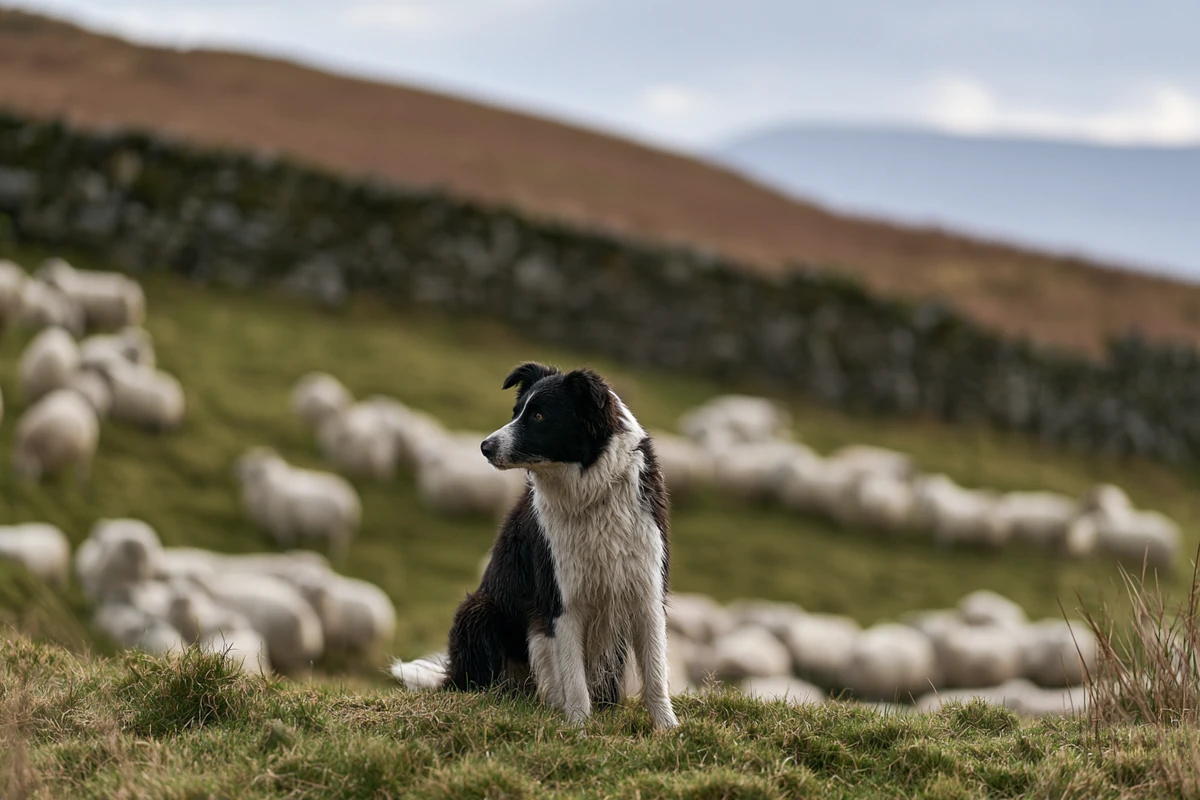
Advertise your Rough Collie puppies, litters and stud dogs
Do you breed Rough Collies? List your kennel on caninebreeder.co.uk so that buyers looking for Rough Collie puppies for sale, and breeders searching for a Rough Collie stud dog, can find you. You can advertise Rough Collie puppies for sale, planned litters and stud dogs, and set out the hip scores, eye certificates and DNA results behind your breeding. A basic listing shows your kennel name, location, website, social media and categories, and paid plans unlock more showcase features. Add your listing or see pricing.
No breeders are listed here yet, so the first profiles get the page to themselves.
- Free basic profile: your breeder or company name, website, social media, location, breeds and industries.
- Litters and stud dogs advertised in their own sections, never mixed with puppies for sale.
- Premium showcase for your services and prices, previous customers, awards, video, gallery and health certificates, with your phone and email shown to buyers.
- Sponsored articles about your breed or industry, written and published by our team.
- Featured placement at the top of this page, labelled as sponsored.
Is it free to advertise here?
Yes. A breeder profile and your litter and stud dog adverts are free. Premium profiles, featured placement and sponsored articles are optional paid extras; see pricing.
Do I need a licence to advertise puppies?
In England you need a dog breeding licence from your council if you breed three or more litters in 12 months or breed and sell dogs as a business, and Wales, Scotland and Northern Ireland have their own schemes. Licensed breeders show their licence number and issuing council on every advert. Puppies must be at least eight weeks old before they go to new homes.
Is my listing already here?
We add licensed breeders from councils' public registers. Search for your kennel name; if it is listed you can claim it and edit everything.
About the Rough Collie
The Rough Collie, a member of the Pastoral group, shares its origins with the Smooth Collie: both descend from Scotland's working sheepdogs. The Royal Kennel Club records that early collies were smaller than today's and mostly black and white, tricolour or black and tan. After the first sable was born in 1868, sable and white became the favourite colour, though tricolours and blue merles remain common. Separate show classes for rough and smooth sheepdogs began in 1870. S.E. Shirley, founder of the Kennel Club, championed the breed, and Queen Victoria took collies from Balmoral to her other royal estates. RKC registrations have fallen from 668 in 2016 to 345 in 2025, placing the breed on the At Watch list for native breeds with 300 to 450 registrations a year. Browse other pastoral breeders or read about vulnerable native breeds.
Size and build. The RKC classes the Rough Collie as a large breed. The breed standard gives dogs 56–61 cm at the shoulder and bitches 51–56 cm. It asks for a well-proportioned dog that looks capable of work and puts particular weight on expression, which depends on the balance of skull and foreface, the shape and placement of the eyes, and ear carriage.
Coat and grooming. The very dense double coat has a straight, harsh outer layer over a soft, close undercoat, with an abundant mane and frill, a smooth face and feathered legs. The three recognised colours are sable and white, tricolour and blue merle, each carrying white collie markings to some degree. The RKC lists the coat as medium length and advises daily grooming; the breed sheds. The Collie Association advises extra care behind the ears and under the legs, and says free running helps keep an adult coat in good order.
Exercise. The RKC recommends up to an hour of exercise a day. It suggests a large garden, though it rates the breed as suitable for a small house.
Temperament and suitability. The RKC sums the breed up as friendly, happy and active, and the standard describes the ideal as good with children and other dogs, with no trace of nervousness or aggression. It can live in town or country, and the RKC gives a lifespan of over 12 years. The Collie Association suggests daily handling from puppyhood and joining a local training club.
Rough Collie health tests
The Royal Kennel Club lists eye screening under the BVA/KC/ISDS Eye Scheme, including litter screening, and hip scoring under the BVA/KC Hip Dysplasia Scheme as Good Practice, its recommended minimum before breeding, and adds four DNA tests as Best Practice. The breed is in Breed Watch Category 2; the points of concern for judges are deep-set eyes, incorrect dentition, an excessively narrow jaw, and incorrect hind conformation or poor rear movement. Since 1 January 2013 the RKC has not registered puppies from merle-to-merle matings, because the merle gene carries risks to sight and hearing.
The Collie Association names hip dysplasia, Collie eye anomaly (CEA), progressive retinal atrophy (PRA) and drug sensitivity as the four known inherited problems in UK Rough Collies. It describes CEA as present from birth and non-progressive, says its milder forms do not appear to affect sight, and advises having every puppy in a litter eye examined by a BVA panel ophthalmologist at six to seven weeks. It also explains that a gene mutation makes some collies react badly to ivermectin and a wider group of medicines, and urges owners to check active ingredients; the RKC's MDR1 (multidrug resistance gene 1) DNA test relates to this sensitivity. Results for registered dogs are on the RKC Health Test Results Finder.
- BVA/KC/ISDS Eye Scheme, including litter screening (RKC Good Practice)
- BVA/KC Hip Dysplasia Scheme (RKC Good Practice)
- DNA test: Collie eye anomaly/choroidal hypoplasia (CEA/CH) (RKC Best Practice)
- DNA test: Degenerative myelopathy (DM) (RKC Best Practice)
- DNA test: Multi-drug resistance (MDR1) (RKC Best Practice)
- DNA test: Progressive retinal atrophy (PRA-rcd2) (RKC Best Practice)
- Breed Watch: Category 2
- Breeding restriction: no RKC registration for puppies from merle-to-merle matings born on or after 1 January 2013
- RKC At Watch list (native breed with 300 to 450 registrations a year)
Choosing a Rough Collie breeder
A responsible Rough Collie breeder will have hip scored both parents under the BVA/KC scheme, had them eye examined under the BVA/KC/ISDS scheme within the 12 months before mating, and had the litter eye screened before the puppies leave. Ask for the parents' DNA results for CEA/CH, MDR1, DM and PRA-rcd2, and confirm them on the RKC Health Test Results Finder. Check that the litter is not from two merle parents, as the RKC will not register puppies from such matings. With registrations falling, a good breeder will also share the coefficient of inbreeding for the mating. Expect to see the puppies with their mother and to collect no earlier than eight weeks. The Collie Association says you should receive a diet sheet and worming record, and suggests keeping to the breeder's diet for at least four months; ask for registration papers and vaccination and microchip details too. In England, a council licence is needed by anyone who breeds three or more litters in any 12-month period and sells any of the puppies, or who runs a business breeding and advertising dogs for sale. Read our buyer safety guide before paying a deposit.
- Can I see both parents' hip scores, their eye certificates from the last 12 months and the litter's eye screening results?
- What are the parents' DNA results for CEA/CH, MDR1, DM and PRA-rcd2?
- What colour are the parents, and is either of them a merle?
- What is the coefficient of inbreeding for this mating, and how does it compare with the breed average?
- Will you take the dog back or help to rehome it at any point in its life?
Rough Collie questions
Is the Rough Collie becoming rare?
Registrations have fallen. The Royal Kennel Club recorded 345 Rough Collie registrations in 2025, compared with 668 in 2016, and the breed is on the RKC At Watch list, which covers native breeds with between 300 and 450 registrations a year. It is not on the vulnerable native breeds list, which is for breeds with fewer than 300.
How much grooming does a Rough Collie need?
The RKC advises grooming every day and notes that the breed sheds. The coat is very dense, with an abundant mane and frill. The Collie Association suggests extra care with the areas behind the ears and under the front and back legs, and starting a grooming routine as soon as a puppy comes home.
What health tests should Rough Collie parents have?
The RKC lists the BVA/KC/ISDS Eye Scheme (including litter screening) and the BVA/KC Hip Dysplasia Scheme as Good Practice, and DNA tests for CEA/CH, degenerative myelopathy, MDR1 and PRA-rcd2 as Best Practice. The breed is in Breed Watch Category 2, and the RKC will not register puppies from merle-to-merle matings.
What is MDR1 and why does it matter in collies?
MDR1 is the multidrug resistance gene 1, and the RKC lists a DNA test for it as Best Practice in this breed. The Collie Association explains that a gene mutation makes some collies react badly to ivermectin and a wider group of medicines, many of them licensed for dogs, and urges owners to check active ingredients and know whether their dog carries the defect.
More for Rough Collie owners and breeders
- Rough Collie: breeders
- Rough Collie: puppies for sale
- Rough Collie: stud dogs
- All Pastoral group breeds
Official sources
- Collie (Rough) breed information u2013 The Royal Kennel Club
- Collie (Rough) breed standard u2013 The Royal Kennel Club
- Collie (Rough) Breed Watch Category 2 u2013 The Royal Kennel Club
- Vulnerable native breeds and At Watch list u2013 The Royal Kennel Club
- Collie (Rough) DNA testing u2013 The Royal Kennel Club
- The Collie Association
- The Collie Association u2013 Collie health
- The Collie Association u2013 Collie eye disorders
- The Collie Association u2013 Drug sensitivity
- The Collie Association u2013 Collie care
- Rough Collie Breed Council
- BVA/KC/ISDS Eye Scheme
- BVA/KC Hip Dysplasia Scheme
- Eye screening scheme u2013 The Royal Kennel Club
- Hip dysplasia screening scheme u2013 The Royal Kennel Club
- Health Test Results Finder u2013 The Royal Kennel Club
- Inbreeding calculators u2013 The Royal Kennel Club
- Dog breeding licence (England) u2013 GOV.UK