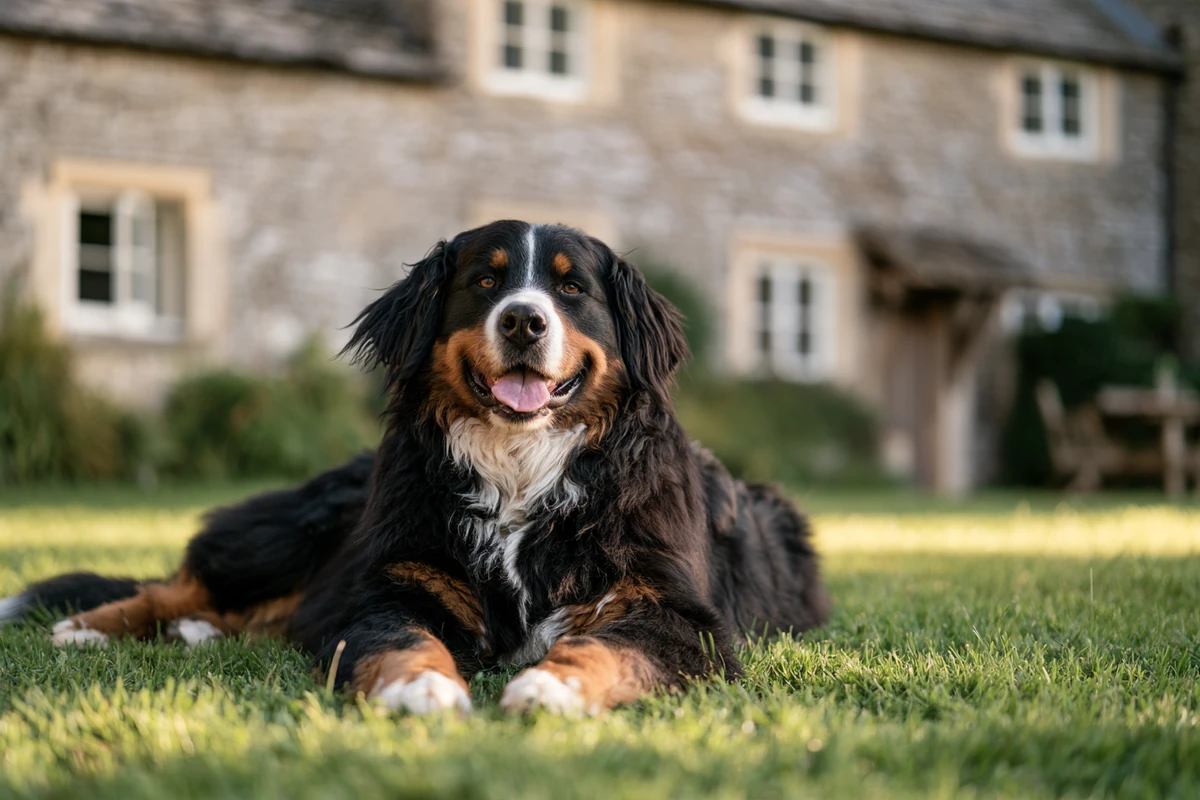
Advertise your Russian Black Terrier puppies, litters and stud dogs
Do you breed Russian Black Terriers in the UK? List your kennel on caninebreeder.co.uk so buyers searching for Russian Black Terrier puppies for sale can find you, read about your dogs and contact you directly. You can advertise Russian Black Terrier puppies for sale and planned litters, promote a Russian Black Terrier stud dog, and show the hip scores, elbow grades and DNA results that serious buyers ask for. Add your listing or compare our plans.
No breeders are listed here yet, so the first profiles get the page to themselves.
- Free basic profile: your breeder or company name, website, social media, location, breeds and industries.
- Litters and stud dogs advertised in their own sections, never mixed with puppies for sale.
- Premium showcase for your services and prices, previous customers, awards, video, gallery and health certificates, with your phone and email shown to buyers.
- Sponsored articles about your breed or industry, written and published by our team.
- Featured placement at the top of this page, labelled as sponsored.
Is it free to advertise here?
Yes. A breeder profile and your litter and stud dog adverts are free. Premium profiles, featured placement and sponsored articles are optional paid extras; see pricing.
Do I need a licence to advertise puppies?
In England you need a dog breeding licence from your council if you breed three or more litters in 12 months or breed and sell dogs as a business, and Wales, Scotland and Northern Ireland have their own schemes. Licensed breeders show their licence number and issuing council on every advert. Puppies must be at least eight weeks old before they go to new homes.
Is my listing already here?
We add licensed breeders from councils' public registers. Search for your kennel name; if it is listed you can claim it and edit everything.
About the Russian Black Terrier
The Russian Black Terrier is a large, powerfully built guard dog developed by the Russian army after the Second World War, and The Royal Kennel Club (RKC) places it in the Working group rather than the Terrier group.
Origin and purpose. The World Wars had left Russia short of suitable service dogs, so the army set out to produce one that could work on its own across very different terrain and in extreme weather. The RKC breed page explains that a Giant Schnauzer was at the centre of the programme, mated with Airedale and Rottweiler bitches, and that the offspring were later crossed with the Moscow Retriever, itself bred from Newfoundland and sheepdog stock. Working examples were first shown in Moscow in 1955, the first standard followed in 1958, and the FCI adopted the breed in 1984.
Size. The breed standard describes an imposing, almost square dog with heavy bone and well-developed muscle. Dogs stand 68 to 77 cm at the withers and bitches 66 to 72 cm, although the RKC points out that individuals can be larger or smaller than the figures given.
Coat and grooming. The weatherproof coat is of medium texture over a dense undercoat, slightly wavy when brushed, with a beard, eyebrows and leg furnishings. The only accepted colours are black, or black with some grey hairs making up no more than a third of the coat. The RKC suggests grooming every day and records the breed as one that does not shed, but the standard also calls for the ears, skull, cheeks, throat, underside of the tail, buttocks and backs of the stifles to be closely trimmed, so owners should plan for regular trimming at home or with a groomer.
Exercise and home. The RKC lists more than two hours of exercise a day, a large house and a large garden, with a typical lifespan of over 10 years.
Temperament. The standard describes an alert, lively and even-tempered dog with natural guarding instincts: brave, self-confident, easily trained, adaptable and wary of strangers. That combination, in a dog of this size, makes early socialisation and steady, consistent training important. Talk to breeders and the breed club about whether it suits your household, browse Russian Black Terrier breeders, or compare two of its foundation breeds, the Giant Schnauzer and Rottweiler.
Russian Black Terrier health tests
The RKC's Breed Watch places the Russian Black Terrier in Category 1, meaning no breed-specific points of concern have been flagged for show judges beyond those the standard already covers. That says nothing about inherited disease in individual dogs, which is why the RKC Health Standard sets out tests to complete before breeding. Good Practice is the minimum the RKC strongly recommends; Best Practice means completing both lists.
Hip and elbow X-rays under the BVA hip and elbow schemes can only be taken once the dog is at least a year old and microchipped. Hips are scored from 0 to 106 and compared with the breed median; elbows are graded 0 to 3. The three Best Practice tests are DNA tests. HUU can lead to bladder stones, JLPP affects the nerves to the voice box and hind legs from a few weeks of age, and prcd-PRA causes gradual loss of sight. All three are autosomal recessive, so two carriers can produce affected puppies. The RKC sells a breed-specific DNA package covering HUU and JLPP, and results for registered dogs appear on the Health Test Results Finder.
Good Practice (RKC)
- Prioritising genetic diversity (check the inbreeding coefficient of the planned mating)
- Hip testing (for hip dysplasia) using the BVA/RKC Hip Dysplasia Scheme
- Elbow testing (for elbow dysplasia) using the BVA/RKC Elbow Dysplasia Scheme
Best Practice (RKC), in addition
- DNA test for Hyperuricosuria (HUU)
- DNA test for Juvenile laryngeal paralysis and polyneuropathy (JLPP)
- Progressive retinal atrophy (prcd-PRA)
Breed Watch: Category 1
Choosing a Russian Black Terrier breeder
A careful Russian Black Terrier breeder has both parents hip scored and elbow graded under the BVA/RKC schemes before mating and will show you the certificates, ideally alongside DNA results for HUU, JLPP and prcd-PRA. They should be able to tell you the inbreeding coefficient of the litter and why they chose that stud dog. Because this is a large breed with guarding instincts, expect an honest conversation about temperament, the training and socialisation a puppy will need, and the daily grooming and regular trimming the coat requires. You should see the puppies with their mother where they are raised; for licensed breeders in England that is a legal condition, as is not selling a puppy before 8 weeks. Anyone in England who breeds three or more litters in 12 months and sells any of the puppies, or runs a business breeding and advertising dogs, needs a council licence and must show its number in adverts. The Russian Black Terrier Club can offer breed advice, and our buyer safety guide lists common warning signs.
- What are the parents' hip scores and elbow grades, and how do the hip scores compare with the breed median?
- Have the parents been DNA tested for HUU, JLPP and prcd-PRA, and can I see the results?
- What is the inbreeding coefficient for this litter?
- How are the puppies being socialised, and what training do you advise for a guarding breed?
- Will the puppy be RKC registered, and if you need a breeding licence, what is your licence number?
Russian Black Terrier questions
How big does a Russian Black Terrier get?
The RKC breed standard gives a height at the withers of 68 to 77 cm for dogs and 66 to 72 cm for bitches. It describes a large, heavily boned, almost square dog. The RKC notes that the standard describes the ideal, so an individual dog may be larger or smaller.
Does the Russian Black Terrier shed?
The RKC breed profile records the Russian Black Terrier as a breed that does not shed. The coat still needs grooming every day, and the standard calls for close trimming of areas including the ears, skull, cheeks, throat and hindquarters, so allow for regular trimming at home or by a groomer.
Which health tests should the parents have?
Under the RKC Health Standard, Good Practice is hip scoring and elbow grading under the BVA/RKC schemes plus attention to genetic diversity. Best Practice adds DNA tests for HUU, JLPP and prcd-PRA. Ask to see the certificates, and check registered dogs on the RKC Health Test Results Finder.
How much exercise does a Russian Black Terrier need?
The RKC suggests more than two hours of exercise a day and lists a large house with a large garden as the right home size, in either town or country.
More for Russian Black Terrier owners and breeders
- Russian Black Terrier: breeders
- Russian Black Terrier: puppies for sale
- Russian Black Terrier: stud dogs
- All Working group breeds
Official sources
- Russian Black Terrier breed information - The Royal Kennel Club
- Russian Black Terrier breed standard - The Royal Kennel Club
- Russian Black Terrier Club - RKC club profile
- The Royal Kennel Club Health Standard
- BVA Hip Dysplasia Scheme
- BVA Elbow Dysplasia Scheme
- DNA test - HUU (Hyperuricosuria) - The Royal Kennel Club
- DNA test - JLPP - The Royal Kennel Club
- DNA test - prcd-PRA - The Royal Kennel Club
- Russian Black Terrier DNA testing package - The Royal Kennel Club
- Breed Watch Category 1 - The Royal Kennel Club
- Inbreeding coefficient calculator - The Royal Kennel Club
- Dog breeding licence (England) - GOV.UK
- Animal Welfare (Licensing of Activities Involving Animals) (England) Regulations 2018, Schedule 6