Advertise your Shorkie puppies, litters and stud dogs
Do you breed Shorkies? List your kennel on caninebreeder.co.uk so families looking for a Shih Tzu and Yorkshire Terrier cross can find you. A free basic profile shows your kennel name, website, social media, location and categories. When you have a litter, you can advertise Shorkie puppies for sale, promote your Shorkie stud dog or parent-breed sire, and set out the eye certificates and BOAS grades that careful buyers ask for. Add your listing today and reach Shorkie buyers across the UK.
No breeders are listed here yet, so the first profiles get the page to themselves.
- Free basic profile: your breeder or company name, website, social media, location, breeds and industries.
- Litters and stud dogs advertised in their own sections, never mixed with puppies for sale.
- Premium showcase for your services and prices, previous customers, awards, video, gallery and health certificates, with your phone and email shown to buyers.
- Sponsored articles about your breed or industry, written and published by our team.
- Featured placement at the top of this page, labelled as sponsored.
Is it free to advertise here?
Yes. A breeder profile and your litter and stud dog adverts are free. Premium profiles, featured placement and sponsored articles are optional paid extras; see pricing.
Do I need a licence to advertise puppies?
In England you need a dog breeding licence from your council if you breed three or more litters in 12 months or breed and sell dogs as a business, and Wales, Scotland and Northern Ireland have their own schemes. Licensed breeders show their licence number and issuing council on every advert. Puppies must be at least eight weeks old before they go to new homes.
Is my listing already here?
We add licensed breeders from councils' public registers. Search for your kennel name; if it is listed you can claim it and edit everything.
About the Shorkie
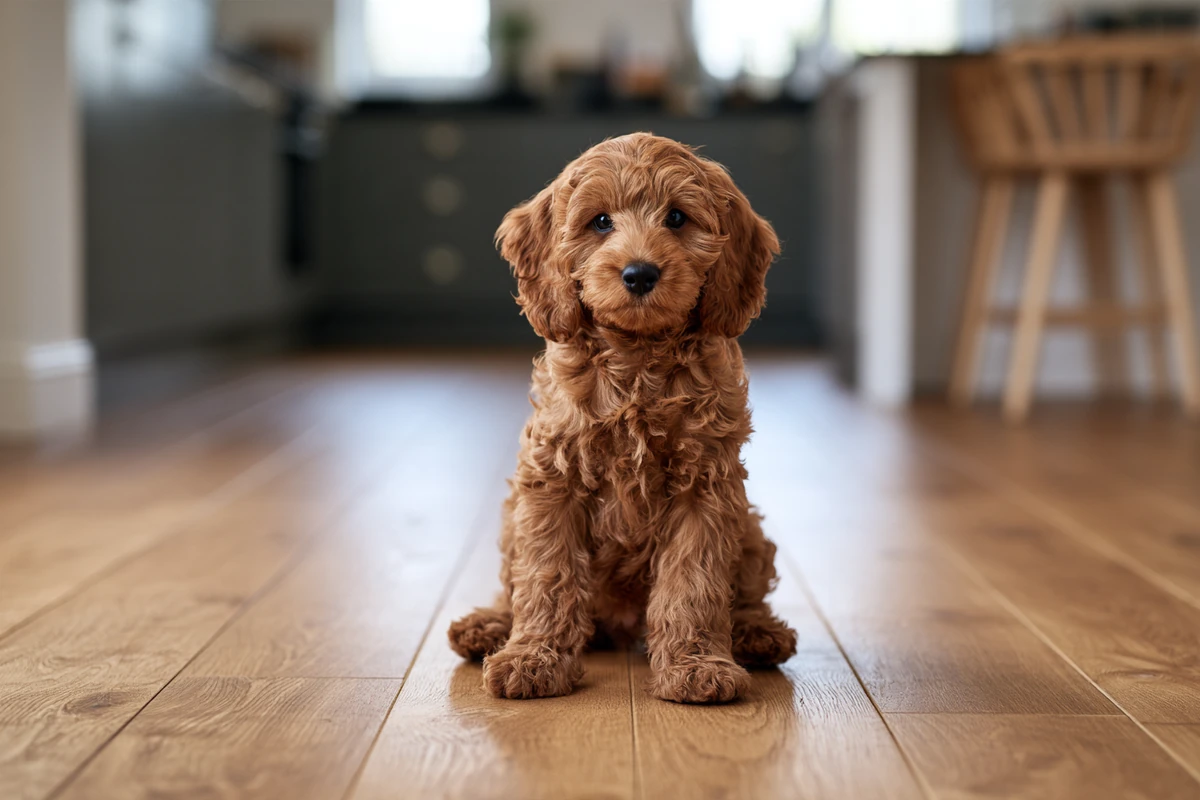
The Shorkie is a crossbreed produced by mating a Shih Tzu with a Yorkshire Terrier, and it is sometimes advertised as a Shorkie Tzu or Yorkie Tzu. The Royal Kennel Club (RKC) does not recognise it as a breed, so there is no breed standard. The RKC's guidance on crossbreeds explains that puppies often show a mix of their parents' traits, which can combine in many different ways, so the best guide to a Shorkie is its two parent breeds and, better still, the actual parents.
The parent breeds
The Shih Tzu belongs to the RKC's Utility group. The RKC says it is widely thought to have originated in China with Tibetan ancestry; early dogs were known as the Lhasa Lion dog, and the breed was first shown in England in 1933. Its breed standard describes a sturdy, abundantly coated dog with a broad, round head, a short, square muzzle and a friendly, independent temperament.
The Yorkshire Terrier is in the Toy group. The RKC traces it to working terriers that Scottish labourers brought to Yorkshire's mining and cotton-mill districts, and notes that it still keeps some of its terrier instincts. Its standard asks for an alert, intelligent toy terrier that is spirited but even-tempered.
Size
The Shih Tzu standard gives a height of no more than 27 cm and a weight of 4.5 to 8 kg, and the Yorkshire Terrier standard gives a weight of up to 3.2 kg. The RKC notes that a dog will not necessarily match these sizes, and a cross can fall anywhere in or around the range, so ask how big both parents are.
Coat, grooming and exercise
The RKC lists both parent breeds as long-coated, non-shedding and needing grooming every day, so plan for daily coat care whichever coat a Shorkie inherits. It suggests up to an hour of exercise a day for a Shih Tzu and up to 30 minutes for a Yorkshire Terrier.
Temperament and suitability
The RKC describes both parents as suitable for a flat, a small or medium garden, and life in town or country, and gives lifespans of over 10 years for the Shih Tzu and over 12 years for the Yorkshire Terrier. Temperament, coat and head shape all vary in a cross, so meet the parents before deciding whether a Shorkie suits your household.
Shorkie health tests
A Shorkie has no health schedule of its own, so follow the RKC's recommendations for each parent breed. For the Shih Tzu, the RKC lists eye testing under the BVA/KC/ISDS Eye Scheme as Good Practice, and its eye screening guidance says adult breeding dogs should be examined in the 12 months before a mating. In August 2026 the RKC also recognised breathing assessment for brachycephalic obstructive airway syndrome (BOAS) under the Respiratory Function Grading Scheme as Best Practice for the breed, and says it will join the breed's Health Standard in January 2027. Dogs can be graded from 12 months old, from Grade 0 (clinically unaffected) to Grade 3, and are reassessed every two years while they are being bred from; the RKC advises against breeding from a Grade 3 dog.
For the Yorkshire Terrier, the RKC currently recommends no pre-breeding screening. The BVA eye scheme is open to crossbreeds and to dogs not registered with the RKC, and the BVA advises clinical eye examinations for both parents of any planned litter. A Shorkie that inherits a shorter muzzle may be prone to the breathing, eye, skin and heat problems set out in the RKC's flat-faced dog hub. Health testing lowers risk but cannot guarantee a healthy puppy.
Health tests and schemes relevant to the Shorkie's parents:
- Shih Tzu parent: eye testing using the BVA/KC/ISDS Eye Scheme (RKC Good Practice)
- Shih Tzu parent: breathing testing for BOAS using the Respiratory Function Grading Scheme (RKC Best Practice, recognised August 2026; joins the Health Standard in January 2027)
- Yorkshire Terrier parent: no RKC-recommended pre-breeding screening at present; the BVA still advises an eye examination for both parents of a litter
- Breed Watch: the Shorkie has no Breed Watch entry as it is not a recognised breed; both parent breeds are in Category 1
Choosing a Shorkie breeder
The Shorkie is not a recognised breed, so there is no breed health schedule to rely on. A careful breeder should tell you which breeds the parents are, whether the litter is a first cross or a Shorkie-to-Shorkie mating, and how each parent has been health tested. Expect to see a recent eye certificate for the Shih Tzu parent and its BOAS grade, an RKC Best Practice test for the breed since August 2026. Where the parents are RKC registered, you can check their results on the Health Test Results Finder. The RKC's crossbreed advice is to see the mother with her puppies and ask about the father.
A good breeder will be honest that size, coat and head shape vary, and will ask about your home and routine. All puppies must be microchipped and registered on a database by eight weeks old. In England, anyone who breeds three or more litters in 12 months and sells any of the puppies, or runs a business that breeds and advertises dogs for sale, needs a breeding licence and must show the licence number in adverts. Our buyer safety guide covers the general checks.
Questions to ask a Shorkie breeder:
- Are both parents pure-bred, and can I see their RKC registration or pedigree details?
- Can I see eye certificates for both parents, and the Shih Tzu parent's BOAS grade?
- Can I meet the mother with the puppies, and what do you know about the father?
- How big are the parents, and what size and coat do you expect the puppies to have?
- Will the puppy be microchipped and registered before it leaves, and do you hold a breeding licence?
Shorkie questions
Is the Shorkie recognised by the Royal Kennel Club?
No. The Shorkie is a cross between the Shih Tzu and the Yorkshire Terrier, not a recognised breed, so it has no breed standard and cannot enter breed shows. A Shorkie can join the RKC Activity Register, which is open to crossbreeds, and take part in licensed events such as agility, obedience, rally and heelwork to music.
How big does a Shorkie get?
It depends on the parents. The Shih Tzu breed standard gives a height of no more than 27 cm and a weight of 4.5 to 8 kg, while the Yorkshire Terrier standard gives a weight of up to 3.2 kg. The RKC notes that an individual dog will not necessarily match the sizes in its standard, and a cross can vary even within one litter, so ask to see both parents.
Do Shorkies shed, and are they suitable for allergy sufferers?
The RKC lists both parent breeds as long-coated dogs that do not shed and need grooming every day. Coat type in a cross varies, and allergies differ from person to person, so no breeder can promise that a Shorkie will suit someone with an allergy. Spend time with the parents before you decide.
What health tests should a Shorkie's parents have?
For the Shih Tzu parent, the RKC recommends eye testing under the BVA/KC/ISDS Eye Scheme and, as Best Practice since August 2026, a BOAS assessment under the Respiratory Function Grading Scheme. The RKC currently lists no pre-breeding screening for the Yorkshire Terrier, but the BVA advises eye examinations for both parents of any litter, and its scheme is open to crossbreeds.
More for Shorkie owners and breeders
Official sources
- Shih Tzu breed information - Royal Kennel Club
- Yorkshire Terrier breed information - Royal Kennel Club
- Shih Tzu breed standard - Royal Kennel Club
- Yorkshire Terrier breed standard - Royal Kennel Club
- What is a crossbreed dog? - Royal Kennel Club
- BVA/KC/ISDS Eye Screening Scheme - Royal Kennel Club
- Eye scheme - British Veterinary Association
- Respiratory Function Grading Scheme (BOAS) - Royal Kennel Club
- Brachycephalic hub: flat-faced dogs - Royal Kennel Club
- Dog Health Test Results Finder - Royal Kennel Club
- Inbreeding coefficient calculator - Royal Kennel Club
- Activity Register - Royal Kennel Club