
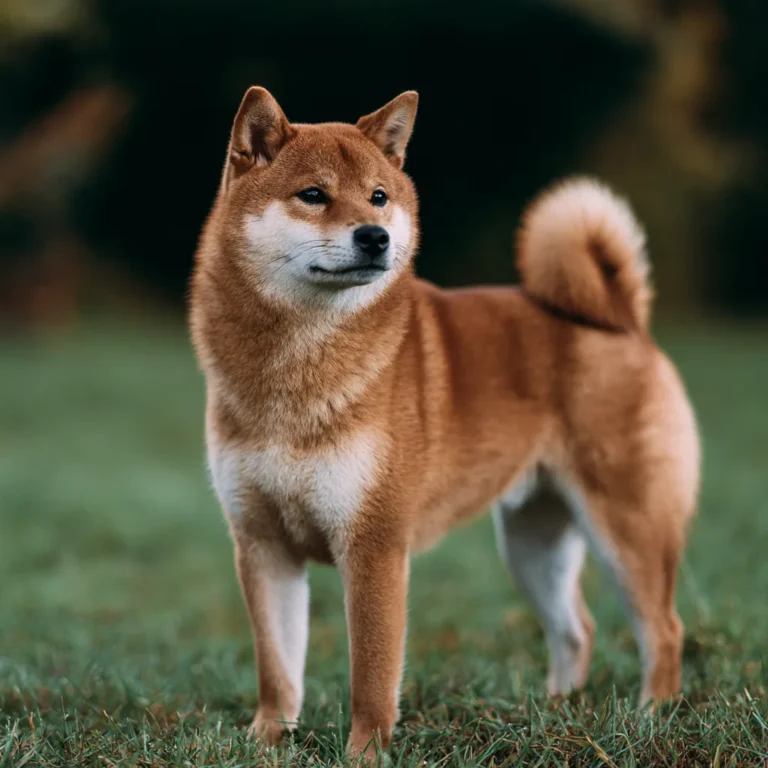
No Japanese Shiba Inu puppies are listed right now
Breeders add puppies when they have a litter. One breeder lists the Japanese Shiba Inu. Ask them about their next litter.
Japanese Shiba Inu breeders
- Japanese Shiba InuSpecialities: not listed yet5-star licence (declared)
Marilouvale Japanese Shiba Inu
North Lincolnshire

Do you breed the Japanese Shiba Inu? Add a litter free.
Buying a Japanese Shiba Inu puppy
Looking for Japanese Shiba Inu puppies for sale? Start with the breeder listings on caninebreeder.co.uk, which show each kennel's location, website, social links and categories, then contact the breeders directly. When we checked in September 2026, the RKC's Find a Puppy service listed four Shiba litters across England and Scotland, so availability can be limited and joining a waiting list makes sense. Before you commit, ask for the parents' eye certificates with gonioscopy grades, their hip scores and their GM1_2 and GM2_2 DNA results, and confirm them on the RKC Health Test Results Finder. Visit to see the litter with its mother, and never accept a puppy younger than eight weeks. We do not inspect breeders, so read our buyer safety guide before paying a deposit.
Health tests to ask about
The RKC lists eye testing under the BVA/KC/ISDS Eye Scheme, including gonioscopy for PLA, as Good Practice for the Shiba. At Best Practice level it adds hip scoring under the BVA/KC Hip Dysplasia Scheme and two DNA tests, recognised in February 2025 and applied from December 2025, for gangliosidosis (GM1_2) and gangliosidosis type II (GM2_2).
Gonioscopy uses a special lens to examine the drainage angle inside the eye. Since January 2026 the RKC eye screening scheme has graded results 1 to 3, and the BVA says dogs graded 3 are at risk of developing glaucoma. Hip X-rays can be taken from one year of age; each hip is scored from 0 to 53, and the BVA advises breeding from dogs with scores below or close to the breed median. The gangliosidoses are storage diseases that affect the nervous system, including the brain and spinal cord. Both are autosomal recessive, so a carrier shows no signs but can pass the gene on, and mating two carriers risks affected puppies.
The RKC places the Shiba in Breed Watch Category 1, with no specific points of concern identified. Health testing lowers risk but cannot guarantee a healthy puppy.
Health tests and schemes for the Japanese Shiba Inu (RKC):
- Eye testing, including gonioscopy for PLA, under the BVA/KC/ISDS Eye Scheme, RKC Good Practice
- Hip scoring under the BVA/KC Hip Dysplasia Scheme, RKC Best Practice
- DNA test for gangliosidosis (GM1_2), RKC Best Practice
- DNA test for gangliosidosis type II (GM2_2), RKC Best Practice
- Breed Watch: Category 1
More for Japanese Shiba Inu owners and breeders
- Japanese Shiba Inu: breeders
- Japanese Shiba Inu: puppies for sale
- Japanese Shiba Inu: stud dogs
- All Utility group breeds
Official sources
- Japanese Shiba Inu breed information - Royal Kennel Club
- Japanese Shiba Inu breed standard - Royal Kennel Club
- Association of Japanese Shiba Inu - RKC club profile
- Japanese Shiba Inu Club of Great Britain - RKC club profile
- BVA/KC/ISDS Eye Scheme - British Veterinary Association
- BVA/KC Hip Dysplasia Scheme - British Veterinary Association
- Eye screening scheme - Royal Kennel Club
- Hip dysplasia screening scheme - Royal Kennel Club
- DNA test for gangliosidosis (GM1) - Royal Kennel Club
- DNA test for gangliosidosis type II (GM2) - Royal Kennel Club
- Breed Watch Category 1 - Royal Kennel Club
- Health Test Results Finder - Royal Kennel Club
- Inbreeding coefficient calculator - Royal Kennel Club
- Using your dog as a stud - Royal Kennel Club
- Find a Puppy: Japanese Shiba Inu - Royal Kennel Club
- Dog breeding licence (England) - GOV.UK
- Animal Welfare (Licensing of Activities Involving Animals) (England) Regulations 2018, Schedule 6