
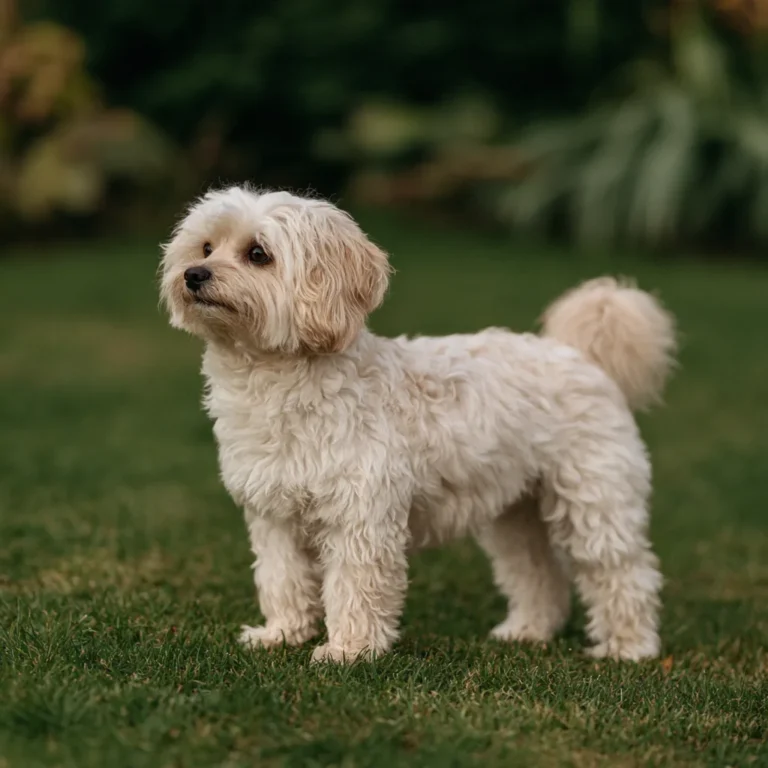
No Maltipoo puppies are listed right now
Breeders add puppies when they have a litter. 2 breeders list the Maltipoo. Ask them about their next litter.
Maltipoo breeders
- Cockapoo · Maltipoo · Bulldog +2Specialities: not listed yetMixed breeder
Kendricks K9 Services
Saxilby, Lincolnshire - Cavapoo · Cockapoo · Maltipoo +4Specialities: not listed yet1-star licence (declared)Mixed breeder
Perfect Pooches
Crowhurst, East Sussex

Do you breed the Maltipoo? Add a litter free.
Buying a Maltipoo puppy
If you are searching for Maltipoo puppies for sale, this page lists UK breeders who advertise Maltese and Toy Poodle cross litters. A Maltipoo is a crossbreed, so look past the name to the two parents. Ask for the Toy Poodle's prcd-PRA DNA result and recent eye certificates for both parents, and ask how big each parent is, because that is the best clue to your puppy's adult size.
Steer clear of adverts that push "teacup" or "micro" puppies; the RKC links breeding for extreme smallness to health problems. Visit in person, see the litter with their mother, and expect a microchipped puppy of at least eight weeks old. Coats vary, so be ready for daily brushing and regular trims whatever type your puppy grows. A good breeder will be happy to wait while you make your decision.
Health tests to ask about
The Maltipoo has no RKC health list of its own because it is a crossbreed. The RKC advises buyers of crossbreeds to ask what breed-related health tests both parents have had, so base your questions on the RKC lists for the Maltese and the Toy Poodle.
The only DNA test on the Toy Poodle's Good Practice list is for prcd-PRA, a form of progressive retinal atrophy. Affected dogs become night blind first and later lose their sight completely; the RKC says signs begin from around three years of age or later, varying by breed. It is an autosomal recessive condition, so a puppy is only affected if it inherits a faulty copy of the gene from both parents. The RKC recommends eye examinations under the BVA/RKC/ISDS Eye Scheme for both parent breeds, and hip scoring for the Toy Poodle. The BVA hip scheme only accepts dogs aged one year or over, and scores run from 0 to 106, lower being better.
Size matters too. The RKC warns that breeding from the very smallest dogs to produce "teacup" puppies is linked to breathing problems, fragile bones, and joint, heart and stomach problems. Screening lowers risk but cannot guarantee a healthy puppy.
Toy Poodle parent
- DNA test: progressive retinal atrophy (prcd-PRA) (RKC Good Practice)
- BVA/RKC/ISDS Eye Scheme (RKC Best Practice)
- BVA/RKC Hip Dysplasia Scheme (RKC Best Practice)
Maltese parent
- BVA/RKC/ISDS Eye Scheme (RKC Best Practice)
If the Poodle parent is a Miniature (RKC Best Practice): DNA tests for osteochondrodysplasia (OC) and prcd-PRA, plus the BVA/RKC/ISDS Eye Scheme and the BVA/RKC Hip Dysplasia Scheme.
Breed Watch: the Maltese, Toy Poodle and Miniature Poodle are all Category 1, with no breed-specific points of concern listed. The Maltipoo has no category of its own.
More for Maltipoo owners and breeders
Official sources
- Maltese breed information - The Royal Kennel Club
- Maltese breed standard - The Royal Kennel Club
- Poodle (Toy) breed information - The Royal Kennel Club
- Poodle (Toy) breed standard - The Royal Kennel Club
- Poodle (Miniature) breed information - The Royal Kennel Club
- Breed Watch Category 1 explained - The Royal Kennel Club
- Buying a teacup dog - The Royal Kennel Club
- What is a crossbreed dog? - The Royal Kennel Club
- Activity Register - The Royal Kennel Club
- Health Test Results Finder - The Royal Kennel Club
- Inbreeding calculators (COIs) - The Royal Kennel Club
- BVA Eye Scheme
- BVA Hip Dysplasia Scheme