
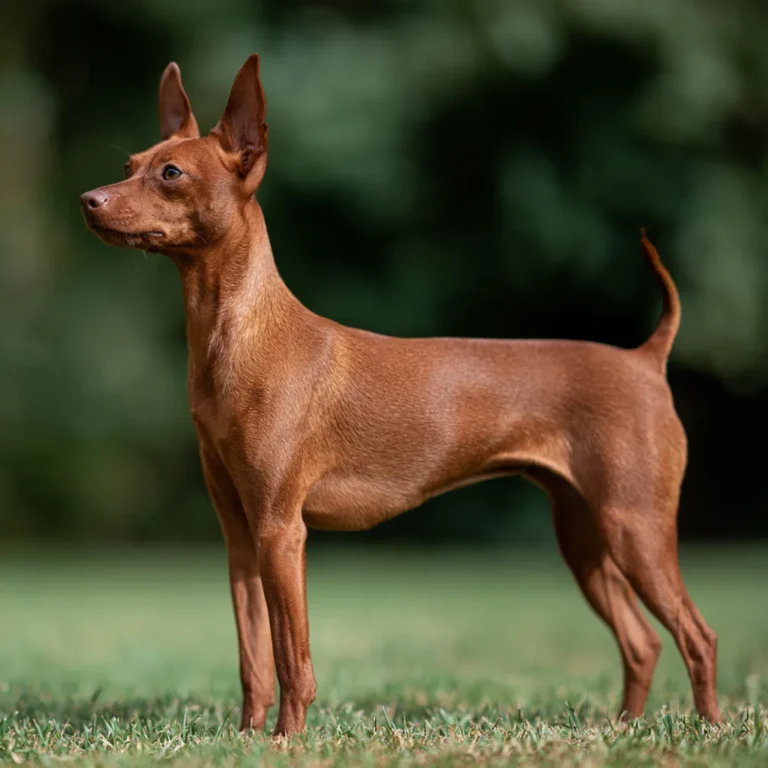
No Miniature Pinscher stud dogs are listed right now
One breeder lists the Miniature Pinscher. Ask them if they have a stud dog.
Miniature Pinscher breeders
- Dobermann · Miniature PinscherSpecialities: not listed yet
Krieger Dobermanns & Miniature Pinschers
Largs, North Ayrshire

Do you breed the Miniature Pinscher? Add a stud dog free.
Using a Miniature Pinscher stud dog
Miniature Pinscher stud dogs on this page are listed by their owners. Before booking, ask to see his current eye certificate under the BVA/RKC/ISDS Eye Scheme, examined within the 12 months before the mating, and his patella score under the Miniature Pinscher Club of Great Britain's scheme, which aims to test all sires and dams and advises looking for 0:0. Check that he is RKC registered in a recognised colour and that nothing on his registration would stop the litter being registered. Run the pairing through the RKC's inbreeding coefficient calculator, since genetic diversity is the RKC's Good Practice priority for the breed. Compare his height with the 25 to 30 cm range in the standard and his movement with the hackney action it describes. Agree the stud fee and any repeat-mating terms in writing before the mating.
Health tests for a Miniature Pinscher stud
The RKC Health Standard sets two levels of testing for the Miniature Pinscher. At Good Practice level, breeders should prioritise genetic diversity. At Best Practice level, they should also have eyes examined under the BVA/RKC/ISDS Eye Scheme, including litter screening of puppies. The RKC advises examining breeding dogs within the 12 months before a mating. The Min Pin is not on the BVA's January 2026 list of breeds with known inherited eye disease, but the examination still looks for both inherited and non-inherited eye conditions.
The RKC's breed page also points to a breed club health scheme, although the RKC does not itself record patella results. The Miniature Pinscher Club of Great Britain runs patella testing for patella luxation (slipping kneecaps), a condition the RKC says is seen more often in smaller dogs. A vet of the owner's choice grades each knee from 0 to 4 on the Putnam (1968) scale; no anaesthetic or X-rays are needed. The club recommends testing from 12 months of age, ideally between 12 and 24 months and before breeding, and publishes results with the owner's permission. Club membership is not required.
The breed is in Breed Watch Category 1, with no breed-specific concerns flagged for show judges. Health tests reduce risk but cannot guarantee a healthy puppy.
Health tests and schemes for the Miniature Pinscher:
- Prioritising genetic diversity, for example by checking the RKC inbreeding coefficient of a planned mating (RKC Good Practice)
- Eye testing using the BVA/RKC/ISDS Eye Scheme, including litter screening (RKC Best Practice)
- Patella testing under the Miniature Pinscher Club of Great Britain's breed club health scheme, graded on the Putnam (1968) scale (breed club scheme noted on the RKC breed page)
- Breed Watch: Category 1
More for Miniature Pinscher owners and breeders
- Miniature Pinscher: breeders
- Miniature Pinscher: puppies for sale
- Miniature Pinscher: stud dogs
- All Toy group breeds
Official sources
- Miniature Pinscher breed information - Royal Kennel Club
- Miniature Pinscher breed standard - Royal Kennel Club
- Breed Watch Category 1 - Royal Kennel Club
- Miniature Pinscher Club of Great Britain
- Patella testing scheme - Miniature Pinscher Club of Great Britain
- Puppy advice - Miniature Pinscher Club of Great Britain
- Eye screening scheme - Royal Kennel Club
- Eye scheme - British Veterinary Association
- Patella luxation in dogs - Royal Kennel Club
- Colour Watch - Royal Kennel Club
- Inbreeding coefficient calculator - Royal Kennel Club
- Health Test Results Finder - Royal Kennel Club
- Dog breeding licence (England) - GOV.UK