
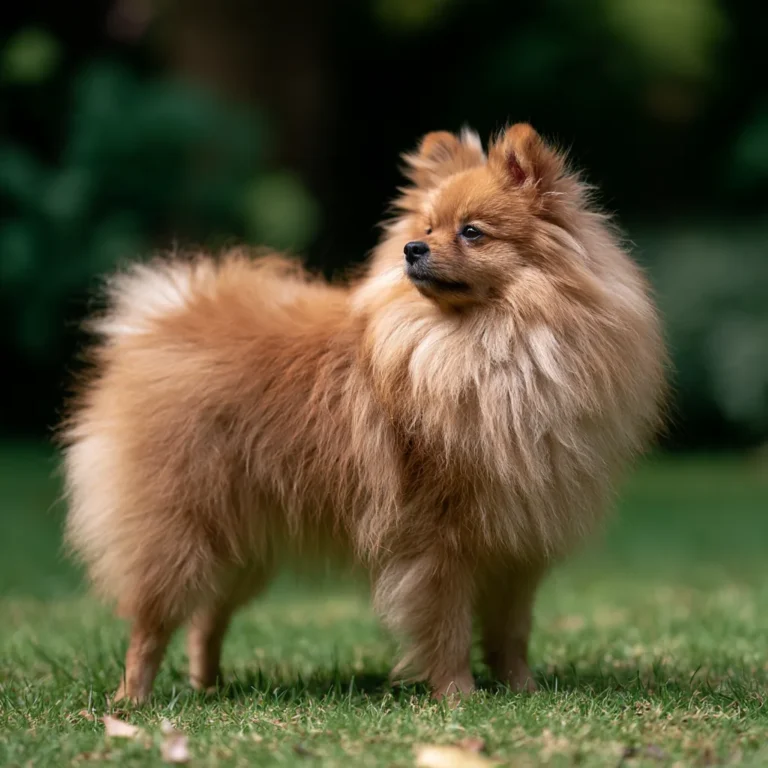
No Pomeranian stud dogs are listed right now
11 breeders list the Pomeranian. Ask them if they have a stud dog.
Pomeranian breeders
- PomeranianSpecialities: not listed yet
Champion Breeds
Earls Colne, Essex - Cocker Spaniel · PomeranianSpecialities: not listed yetLicensed breeder3-star licence
Liberty’s Perfect Pomeranians & Cockers
Wakefield, West Yorkshire - PomeranianSpecialities: not listed yetLicensed breeder4-star licence
Poms Af
Tonbridge and Malling - Cocker Spaniel · German Shepherd Dog · Pomeranian +1Specialities: not listed yetLicensed breeder5-star licence
The Woman’s Touch (Chezza)
North Northamptonshire, Northamptonshire - PomeranianSpecialities: not listed yetLicensed breeder
Poms With Love
Mid Sussex - PomeranianSpecialities: not listed yetLicensed breeder3-star licence
Diamond Pomeranians
Merton - PomeranianSpecialities: not listed yetLicensed breeder5-star licence
Absolutely Poms
Guildford, Surrey - PomeranianSpecialities: not listed yetLicensed breeder3-star licence
Primigola Pomeranians
Ilkeston, Derbyshire

11 listed. See all
Do you breed the Pomeranian? Add a stud dog free.
Using a Pomeranian stud dog
Pomeranian stud dogs on this page are listed by their owners. Before agreeing a mating, check the dog's RKC registration and ask for a current eye certificate under the BVA/KC/ISDS Eye Scheme, which you can confirm on the RKC Health Test Results Finder. Ask whether his fontanelle is fully closed, as Breed Watch expects in dogs over 12 months, and whether he has been MRI scanned under the BVA CM/SM Scheme. Confirm his colour: merle is outside the standard, and the RKC will not register merle Pomeranians. Use the RKC's inbreeding coefficient calculator, previously part of the Kennel Club's Mate Select service, to check the pairing against the breed average. If the bitch's owner is a licensed breeder in England, she must not be mated before 12 months of age or after two litters delivered by caesarean section. Agree the fee and terms in writing, and see our stud dogs page for more.
Health tests for a Pomeranian stud
The RKC lists one pre-breeding test for the Pomeranian, as Best Practice: an eye examination under the BVA/KC/ISDS Eye Scheme. Its general advice is that adult dogs are examined within the 12 months before a mating. There is no breed-specific RKC DNA package, although individual DNA tests are available. The RKC also notes that the breed can be affected by conformational concerns: under Breed Watch Category 2, judges are asked to check that the fontanelle, the soft spot on the skull, is fully closed in dogs over 12 months old.
The Pomeranian Club's health pages cover other conditions. Patella luxation, where the kneecap slips out of place, is seen more often in smaller dogs; the RKC names the Pomeranian among affected breeds and says genetics are likely to play a part. The BVA lists Pomeranians among breeds reported with Chiari-like malformation and syringomyelia (CM/SM), and the club advises against breeding from any Pom graded with CM or SM under the MRI-based BVA CM/SM Scheme. For Alopecia X, a coat loss that usually begins before two years of age, the club suggests breeding only from dogs older than that and avoiding affected lines. Health testing lowers risk but cannot guarantee a healthy puppy.
Health tests and schemes for the Pomeranian:
- Eye testing using the BVA/KC/ISDS Eye Scheme (RKC Best Practice)
- No RKC breed-specific DNA testing package; individual DNA tests available
- Breed Watch: Category 2 (fontanelle should be fully closed in mature dogs over 12 months)
More for Pomeranian owners and breeders
Official sources
- Pomeranian breed information - Royal Kennel Club
- Pomeranian breed standard - Royal Kennel Club
- Pomeranian Breed Watch Category 2 - Royal Kennel Club
- Eye screening scheme - Royal Kennel Club
- Eye scheme - British Veterinary Association
- Chiari malformation/syringomyelia scheme - British Veterinary Association
- Patella luxation in dogs - Royal Kennel Club
- What is merle? - Royal Kennel Club
- Colour Watch - Royal Kennel Club
- Health Test Results Finder - Royal Kennel Club
- Inbreeding coefficient calculator - Royal Kennel Club
- Find a Club - Royal Kennel Club
- The Pomeranian Club
- Health and welfare - The Pomeranian Club
- Buying guide - The Pomeranian Club
- Teacup puppies - The Pomeranian Club
- Distal fractures of the radius and ulna (broken front leg) - The Pomeranian Club
- The Northern Pomeranian Club