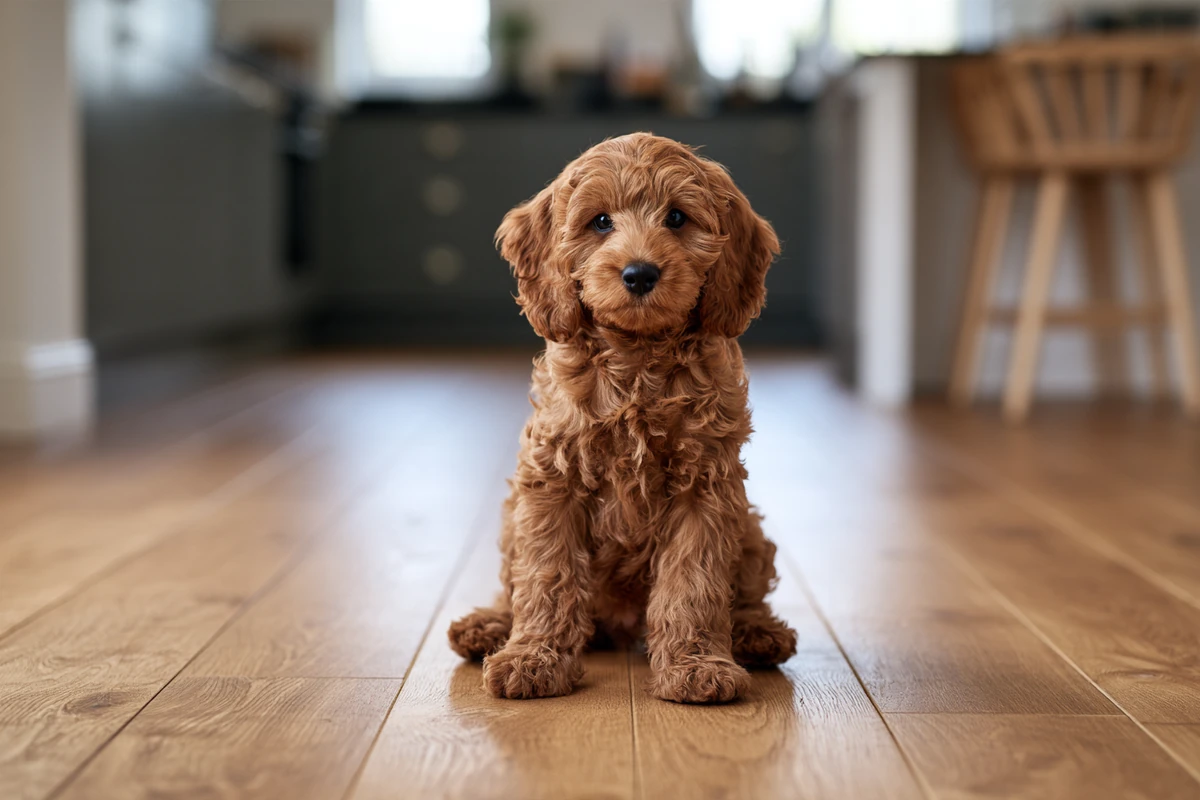
Advertise your Puggle stud dog
Offer your Puggle at stud to owners of health-tested bitches. Show his registration, health test results and achievements, and link the listing to your free breeder profile.
No breeders are listed here yet, so the first profiles get the page to themselves.
- Free basic profile: your breeder or company name, website, social media, location, breeds and industries.
- Litters and stud dogs advertised in their own sections, never mixed with puppies for sale.
- Premium showcase for your services and prices, previous customers, awards, video, gallery and health certificates, with your phone and email shown to buyers.
- Sponsored articles about your breed or industry, written and published by our team.
- Featured placement at the top of this page, labelled as sponsored.
Is it free to advertise here?
Yes. A breeder profile and your litter and stud dog adverts are free. Premium profiles, featured placement and sponsored articles are optional paid extras; see pricing.
Do I need a licence to advertise puppies?
In England you need a dog breeding licence from your council if you breed three or more litters in 12 months or breed and sell dogs as a business, and Wales, Scotland and Northern Ireland have their own schemes. Licensed breeders show their licence number and issuing council on every advert. Puppies must be at least eight weeks old before they go to new homes.
Is my listing already here?
We add licensed breeders from councils' public registers. Search for your kennel name; if it is listed you can claim it and edit everything.
Using a Puggle stud dog
A first-cross Puggle litter has a Pug or Beagle sire, and bitch owners will want to see his registration and the tests his own breed calls for. A Pug stud should hold a current Respiratory Function Grading result, renewed every two years while he is used for breeding, plus an eye examination within the 12 months before mating, a PDE result and ideally a BVA/KC hip score. The RFG Scheme needs an RKC registration certificate, and the RKC advises against breeding from a dog graded 3. A Beagle stud should have DNA results for Lafora's disease and NCCD, plus FVIID, IGS and MLS. The RKC inbreeding calculator can show a registered sire's own coefficient of inbreeding (COI), but the RKC holds no pedigree data for crossbreeds, so a Puggle stud's owner should keep careful mating records. Agree the fee and terms in writing, and list your dog on our Puggle stud dogs page.
Health tests for a Puggle stud
A Puggle has no RKC health tests of its own. The RKC's advice for anyone breeding a cross is to use the screening schemes and DNA tests recommended for both parent breeds. For the Pug, the Good Practice tests are a breathing assessment for brachycephalic obstructive airway syndrome (BOAS) and an eye examination; Best Practice adds a DNA test for Pug dog encephalitis (PDE), reported as a risk level rather than a definite result, and hip scoring. For the Beagle, DNA tests for Lafora's disease and neonatal cerebellar cortical degeneration (NCCD) are Good Practice, with three more DNA tests at Best Practice level. The RKC describes the Beagle conditions as autosomal recessive: a dog is affected only if it inherits a faulty copy from each parent, while a carrier shows no signs but can pass the variant on. This matters most when Puggles are bred together or back to a parent breed. The Respiratory Function Grading Scheme covers a list of breeds and needs the dog's RKC registration certificate, so it applies to the Pug parent rather than the puppies; the BVA eye scheme is open to crossbreeds. On Breed Watch the Pug is in Category 3 and the Beagle in Category 1. No test can guarantee a puppy's future health.
- Pug parent: RKC/University of Cambridge Respiratory Function Grading (RFG) Scheme for BOAS (Good Practice)
- Pug parent: BVA/KC/ISDS Eye Scheme (Good Practice)
- Pug parent: DNA test for Pug dog encephalitis (PDE), a risk test (Best Practice)
- Pug parent: BVA/KC Hip Dysplasia Scheme (Best Practice)
- Beagle parent: DNA test for Lafora's disease (Good Practice)
- Beagle parent: DNA test for neonatal cerebellar cortical degeneration (NCCD) (Good Practice)
- Beagle parent: DNA test for Factor VII deficiency (FVIID) (Best Practice)
- Beagle parent: DNA test for Imerslund-Gräsbeck syndrome (IGS-2) (Best Practice)
- Beagle parent: DNA test for Musladin-Lueke syndrome (MLS) (Best Practice)
- Optional for the Pug parent: Pug Breed Council 5 Star Health Scheme, which adds a visual health assessment, patella checks and hemivertebrae X-rays
- Breed Watch: Pug Category 3 (visible concerns tied to exaggerated physical features), Beagle Category 1; the Puggle itself is not categorised
More for Puggle owners and breeders
Official sources
- Pug - The Royal Kennel Club
- Beagle - The Royal Kennel Club
- Pug breed standard - The Royal Kennel Club
- Beagle breed standard - The Royal Kennel Club
- What is a crossbreed dog? - The Royal Kennel Club
- How to breed a crossbred dog - The Royal Kennel Club
- Activity Register - The Royal Kennel Club
- Respiratory Function Grading Scheme - The Royal Kennel Club
- Risk test (DNA based) - Pug dog encephalitis - The Royal Kennel Club
- DNA test - Lafora's disease - The Royal Kennel Club
- DNA test - NCCD - The Royal Kennel Club
- Breed Watch: Pug - Category 3 - The Royal Kennel Club
- Breed Watch Category 1 - The Royal Kennel Club
- BVA/KC/ISDS Eye Scheme - British Veterinary Association
- BVA/KC Hip Dysplasia Scheme - British Veterinary Association
- Pug 5 Star Health Scheme - Pug Breed Council
- Health Test Results Finder - The Royal Kennel Club
- Dog breeding licence (England) - GOV.UK