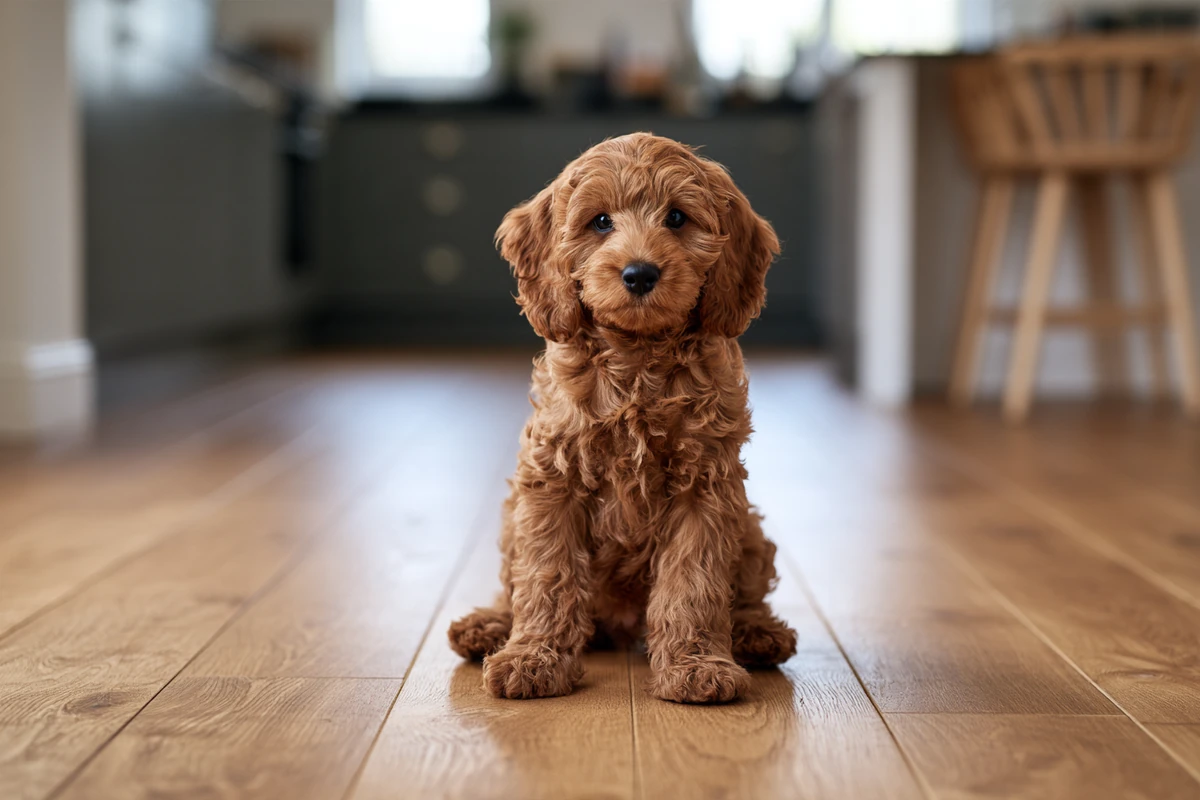
Advertise your Cavachon puppies, litters and stud dogs
Do you breed Cavachons? Caninebreeder.co.uk is an independent UK directory where you can list your kennel, advertise Cavachon puppies for sale and promote your Cavachon stud dog. Health records matter to buyers, so your listing can show the Cavalier parent's heart certificate, CC/DE and EF DNA results and eye certificates, and say whether the litter is a first cross, a backcross or second generation. Add planned litters, take enquiries directly and help families find a Cavalier x Bichon breeder who health tests.
No breeders are listed here yet, so the first profiles get the page to themselves.
- Free basic profile: your breeder or company name, website, social media, location, breeds and industries.
- Litters and stud dogs advertised in their own sections, never mixed with puppies for sale.
- Premium showcase for your services and prices, previous customers, awards, video, gallery and health certificates, with your phone and email shown to buyers.
- Sponsored articles about your breed or industry, written and published by our team.
- Featured placement at the top of this page, labelled as sponsored.
Is it free to advertise here?
Yes. A breeder profile and your litter and stud dog adverts are free. Premium profiles, featured placement and sponsored articles are optional paid extras; see pricing.
Do I need a licence to advertise puppies?
In England you need a dog breeding licence from your council if you breed three or more litters in 12 months or breed and sell dogs as a business, and Wales, Scotland and Northern Ireland have their own schemes. Licensed breeders show their licence number and issuing council on every advert. Puppies must be at least eight weeks old before they go to new homes.
Is my listing already here?
We add licensed breeders from councils' public registers. Search for your kennel name; if it is listed you can claim it and edit everything.
About the Cavachon
The Cavachon, sometimes spelt Cavashon, is a cross between a Cavalier King Charles Spaniel and a Bichon Frise. It is a crossbreed, not a breed recognised by the Royal Kennel Club (RKC), so there is no breed standard for it and it cannot be entered on the RKC Breed Register. Crossbreeds can join the RKC Activity Register for events such as agility. Its two parent breeds, both small companion dogs in the RKC's Toy group, give the clearest picture.
Where the parents come from. Toy spaniels became well established at the courts of Charles I and Charles II. According to the RKC, Crufts offered special prizes between 1926 and 1930 for Blenheim spaniels of the older, longer-muzzled type, and the Cavalier was recognised as a separate breed in 1945. The Bichon Frise belongs to a family of white dogs from Mediterranean countries. The RKC says the breed was developed in France, but it is thought to have been on Tenerife by the 1300s before traders brought it to mainland Europe, where it found favour at royal courts.
Size. The Cavalier standard gives a weight of 5.4–8.2 kg, and the Bichon standard an ideal height of 23–28 cm at the withers. The RKC notes that parents of similar size tend to produce puppies of roughly the same size, so a Cavachon is usually small.
Coat and grooming. The Cavalier has a long, silky coat that the RKC lists as shedding, with grooming more than once a week. The Bichon has a fine, curly white coat, listed as non-shedding and needing grooming every day. A Cavachon may inherit either coat or a mixture, and colour varies too, so do not count on a low-shedding puppy.
Exercise. The RKC suggests up to an hour a day for the Cavalier and up to 30 minutes for the Bichon, and rates both breeds as suitable for a flat with a small or medium garden.
Temperament and suitability. The Cavalier standard describes a sporting, affectionate and fearless little spaniel that is friendly and not nervous, and the Bichon standard a happy, lively dog that is friendly and outgoing. The RKC says Toy breeds should be friendly and enjoy attention, but also that a crossbred puppy's character depends on how its parents' genes combine, and on socialisation and training. The RKC gives both parent breeds a lifespan of over 12 years.
Cavachon health tests
A Cavachon can inherit health problems from either side, and the RKC advises anyone breeding a crossbreed to use the tests recommended for both parent breeds. For the Cavalier King Charles Spaniel, the RKC's Good Practice list is DNA tests for curly coat/dry eye and episodic falling, plus heart screening for mitral valve disease (MVD), which the RKC says starts earlier in Cavaliers than in dogs generally. The heart scheme uses approved cardiologists, as most local vets cannot assess dogs for it; dogs can be assessed from 18 months of age, and results are graded green, amber or red for breeding. Best Practice adds an eye examination, which the RKC also lists as Good Practice for the Bichon Frise. The BVA eye scheme accepts crossbreeds as well as pedigrees.
The RKC describes curly coat/dry eye and episodic falling as recessive: a puppy is affected only if it inherits a faulty copy from each parent. When two Cavachons are mated, both should be DNA tested, as either could be a carrier.
The RKC also highlights syringomyelia in Cavaliers, which is diagnosed by MRI; the BVA's CM/SM scheme accepts any dog, crossbreeds included. The Cavalier is in Breed Watch Category 2 and the Bichon in Category 1; the Cavachon has no category.
- Cavalier, Good Practice: DNA test for Curly coat/dry eye (CC/DE)
- Cavalier, Good Practice: DNA test for Episodic falling (EF)
- Cavalier, Good Practice: heart screening for mitral valve disease (MVD) using the Kennel Club heart scheme for Cavalier King Charles Spaniels
- Cavalier, Best Practice: BVA/KC/ISDS Eye Scheme
- Bichon Frise, Good Practice: BVA/KC/ISDS Eye Scheme
- Also available for Cavalier lines, though not on the RKC's Good or Best Practice lists: MRI screening under the BVA Chiari malformation/syringomyelia (CM/SM) scheme
Choosing a Cavachon breeder
A good Cavachon breeder starts with the Cavalier parent's heart. Ask to see a current certificate from the Kennel Club heart scheme, which is graded by approved cardiologists, along with DNA results for curly coat/dry eye and episodic falling and an eye certificate. The Bichon parent should have a BVA/KC/ISDS eye certificate. Results for dogs on the RKC Breed Register or Activity Register can be looked up on the RKC Health Test Results Finder. If both parents are Cavachons, ask how their hearts were checked, whether both were DNA tested and how the breeder avoided pairing relatives; the RKC's pedigree data do not cover crossbreeds, so breeders need to keep their own records.
Expect to see the mother with her puppies, and for puppies to be at least eight weeks old and microchipped before they go home. In England, anyone breeding three or more litters in 12 months and selling any of the puppies needs a licence from the local council, and the licence number must appear in adverts.
- Can I see the Cavalier parent's heart certificate, and how old was the dog when tested?
- What are the CC/DE and EF results, and has the other parent been tested?
- Do both parents have current eye certificates?
- Is this a first cross, a backcross or two Cavachons bred together?
- What coats and grooming needs have your earlier litters had?
Cavachon questions
Is the Cavachon a Royal Kennel Club recognised breed?
No. The Cavachon is a crossbreed, so there is no RKC breed standard and it cannot be registered on the Breed Register or shown in breed classes. It can be registered on the RKC Activity Register, which is open to pedigree and crossbred dogs and allows entry to agility, flyball, heelwork to music, obedience, rally and working trials.
How big does a Cavachon get?
There is no standard, so size follows the parents. The RKC standard gives the Cavalier a weight of 5.4u20138.2 kg and the Bichon Frise an ideal height of 23u201328 cm at the withers. The RKC says parents of similar size tend to produce puppies of roughly the same size, so most Cavachons are small dogs, but ask to see both parents.
Does a Cavachon shed?
It varies. The RKC lists the Cavalier as a shedding breed and the Bichon Frise as non-shedding, and it warns that a crossbreed's coat texture is hard to predict. Plan for regular grooming whichever coat your puppy has, and do not rely on a promise that it will not shed.
What health tests should a Cavachon's parents have?
The RKC advises crossbreed breeders to use the tests for both parent breeds. For the Cavalier, that means DNA tests for curly coat/dry eye (CC/DE) and episodic falling (EF), heart screening under the Kennel Club heart scheme and an eye examination. For the Bichon Frise, it means an eye examination under the BVA/KC/ISDS Eye Scheme.
More for Cavachon owners and breeders
Official sources
- Cavalier King Charles Spaniel u2013 Royal Kennel Club breed information
- Cavalier King Charles Spaniel breed standard u2013 Royal Kennel Club
- Bichon Frise u2013 Royal Kennel Club breed information
- Bichon Frise breed standard u2013 Royal Kennel Club
- How to breed a crossbred dog u2013 Royal Kennel Club
- Activity Register u2013 Royal Kennel Club
- Breed Watch: Cavalier King Charles Spaniel, Category 2 u2013 Royal Kennel Club
- Breed Watch Category 1 u2013 Royal Kennel Club
- Heart Scheme for Cavalier King Charles Spaniels u2013 Royal Kennel Club
- DNA test for curly coat/dry eye (CC/DE) u2013 Royal Kennel Club
- DNA test for episodic falling (EF) u2013 Royal Kennel Club
- Cavalier King Charles Spaniel syringomyelia project u2013 Royal Kennel Club
- Health Test Results Finder u2013 Royal Kennel Club
- Inbreeding coefficient calculators u2013 Royal Kennel Club
- BVA/KC/ISDS Eye Scheme u2013 British Veterinary Association
- Chiari malformation/syringomyelia (CM/SM) scheme u2013 British Veterinary Association
- Canine Health Schemes u2013 British Veterinary Association
- The Cavalier King Charles Spaniel Club
- Dog breeding licence (England) u2013 GOV.UK
- Get your dog or cat microchipped u2013 GOV.UK
- Animal Welfare (Licensing of Activities Involving Animals) (England) Regulations 2018, Schedule 6