Advertise your Foxhound puppies, litters and stud dogs
Do you breed Foxhounds? RKC-registered litters are scarce, so buyers often struggle to find a breeder at all. List your kennel on caninebreeder.co.uk and a free basic profile will show your kennel name, website, social media, location and categories. When a litter is planned you can advertise Foxhound puppies for sale, promote your Foxhound stud dog and explain how you protect genetic diversity in a breed on the RKC's vulnerable native breeds list. Add your listing and help careful owners find you.
No breeders are listed here yet, so the first profiles get the page to themselves.
- Free basic profile: your breeder or company name, website, social media, location, breeds and industries.
- Litters and stud dogs advertised in their own sections, never mixed with puppies for sale.
- Premium showcase for your services and prices, previous customers, awards, video, gallery and health certificates, with your phone and email shown to buyers.
- Sponsored articles about your breed or industry, written and published by our team.
- Featured placement at the top of this page, labelled as sponsored.
Is it free to advertise here?
Yes. A breeder profile and your litter and stud dog adverts are free. Premium profiles, featured placement and sponsored articles are optional paid extras; see pricing.
Do I need a licence to advertise puppies?
In England you need a dog breeding licence from your council if you breed three or more litters in 12 months or breed and sell dogs as a business, and Wales, Scotland and Northern Ireland have their own schemes. Licensed breeders show their licence number and issuing council on every advert. Puppies must be at least eight weeks old before they go to new homes.
Is my listing already here?
We add licensed breeders from councils' public registers. Search for your kennel name; if it is listed you can claim it and edit everything.
About the Foxhound
The Foxhound, often called the English Foxhound, is a traditional British pack hound. According to the Royal Kennel Club, it has always worked as part of a pack, and many hunts bred their own easily recognised type of hound. The RKC also notes that hounds from many packs compete at the annual Festival of Hunting at Peterborough. It is in the RKC's Hound group and has appeared in UK show rings only in fairly recent times, although it has a longer show history in the USA and Australia. In England and Wales, hunting wild mammals with dogs is an offence under the Hunting Act 2004 unless the hunting is exempt under the Act.
The RKC includes the Foxhound on its list of vulnerable native breeds, which covers British and Irish breeds with fewer than 300 registrations a year, and the breed takes part in its vulnerable breed competitions. A footnote explains that the Foxhound is numerous outside the RKC, either because the RKC recognised it later or because most hounds are recorded on a separate specialist register. RKC registrations are very low: the published yearly figures for 2016 to 2025 never go above six.
Size and build
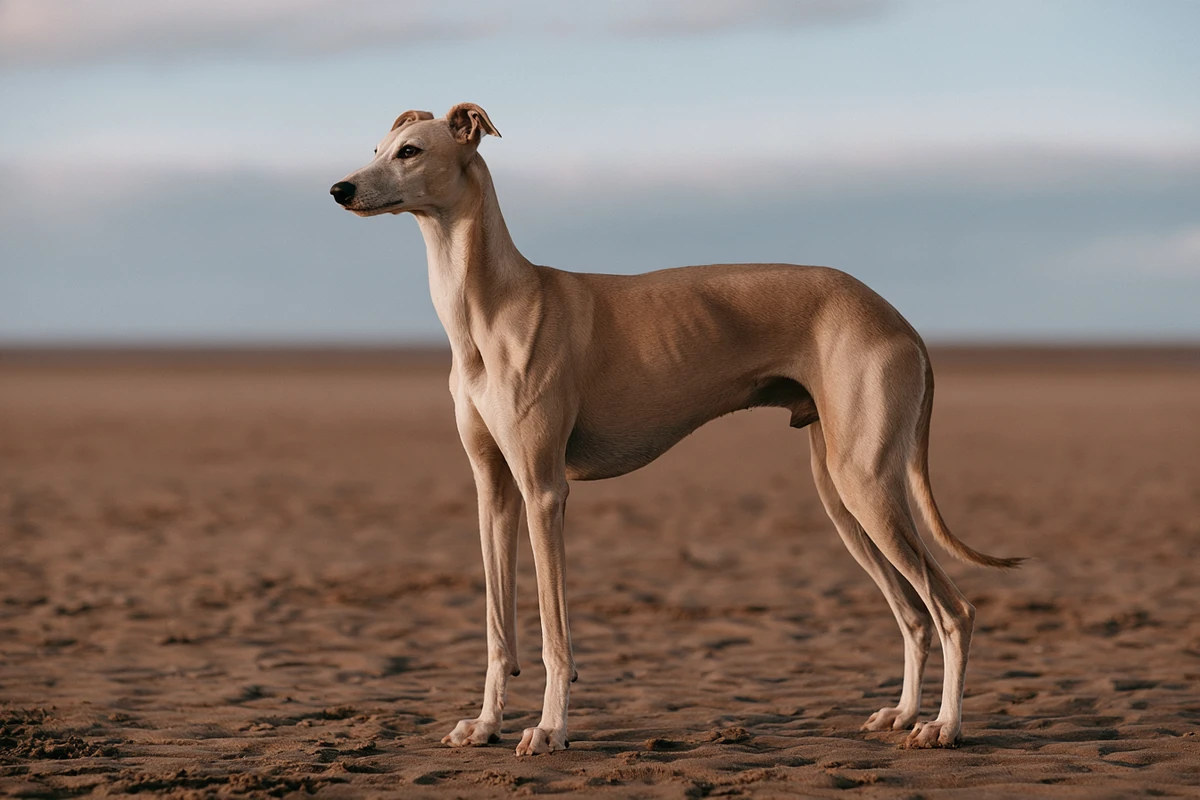
This is a large, well-balanced and powerful hound with a long, slightly arched neck, a deep chest, a broad level back and muscular hindquarters. The breed standard gives a height of about 58 to 64 cm (23 to 25 inches) and asks for free, tireless movement with the ability to gallop.
Coat and grooming
The coat is short, dense and weatherproof. The RKC suggests grooming once a week, and the breed does shed. The standard accepts any recognised hound colour and markings. The RKC's list of breed standard colours includes tricolour, black and white, lemon and white, lemon pied, red and white, tan and white, blue white and tan, badger pied, hare pied and white, most of them also in a mottle form.
Exercise
The RKC lists the Foxhound as needing more than two hours of exercise a day and suggests a large house with a large garden in the country.
Temperament and suitability
The breed standard describes the Foxhound as friendly and not aggressive, with stamina, endurance and a natural ability to hunt. Together with the RKC's exercise and space guidance, that suits an active household with plenty of room. The RKC gives a typical lifespan of over 12 years.
Foxhound health tests
The Royal Kennel Club does not list any breed-specific DNA tests or screening schemes for the Foxhound. Its one Good Practice recommendation for the breed is to prioritise genetic diversity when planning a litter. That advice matters in a breed with only a handful of RKC registrations each year, because a small registered population can lose variety quickly if the same few dogs are bred from again and again.
In practice this means checking the coefficient of inbreeding (COI) of a planned mating with the RKC's inbreeding coefficient calculator, aiming for a figure no higher than the breed's yearly average, and lower where possible, and not relying heavily on one popular sire. The COI is the likelihood that a puppy receives two copies of the same gene from an ancestor that appears on both sides of its pedigree, so a lower figure means less inbreeding.
The Foxhound is in Breed Watch Category 1: show judges have not been asked to watch for any extra points of concern in this breed beyond the breed standard itself. Buyers can look up any results recorded for a registered dog on the RKC Health Test Results Finder. No test or scheme can guarantee that an individual puppy will stay healthy.
Health tests and schemes for the Foxhound (RKC):
- No breed-specific DNA tests or BVA/KC screening schemes are listed by the RKC at present
- Prioritising genetic diversity, for example by checking the coefficient of inbreeding of a planned mating (RKC Good Practice)
- Breed Watch: Category 1
Choosing a Foxhound breeder
Foxhound puppies from RKC-registered litters are rare. When we checked the RKC's Find a Puppy service in late September 2026 it had no Foxhound litters listed, so be ready to wait and to travel. A good breeder will be open about the parents' background, including any show or working history, and will explain how the mating was chosen and its coefficient of inbreeding. As the RKC lists no DNA tests for the breed, ask what general health checks the parents have had and how long related dogs have lived.
Expect to see the puppies with their mother. UK law requires a puppy to be microchipped, with its details recorded on a database, by eight weeks old, so ask for the microchip details and any registration papers. In England, anyone who breeds three or more litters in 12 months and sells any of the puppies, or who runs a business breeding and advertising dogs for sale, needs a council licence and must show the licence number in adverts. A caring breeder will also ask about your space, fencing and daily routine, given the RKC's advice of more than two hours' exercise a day.
Questions to ask a Foxhound breeder:
- Are both parents registered with the Royal Kennel Club, and what is the coefficient of inbreeding for this litter?
- Have any health problems appeared in the parents or their close relatives?
- Can I meet the mother, and the father if he is available?
- How have the puppies been socialised with people, other dogs and household noise?
- Do you hold a dog breeding licence, and will you help if the dog ever needs a new home?
Foxhound questions
Is the Foxhound a vulnerable native breed?
The Royal Kennel Club includes the Foxhound on its list of vulnerable native breeds, which covers British and Irish breeds with fewer than 300 RKC registrations a year. A footnote explains that the breed is numerous outside the RKC, either because of later recognition or because most hounds are recorded on a separate specialist register, so the low figure reflects the RKC register rather than the number of Foxhounds overall.
How much exercise does a Foxhound need?
The RKC puts the Foxhound's needs at more than two hours of exercise a day and suggests a large house with a large garden in the country. The breed standard lists stamina and endurance among its characteristics, so it is not a breed for a sedentary home.
What health tests should a Foxhound's parents have?
The RKC does not list any DNA tests or screening schemes for the Foxhound. Its Good Practice advice is to prioritise genetic diversity, for example by checking the coefficient of inbreeding of a planned mating with the RKC calculator and aiming for a figure at or below the breed's annual average. The breed is in Breed Watch Category 1.
How big is a Foxhound?
The breed standard gives a height of about 58 to 64 cm (23 to 25 inches) and describes a powerful, well-balanced hound. The RKC classes it as a large breed with a typical lifespan of over 12 years.
More for Foxhound owners and breeders
Official sources
- Foxhound breed information - Royal Kennel Club
- Foxhound breed standard - Royal Kennel Club
- Vulnerable native breeds and At Watch lists - Royal Kennel Club
- Genetic diversity: managing and maintaining - Royal Kennel Club
- Breed Watch Category 1 - Royal Kennel Club
- Inbreeding coefficient calculator - Royal Kennel Club
- Health Test Results Finder - Royal Kennel Club
- Find a Foxhound puppy - Royal Kennel Club
- Hunting Act 2004 - legislation.gov.uk
- Animal Welfare (Licensing of Activities Involving Animals) (England) Regulations 2018, Schedule 1
- Dog breeding licence (England) - GOV.UK
- Get your dog or cat microchipped - GOV.UK