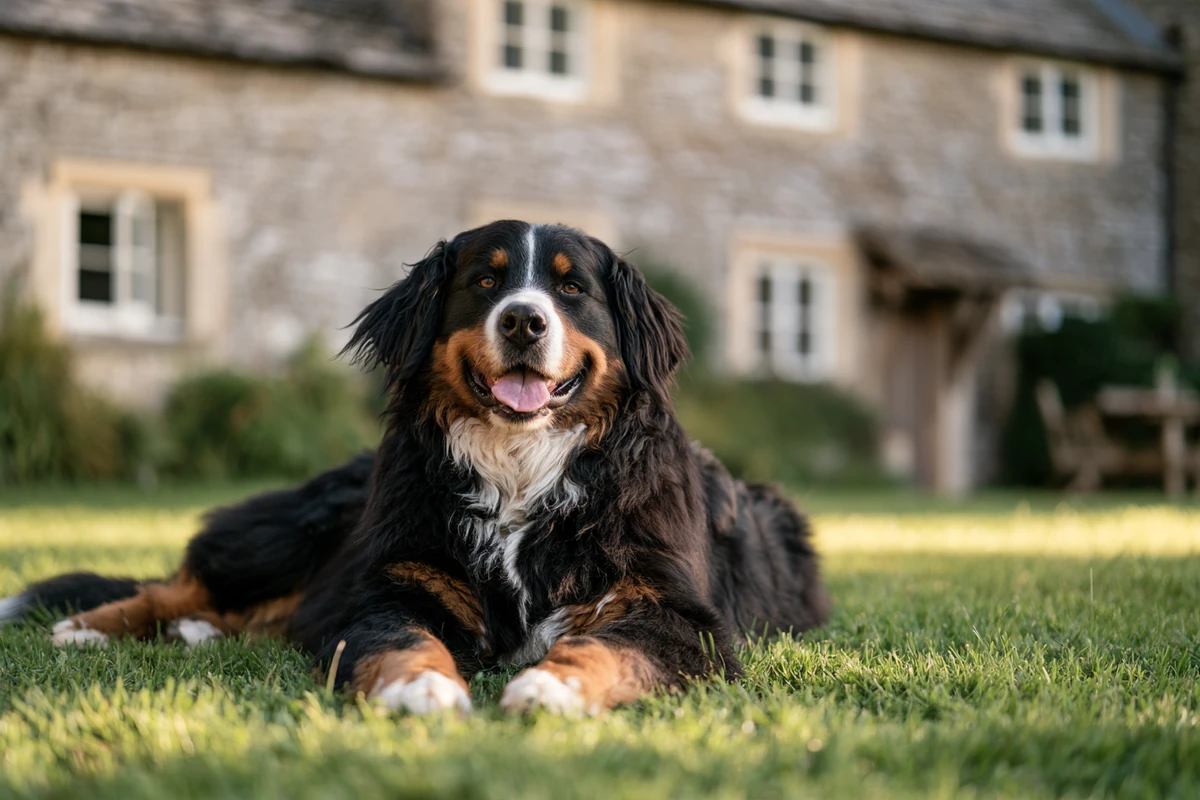
Advertise your Great Dane puppies, litters and stud dogs
Breed Great Danes? List your kennel
Do you breed Great Danes in the UK? List your kennel on caninebreeder.co.uk so buyers searching for Great Dane puppies for sale, and owners looking for a health-tested Great Dane stud dog, can find you. You can advertise planned litters, puppies and stud dogs, and show your hip, elbow, eye and IMGD results. A basic listing shows your kennel name, location, website, social media and categories, and paid plans unlock more showcase features. Add your listing or see pricing.
No breeders are listed here yet, so the first profiles get the page to themselves.
- Free basic profile: your breeder or company name, website, social media, location, breeds and industries.
- Litters and stud dogs advertised in their own sections, never mixed with puppies for sale.
- Premium showcase for your services and prices, previous customers, awards, video, gallery and health certificates, with your phone and email shown to buyers.
- Sponsored articles about your breed or industry, written and published by our team.
- Featured placement at the top of this page, labelled as sponsored.
Is it free to advertise here?
Yes. A breeder profile and your litter and stud dog adverts are free. Premium profiles, featured placement and sponsored articles are optional paid extras; see pricing.
Do I need a licence to advertise puppies?
In England you need a dog breeding licence from your council if you breed three or more litters in 12 months or breed and sell dogs as a business, and Wales, Scotland and Northern Ireland have their own schemes. Licensed breeders show their licence number and issuing council on every advert. Puppies must be at least eight weeks old before they go to new homes.
Is my listing already here?
We add licensed breeders from councils' public registers. Search for your kennel name; if it is listed you can claim it and edit everything.
About the Great Dane
About the Great Dane
Despite its name, the Great Dane comes from Germany, where, according to the Royal Kennel Club breed page, its heavier ancestors hunted wild boar in packs. The breed has since become taller and more elegant, and the RKC now places it in the Working Group while noting that some enthusiasts still see it as a sighthound. Registrations have fallen in recent years: RKC figures show 519 in 2025, against 1,203 in 2021 and 909 in 2016.
Size and build
The RKC rates the Great Dane as extra large. The breed standard sets minimums rather than maximums for adults over 18 months: 76 cm (30 in) and 54 kg (120 lb) for dogs, 71 cm (28 in) and 46 kg (100 lb) for bitches. It asks for a very muscular but elegant dog with a deep chest, a long head, high-set folded ears and lithe, springy movement.
Coat and grooming
The short, dense coat needs grooming about once a week and it sheds. Breed standard colours are black, blue, brindle, fawn, harlequin and mantle. Merle can be registered only as a non-breed-standard colour; a 2021 poll of the breed clubs did not reach the majority needed to ask the RKC to add it to the standard, as the Great Dane Club reports. The RKC's Colour Watch puts the breed in Category 2, meaning more than 2% and up to 10% of registrations are in non-breed-standard colours.
Exercise and space
The RKC suggests more than two hours of exercise a day, a large house and a large garden, in town or country. Growth needs care: the Great Dane Breed Council notes that the neck vertebrae are vulnerable during rapid growth and lists overfeeding and over-supplementation, alongside inheritance, as factors in Wobbler syndrome. The Great Dane Club's bloat guidance advises feeding little and often and avoiding hard exercise for one to two hours around meals.
Temperament and suitability
The standard asks for a dog that is kindly without nervousness, friendly and outgoing, and the RKC describes the breed as a loyal family dog. The RKC gives a lifespan of under 10 years. In the Breed Council's 2021 health survey a noticeable number of owners reported separation anxiety, nervousness or aggression towards other dogs, and the breed health co-ordinator stressed the importance of socialisation. See our guide to family pet dogs.
Great Dane health tests
Great Dane health and testing
The Great Dane is in Breed Watch Category 2. The RKC asks judges to look out for eyelids that turn in or out, unsound movement, poor hind conformation or rear movement, and nervous temperament.
The RKC Health Standard lists four Best Practice tests for breeding stock. The IMGD DNA test screens for inherited myopathy of Great Danes, a progressive muscle disease that usually appears between six and twelve months; it is autosomal recessive, so a puppy is affected only if both parents pass on the faulty gene. The RKC sells a breed-specific DNA package covering IMGD. Hips and elbows are X-rayed from one year old: the BVA hip score runs from 0 to 106, lower being better, and the elbow scheme recommends breeding only from grade 0. Eyes are examined under the BVA/KC/ISDS Eye Scheme, and the RKC advises doing this within the 12 months before a mating.
The Health Standard also lists heart testing as the breed's club health scheme, linking to the Breed Council's dilated cardiomyopathy research page. DCM usually develops in adulthood, and the Breed Council warns that a normal research scan does not show a dog is clear.
What the RKC lists for this breed
- DNA test for inherited myopathy of Great Danes (IMGD) (Best Practice)
- BVA/KC Hip Dysplasia Scheme (Best Practice)
- BVA/KC Elbow Dysplasia Scheme (Best Practice)
- BVA/KC/ISDS Eye Scheme (Best Practice)
- Breed club health scheme: heart testing (Great Dane Breed Council)
- Breed Watch: Category 2
- Additional breed-specific breeding restrictions: none
Choosing a Great Dane breeder
Choosing a Great Dane breeder
A careful Great Dane breeder will show you results for all four RKC Best Practice tests on both parents, and you can check them on the RKC Health Test Results Finder. Look for hip scores around or below the breed median, elbow grade 0, an eye certificate from within 12 months of the mating and an IMGD result that rules out an affected puppy. Because heart disease and bloat both appear in the breed, a good breeder will talk openly about the ages and causes of death of older relatives, and will not describe a research heart scan as a clearance. Expect guidance on feeding and limiting exercise while the puppy grows, and frank talk about the car, house and vet bills a giant dog needs. Meet the mother: the standard asks for a kindly, friendly and outgoing dog, and a nervous temperament is a Breed Watch point. In England, licensed breeders may not sell puppies under eight weeks old or show them without their mother (Schedule 6), and anyone breeding three or more litters in 12 months and selling any of the puppies, or running a breeding business, needs a council licence.
Questions to ask
- Can I see the hip scores, elbow grades, eye certificates and IMGD results for both parents?
- Have any close relatives had heart disease, bloat or bone cancer, and at what age?
- How should I feed and exercise the puppy during its growth period?
- What colour will the puppy be registered as, and is it a breed standard colour?
- Will you take the dog back at any age if I cannot keep it?
Great Dane questions
How big does a Great Dane get?
The RKC breed standard sets minimums for adults over 18 months: 76 cm (30 in) and 54 kg (120 lb) for dogs, and 71 cm (28 in) and 46 kg (100 lb) for bitches. The RKC rates the breed as extra large and suggests a large house and garden. The standard describes the ideal, so an individual dog may be larger or smaller.
How long do Great Danes live?
The RKC gives a lifespan of under 10 years. Breed clubs highlight heart disease (dilated cardiomyopathy), bloat and bone cancer as concerns, so ask breeders about the health and ages of the parents' older relatives.
What health tests should a Great Dane's parents have?
The RKC lists four Best Practice tests: the IMGD DNA test for inherited myopathy of Great Danes, the BVA/KC Hip Dysplasia Scheme, the BVA/KC Elbow Dysplasia Scheme and the BVA/KC/ISDS Eye Scheme. The Health Standard also lists heart testing as a breed club health scheme. Results for RKC-registered dogs can be checked on the RKC Health Test Results Finder.
Is merle an accepted Great Dane colour?
No. The RKC lists merle as a non-breed-standard colour: merle puppies can be registered but the colour is not accepted in the breed standard. The breed standard colours are black, blue, brindle, fawn, harlequin and mantle.
More for Great Dane owners and breeders
Official sources
- Great Dane breed page - The Royal Kennel Club
- Great Dane breed standard - The Royal Kennel Club
- Great Dane Breed Watch Category 2 - The Royal Kennel Club
- The Royal Kennel Club Health Standard
- DNA test - IMGD (inherited myopathy of Great Danes) - The Royal Kennel Club
- Great Dane breed-specific DNA testing package - The Royal Kennel Club
- BVA Hip Dysplasia Scheme
- BVA Elbow Dysplasia Scheme
- BVA Eye Scheme
- Health Test Results Finder - The Royal Kennel Club
- Inbreeding coefficient calculator - The Royal Kennel Club
- Dilated cardiomyopathy research - Great Dane Breed Council
- Member clubs - Great Dane Breed Council
- Great Dane Breeders' and Owners' Association
- Dog breeding licence (England) - GOV.UK
- Animal Welfare (Licensing of Activities Involving Animals) (England) Regulations 2018, Schedule 6