
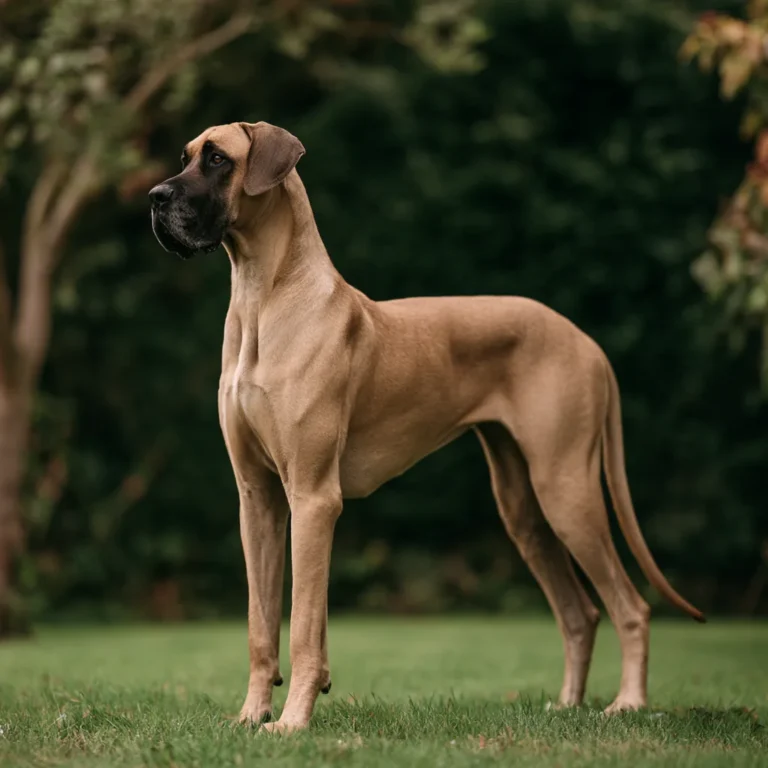
No Great Dane stud dogs are listed right now
3 breeders list the Great Dane. Ask them if they have a stud dog.
Great Dane breeders
- Great DaneSpecialities: not listed yet
Lisvane Great Danes
Cardiff - Great DaneSpecialities: not listed yetLicensed breeder1-star licence
Yangra Great Danes Ltd
Wakefield, West Yorkshire - Great DaneSpecialities: not listed yetLicensed breeder
Primus Great Danes
Stockport, Greater Manchester


Do you breed the Great Dane? Add a stud dog free.
Using a Great Dane stud dog
Great Dane stud dogs
Before using a Great Dane at stud, check that he has results for all four RKC Best Practice tests: hip and elbow X-rays scored under the BVA/KC schemes, an eye certificate from within 12 months of the mating and an IMGD result. Because IMGD is recessive, a carrier should be mated only to a clear partner. Ask about heart health in his older relatives, remembering that DCM appears late and that research scans are not clearances. Confirm he is RKC registered, then put both dogs through the RKC inbreeding coefficient calculator, still called Mate Select on some RKC forms, to compare the litter's COI with the breed average. The Breed Council's colour-breeding guidance, marked as being updated since 2021, sets out which colour lines to keep apart. The RKC keeps no stud register and advises agreeing the fee and terms in a signed written contract before the mating. See our guide to health-tested breeding stock.
Health tests for a Great Dane stud
Great Dane health and testing
The Great Dane is in Breed Watch Category 2. The RKC asks judges to look out for eyelids that turn in or out, unsound movement, poor hind conformation or rear movement, and nervous temperament.
The RKC Health Standard lists four Best Practice tests for breeding stock. The IMGD DNA test screens for inherited myopathy of Great Danes, a progressive muscle disease that usually appears between six and twelve months; it is autosomal recessive, so a puppy is affected only if both parents pass on the faulty gene. The RKC sells a breed-specific DNA package covering IMGD. Hips and elbows are X-rayed from one year old: the BVA hip score runs from 0 to 106, lower being better, and the elbow scheme recommends breeding only from grade 0. Eyes are examined under the BVA/KC/ISDS Eye Scheme, and the RKC advises doing this within the 12 months before a mating.
The Health Standard also lists heart testing as the breed's club health scheme, linking to the Breed Council's dilated cardiomyopathy research page. DCM usually develops in adulthood, and the Breed Council warns that a normal research scan does not show a dog is clear.
What the RKC lists for this breed
- DNA test for inherited myopathy of Great Danes (IMGD) (Best Practice)
- BVA/KC Hip Dysplasia Scheme (Best Practice)
- BVA/KC Elbow Dysplasia Scheme (Best Practice)
- BVA/KC/ISDS Eye Scheme (Best Practice)
- Breed club health scheme: heart testing (Great Dane Breed Council)
- Breed Watch: Category 2
- Additional breed-specific breeding restrictions: none
More for Great Dane owners and breeders
Official sources
- Great Dane breed page - The Royal Kennel Club
- Great Dane breed standard - The Royal Kennel Club
- Great Dane Breed Watch Category 2 - The Royal Kennel Club
- The Royal Kennel Club Health Standard
- DNA test - IMGD (inherited myopathy of Great Danes) - The Royal Kennel Club
- Great Dane breed-specific DNA testing package - The Royal Kennel Club
- BVA Hip Dysplasia Scheme
- BVA Elbow Dysplasia Scheme
- BVA Eye Scheme
- Health Test Results Finder - The Royal Kennel Club
- Inbreeding coefficient calculator - The Royal Kennel Club
- Dilated cardiomyopathy research - Great Dane Breed Council
- Member clubs - Great Dane Breed Council
- Great Dane Breeders' and Owners' Association
- Dog breeding licence (England) - GOV.UK
- Animal Welfare (Licensing of Activities Involving Animals) (England) Regulations 2018, Schedule 6