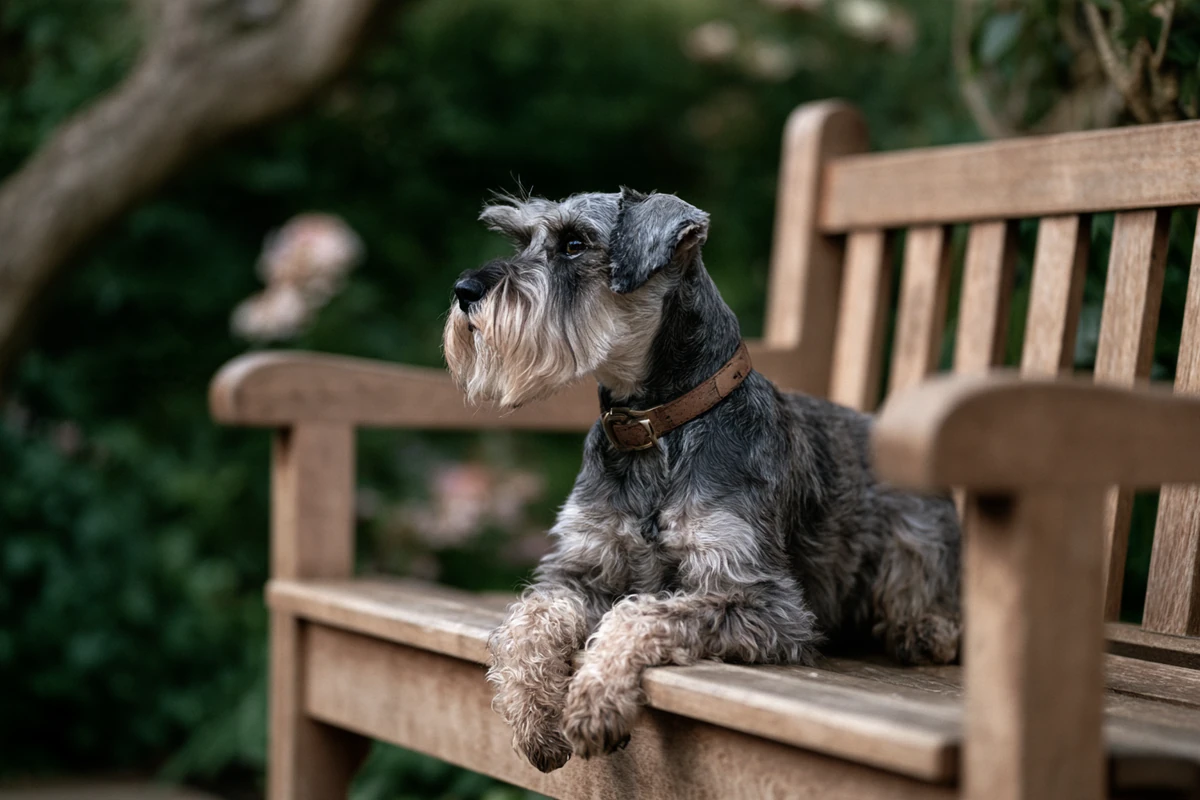
Advertise your Lhasa Apso puppies, litters and stud dogs
Do you breed Lhasa Apsos? List your kennel on caninebreeder.co.uk and reach buyers looking for a well-bred Tibetan companion. A free basic profile shows your kennel name, website, social media, location and categories. When a litter arrives you can advertise Lhasa Apso puppies for sale, promote your Lhasa Apso stud dog, and set out the PRA4 and eye results that careful buyers ask for. Add your listing today and connect with Lhasa owners across the UK.
No breeders are listed here yet, so the first profiles get the page to themselves.
- Free basic profile: your breeder or company name, website, social media, location, breeds and industries.
- Litters and stud dogs advertised in their own sections, never mixed with puppies for sale.
- Premium showcase for your services and prices, previous customers, awards, video, gallery and health certificates, with your phone and email shown to buyers.
- Sponsored articles about your breed or industry, written and published by our team.
- Featured placement at the top of this page, labelled as sponsored.
Is it free to advertise here?
Yes. A breeder profile and your litter and stud dog adverts are free. Premium profiles, featured placement and sponsored articles are optional paid extras; see pricing.
Do I need a licence to advertise puppies?
In England you need a dog breeding licence from your council if you breed three or more litters in 12 months or breed and sell dogs as a business, and Wales, Scotland and Northern Ireland have their own schemes. Licensed breeders show their licence number and issuing council on every advert. Puppies must be at least eight weeks old before they go to new homes.
Is my listing already here?
We add licensed breeders from councils' public registers. Search for your kennel name; if it is listed you can claim it and edit everything.
About the Lhasa Apso
The Lhasa Apso is a small, long-coated dog from Tibet, shown in the Utility group of the Royal Kennel Club (RKC). The RKC counts it among the earliest companion breeds. For centuries it lived with monks in isolated Tibetan monasteries as a companion and watchdog, and it was believed to bring its owner good fortune. Closely guarded in Tibet, it did not reach other countries until the late 19th century. The Kennel Club (now the RKC) recognised it in 1908, grouped with the Tibetan Terrier under the name Lhasa Terrier, and separated the two breeds in 1934. The North of England Lhasa Apso Club (NOELAC) describes its old job as an indoor sentinel that raised the alarm when strangers approached.
Size and build
The breed standard gives an ideal height of 25 cm (10 inches) at the shoulder for dogs, with bitches a little smaller. It asks for a sturdy, compact dog whose body is longer than its height at the withers, with a level topline, a well-feathered tail carried over the back and a reverse scissor bite, where the upper teeth close just inside the lower ones.
Coat and grooming
The outer coat should be long, heavy and straight with a hard feel, rather than woolly or silky, and there is a moderate undercoat. Hair from the head falls over the eyes but should not block the dog's vision. The RKC recommends grooming every day and lists the breed as non-shedding. NOELAC favours a short daily brush over long de-matting sessions, warns against bathing a matted coat and advises trimming hair between the foot pads. The standard lists golden, sandy, honey, dark grizzle, slate, smoke, parti-colour, black, white and brown as equally acceptable; merle is not accepted.
Exercise and home
The RKC suggests up to an hour of exercise a day. It rates the breed as suitable for a flat with a small or medium garden, in town or country.
Temperament and suitability
The standard describes a cheerful, assertive dog: watchful and steady, though rather reserved with people it does not know. It suits owners happy to groom daily who can accept some reserve with visitors. The RKC gives a lifespan of over 12 years. RKC registrations fell from 2,231 in 2016 to 525 in 2025, so contact breeders well ahead.
Lhasa Apso health tests
The RKC lists a DNA test for progressive retinal atrophy (PRA4) at Good Practice level for the Lhasa Apso. Good Practice covers the tests the RKC treats as most critical, as a starting point for breeders. PRA is an inherited degeneration of the retina: sight fades over time until the dog is blind, and there is no treatment. PRA4 is autosomal recessive, so a puppy is affected only if it inherits the mutation from both parents. Carriers show no signs but can pass the mutation on. The RKC offers a Lhasa Apso DNA package covering PRA4, and results for registered dogs appear on its Health Test Results Finder.
At Best Practice level the RKC adds an eye examination under the BVA/RKC/ISDS Eye Scheme, recommended within the 12 months before mating. The Lhasa Apso is on the BVA's 2026 list of breeds with a known inherited eye disease, for PRA.
NOELAC's health page also covers kidney (renal) dysplasia, patellar luxation and dry eye (keratoconjunctivitis sicca) in the breed. None of these has an RKC Good or Best Practice test for the Lhasa Apso. The breed is in Breed Watch Category 1, meaning the RKC has not identified visible health concerns linked to its conformation. Health testing reduces risk but cannot guarantee a healthy puppy.
Health tests and schemes for the Lhasa Apso:
- DNA test for progressive retinal atrophy (PRA4) (RKC Good Practice)
- Eye testing using the BVA/RKC/ISDS Eye Scheme (RKC Best Practice)
- Inbreeding coefficient check of the planned mating with the RKC calculator (RKC advice for all breeders)
- Breed Watch: Category 1
Choosing a Lhasa Apso breeder
A careful Lhasa Apso breeder will show you a PRA4 DNA result for both parents and, ideally, an eye certificate under the BVA/RKC/ISDS Eye Scheme from the year before the mating. You can check registered dogs yourself on the RKC Health Test Results Finder. NOELAC's code of ethics, which follows the RKC's code for breed clubs, asks members not to breed where it could harm the dog or the breed. Members also agree to help rehome a dog if the original owner's circumstances change, and to supply RKC paperwork and written guidance on diet and care.
Expect the breeder to be frank about the daily grooming and the breed's reserve with strangers, and to ask how you will manage both. Licensed breeders in England may not sell a puppy under eight weeks old and may only show it to buyers with its mother. Anyone in England who breeds three or more litters in 12 months and sells any puppies, or runs a business breeding and advertising dogs, needs a council licence and must show the licence number in adverts.
Questions to ask a Lhasa Apso breeder:
- Can I see the PRA4 DNA results for both parents?
- Have the parents had an eye examination under the BVA/RKC/ISDS Eye Scheme in the last year?
- Has either parent, or any close relative, had kidney, kneecap or dry eye problems?
- What is the inbreeding coefficient of this mating?
- Will the puppy be RKC registered and microchipped, and do you hold a council breeding licence?
Lhasa Apso questions
Do Lhasa Apsos shed?
The RKC lists the Lhasa Apso as a breed that does not shed, but the long coat still needs grooming every day. The North of England Lhasa Apso Club advises brushing out all tangles before any bath, and mentions a shorter pet clip as a practical option.
What health tests should a Lhasa Apso puppy's parents have?
The RKC lists a DNA test for progressive retinal atrophy (PRA4) at Good Practice level, and an eye examination under the BVA/RKC/ISDS Eye Scheme at Best Practice level, recommended within 12 months before mating. You can check results for registered dogs on the RKC Health Test Results Finder.
Are Lhasa Apsos friendly with strangers?
The breed standard describes the Lhasa as watchful and steady but rather reserved with strangers. The North of England Lhasa Apso Club says the breed was used in Tibetan monasteries to warn the monks of intruders.
How big does a Lhasa Apso get?
The breed standard gives an ideal height of 25 cm (10 inches) at the shoulder for dogs, with bitches slightly smaller. The RKC gives a lifespan of over 12 years.
More for Lhasa Apso owners and breeders
Official sources
- Lhasa Apso breed information - Royal Kennel Club
- Lhasa Apso breed standard - Royal Kennel Club
- Breed Watch Category 1 - Royal Kennel Club
- DNA test for PRA4 (progressive retinal atrophy) - Royal Kennel Club
- Breeding advice for DNA test results - Royal Kennel Club
- Lhasa Apso DNA testing package - Royal Kennel Club
- Eye screening scheme - Royal Kennel Club
- Eye Scheme - British Veterinary Association
- Breeds with known inherited eye disease 2026 - British Veterinary Association (PDF)
- Inbreeding coefficient calculator - Royal Kennel Club
- Health Test Results Finder - Royal Kennel Club
- North of England Lhasa Apso Club
- Lhasa Apso health and welfare - North of England Lhasa Apso Club
- Lhasa Apso grooming guide - North of England Lhasa Apso Club
- Code of Ethics - North of England Lhasa Apso Club
- Dog breeding licence (England) - GOV.UK