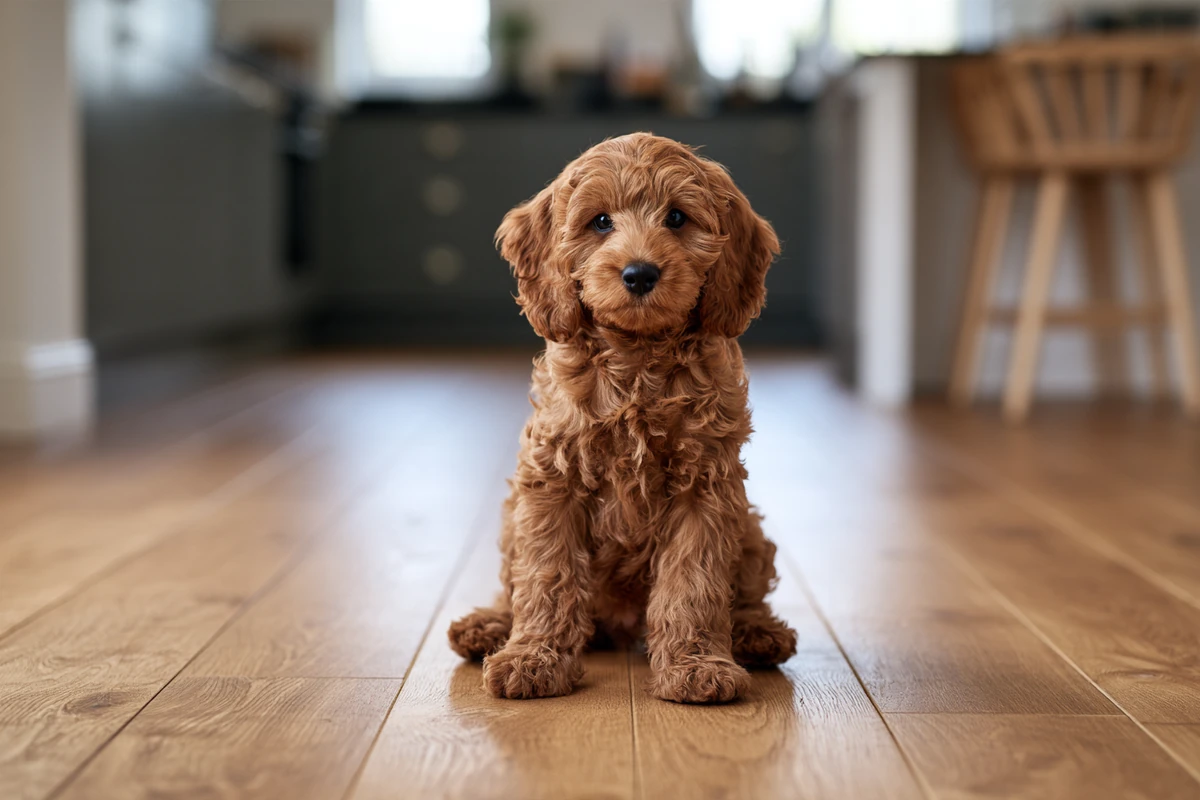
Advertise your Schnoodle puppies, litters and stud dogs
Do you breed Schnoodles? List your kennel on caninebreeder.co.uk so buyers looking for a Schnauzer and Poodle cross can find you. A basic listing shows your kennel or company name, website, social media, location and categories. When a litter is due you can advertise Schnoodle puppies for sale with the parents' DNA and eye results, and if you own a Schnoodle stud dog, or a Schnauzer or Poodle you use for Schnoodle litters, you can list him with his registration and health details. Add your kennel or see our prices.
No breeders are listed here yet, so the first profiles get the page to themselves.
- Free basic profile: your breeder or company name, website, social media, location, breeds and industries.
- Litters and stud dogs advertised in their own sections, never mixed with puppies for sale.
- Premium showcase for your services and prices, previous customers, awards, video, gallery and health certificates, with your phone and email shown to buyers.
- Sponsored articles about your breed or industry, written and published by our team.
- Featured placement at the top of this page, labelled as sponsored.
Is it free to advertise here?
Yes. A breeder profile and your litter and stud dog adverts are free. Premium profiles, featured placement and sponsored articles are optional paid extras; see pricing.
Do I need a licence to advertise puppies?
In England you need a dog breeding licence from your council if you breed three or more litters in 12 months or breed and sell dogs as a business, and Wales, Scotland and Northern Ireland have their own schemes. Licensed breeders show their licence number and issuing council on every advert. Puppies must be at least eight weeks old before they go to new homes.
Is my listing already here?
We add licensed breeders from councils' public registers. Search for your kennel name; if it is listed you can claim it and edit everything.
About the Schnoodle
The Schnoodle is a cross between a Schnauzer and a Poodle. The Royal Kennel Club (RKC) does not recognise it as a breed, so there is no breed standard and no fixed size, coat or colour. The RKC notes that crossbreeds show a varying mix of their parents' traits, so the parent breeds are the best guide. The RKC recognises three Poodle sizes, plus the larger Schnauzer and Giant Schnauzer, so ask which the parents are; this guide assumes a Miniature Schnauzer crossed with a Miniature Poodle. Schnoodles are not eligible for the RKC Breed Register, but they can be recorded on its Activity Register for agility, obedience and similar events.
The parent breeds
The RKC dates the Schnauzer in Germany to at least the 14th century. The miniature variety, first officially recorded in 1888, is thought to have been scaled down with Affenpinscher blood, and its standard describes it as primarily a companion. The Poodle also comes from Germany, where it worked as a water retriever for duck hunters.
Size and build
The Miniature Schnauzer standard gives an ideal height of 36 cm for dogs and 33 cm for bitches. A Miniature Poodle should stand under 38 cm but not under 28 cm at the shoulder. The RKC rates the Miniature Schnauzer as small and the Miniature Poodle as small to medium, and a Schnoodle from these parents will probably fall within that range.
Coat and grooming
The Schnauzer has a harsh, wiry topcoat over a dense undercoat, while the Poodle's coat is profuse, dense and curly. The RKC lists neither parent as shedding, but it suggests grooming the Schnauzer more than once a week and the Poodle every day. The RKC warns that crossbreed coats are hard to predict, so plan for frequent grooming either way.
Exercise, temperament and home life
The RKC suggests up to an hour of exercise a day for both parents. The Miniature Schnauzer standard describes an alert, reliable and intelligent dog that is also adaptable, and the Poodle standard asks for a cheerful, good-tempered one. Plan for regular training and play alongside walks. The RKC lists lifespans of over 10 years for the Miniature Schnauzer and over 12 for the Miniature Poodle. Compare the parents on our Miniature Schnauzer and Miniature Poodle pages, or browse other crossbreeds.
Schnoodle health tests
A Schnoodle has no RKC health tests of its own. The RKC advises anyone breeding a cross to use the tests and schemes recommended for both parent breeds, and for these two breeds they currently all sit at Best Practice level. For the Miniature Schnauzer they are a DNA test for Mycobacterium avium complex (MAC), an immune defect that leaves dogs open to a serious systemic infection, and eye testing that includes litter screening. For the Miniature Poodle they are DNA tests for osteochondrodysplasia (OC), a severe form of dwarfism, and progressive retinal atrophy (prcd-PRA), which leads to gradual loss of sight, plus an eye examination and hip scoring. The RKC describes all three DNA conditions as autosomal recessive: a dog is affected only if it inherits a faulty copy from each parent, while a carrier shows no signs but can pass the variant on. This matters most when Schnoodles are bred together or back to a parent breed. The BVA eye scheme, including litter screening at 5 to 12 weeks, is open to crossbreeds, so Schnoodle puppies can be examined too. Both parent breeds are in Breed Watch Category 1, meaning no visible conformation-related health concerns have been identified. Testing lowers risk but cannot guarantee a puppy's health.
- Miniature Schnauzer parent: DNA test for Mycobacterium avium complex (MAC) (Best Practice)
- Miniature Schnauzer parent: BVA/KC/ISDS Eye Scheme, including litter screening (Best Practice)
- Miniature Poodle parent: DNA test for osteochondrodysplasia (OC) (Best Practice)
- Miniature Poodle parent: DNA test for progressive retinal atrophy (prcd-PRA) (Best Practice)
- Miniature Poodle parent: BVA/KC/ISDS Eye Scheme (Best Practice)
- Miniature Poodle parent: BVA/KC Hip Dysplasia Scheme (Best Practice)
- Breed Watch: Miniature Schnauzer Category 1, Poodle (Miniature) Category 1; the Schnoodle itself is not categorised
Choosing a Schnoodle breeder
A responsible Schnoodle breeder can tell you exactly which Schnauzer and which Poodle were used and show health results for both. Ask for the Miniature Schnauzer parent's MAC DNA result and a current eye certificate, and for the Miniature Poodle parent's OC and prcd-PRA DNA results, eye certificate and hip score. The RKC advises an eye examination within the 12 months before mating, and a breeder may also have had the litter eye screened before 12 weeks. If the parents are RKC registered, you can check their results on the Health Test Results Finder. The RKC's advice for crossbreeds is to see the puppies with their mother and to ask about the father and the health tests both parents have had. Be wary of firm promises about coat type or allergies, since a Schnoodle's coat can follow either parent. In England, anyone who breeds three or more litters in 12 months and sells any of the puppies, or runs a business breeding and advertising dogs, needs a council licence and must show the licence number in adverts. Our buyer safety guide explains viewing and deposits.
- Which size of Schnauzer and Poodle are the parents, and are they RKC registered?
- Can I see the parents' MAC, OC and prcd-PRA results and current eye certificates?
- Has the Poodle parent been hip scored, and how does the score compare with the breed median?
- Was the litter eye screened, and can I see the certificate?
- Can I meet the mother with the puppies, and will you take the dog back if needed?
Schnoodle questions
Is the Schnoodle recognised by The Royal Kennel Club?
No. The Schnoodle is a Schnauzer and Poodle crossbreed, so it has no breed standard and is not eligible for the RKC Breed Register or breed shows. The RKC restricts crossbreed registration to its Activity Register, which covers agility, flyball, heelwork to music, obedience, rally and working trials.
Do Schnoodles shed?
The RKC lists neither the Miniature Schnauzer nor the Miniature Poodle as shedding, but it also says a crossbreed's coat is hard to predict, so no breeder can promise a particular coat. Both parent breeds need frequent grooming: more than once a week for the Schnauzer and daily for the Poodle. If anyone in your home has a dog allergy, spend time with the parents before you commit.
How big is a Schnoodle?
It depends on the parents. The Miniature Schnauzer standard gives an ideal height of 36 cm for dogs and 33 cm for bitches, and a Miniature Poodle should be under 38 cm but not under 28 cm. A Schnoodle from these two breeds is likely to be small. The RKC rates the Schnauzer and the Standard Poodle as medium and the Giant Schnauzer as large, so a Schnoodle with one of those parents is likely to be bigger.
Which health tests should a Schnoodle's parents have?
The RKC lists a MAC DNA test and eye testing (including litter screening) for the Miniature Schnauzer, and OC and prcd-PRA DNA tests, eye testing and hip scoring for the Miniature Poodle. Ask to see the certificates for both parents.
More for Schnoodle owners and breeders
Official sources
- Miniature Schnauzer - The Royal Kennel Club
- Poodle (Miniature) - The Royal Kennel Club
- Miniature Schnauzer breed standard - The Royal Kennel Club
- Poodle (Miniature) breed standard - The Royal Kennel Club
- What is a crossbreed dog? - The Royal Kennel Club
- How to breed a crossbred dog - The Royal Kennel Club
- Activity Register - The Royal Kennel Club
- DNA test - MAC (Mycobacterium avium complex) - The Royal Kennel Club
- DNA test - OC (osteochondrodysplasia) - The Royal Kennel Club
- DNA test - prcd-PRA - The Royal Kennel Club
- Eye screening scheme - The Royal Kennel Club
- BVA/KC/ISDS Eye Scheme - British Veterinary Association
- BVA/KC Hip Dysplasia Scheme - British Veterinary Association
- Breed Watch Category 1 - The Royal Kennel Club
- Health Test Results Finder - The Royal Kennel Club
- Dog breeding licence (England) - GOV.UK