
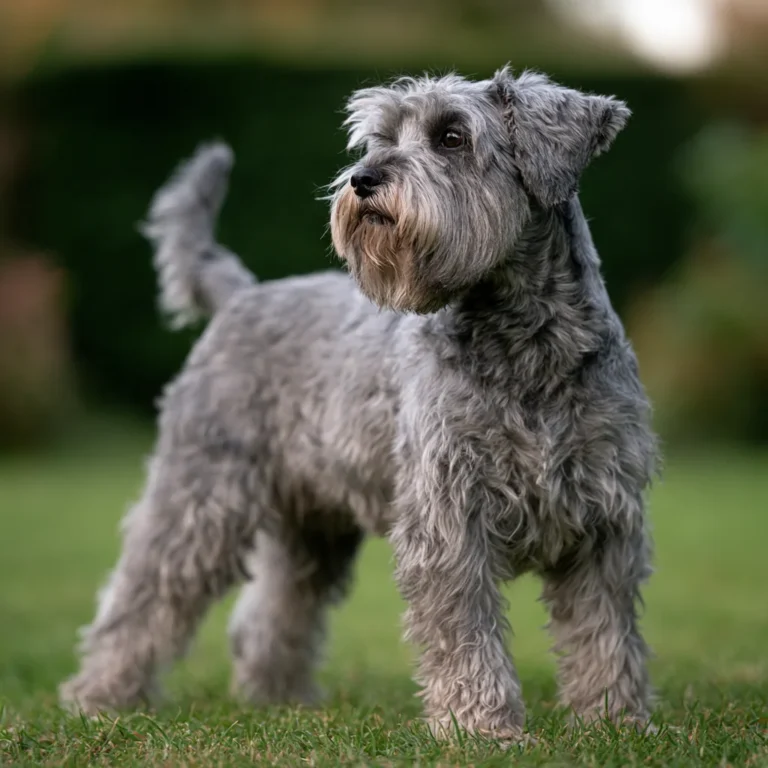
No Schnoodle puppies are listed right now
Breeders add puppies when they have a litter. One breeder lists the Schnoodle. Ask them about their next litter.
Schnoodle breeders
- Cavachon · Cavapoo · Cavapoochon +5Specialities: Companion and family dogsMixed breeder
Nutshaw Kennels
Burnley, Lancashire
Do you breed the Schnoodle? Add a litter free.
Buying a Schnoodle puppy
If you are looking at Schnoodle puppies for sale, start by confirming the parents. A Miniature Schnauzer and Miniature Poodle cross is likely to be small, but a Schnauzer, Giant Schnauzer or Standard Poodle parent changes that. The coat may be wiry, curly or something in between; the RKC lists neither parent breed as shedding, yet both need frequent grooming. Budget time for up to an hour's exercise a day, with training and play on top. Ask to see DNA results and eye certificates for both parents before paying a deposit, and meet the puppies with their mother. Our Schnoodle breeders page lists kennels breeding this cross, and the buyer safety guide explains how to avoid common puppy scams.
Health tests to ask about
A Schnoodle has no RKC health tests of its own. The RKC advises anyone breeding a cross to use the tests and schemes recommended for both parent breeds, and for these two breeds they currently all sit at Best Practice level. For the Miniature Schnauzer they are a DNA test for Mycobacterium avium complex (MAC), an immune defect that leaves dogs open to a serious systemic infection, and eye testing that includes litter screening. For the Miniature Poodle they are DNA tests for osteochondrodysplasia (OC), a severe form of dwarfism, and progressive retinal atrophy (prcd-PRA), which leads to gradual loss of sight, plus an eye examination and hip scoring. The RKC describes all three DNA conditions as autosomal recessive: a dog is affected only if it inherits a faulty copy from each parent, while a carrier shows no signs but can pass the variant on. This matters most when Schnoodles are bred together or back to a parent breed. The BVA eye scheme, including litter screening at 5 to 12 weeks, is open to crossbreeds, so Schnoodle puppies can be examined too. Both parent breeds are in Breed Watch Category 1, meaning no visible conformation-related health concerns have been identified. Testing lowers risk but cannot guarantee a puppy's health.
- Miniature Schnauzer parent: DNA test for Mycobacterium avium complex (MAC) (Best Practice)
- Miniature Schnauzer parent: BVA/KC/ISDS Eye Scheme, including litter screening (Best Practice)
- Miniature Poodle parent: DNA test for osteochondrodysplasia (OC) (Best Practice)
- Miniature Poodle parent: DNA test for progressive retinal atrophy (prcd-PRA) (Best Practice)
- Miniature Poodle parent: BVA/KC/ISDS Eye Scheme (Best Practice)
- Miniature Poodle parent: BVA/KC Hip Dysplasia Scheme (Best Practice)
- Breed Watch: Miniature Schnauzer Category 1, Poodle (Miniature) Category 1; the Schnoodle itself is not categorised
More for Schnoodle owners and breeders
Official sources
- Miniature Schnauzer - The Royal Kennel Club
- Poodle (Miniature) - The Royal Kennel Club
- Miniature Schnauzer breed standard - The Royal Kennel Club
- Poodle (Miniature) breed standard - The Royal Kennel Club
- What is a crossbreed dog? - The Royal Kennel Club
- How to breed a crossbred dog - The Royal Kennel Club
- Activity Register - The Royal Kennel Club
- DNA test - MAC (Mycobacterium avium complex) - The Royal Kennel Club
- DNA test - OC (osteochondrodysplasia) - The Royal Kennel Club
- DNA test - prcd-PRA - The Royal Kennel Club
- Eye screening scheme - The Royal Kennel Club
- BVA/KC/ISDS Eye Scheme - British Veterinary Association
- BVA/KC Hip Dysplasia Scheme - British Veterinary Association
- Breed Watch Category 1 - The Royal Kennel Club
- Health Test Results Finder - The Royal Kennel Club
- Dog breeding licence (England) - GOV.UK