Breed dogs for working sheepdogs and farm collies? Advertise here
Buyers and trainers use this page to find breeders whose lines do this work. List your kennel free, tick the industries your dogs work in, and advertise litters and stud dogs from proven working lines.
No breeders are listed here yet, so the first profiles get the page to themselves.
- Free basic profile: your breeder or company name, website, social media, location, breeds and industries.
- Litters and stud dogs advertised in their own sections, never mixed with puppies for sale.
- Premium showcase for your services and prices, previous customers, awards, video, gallery and health certificates, with your phone and email shown to buyers.
- Sponsored articles about your breed or industry, written and published by our team.
- Featured placement at the top of this page, labelled as sponsored.
Is it free to advertise here?
Yes. A breeder profile and your litter and stud dog adverts are free. Premium profiles, featured placement and sponsored articles are optional paid extras; see pricing.
Do I need a licence to advertise puppies?
In England you need a dog breeding licence from your council if you breed three or more litters in 12 months or breed and sell dogs as a business, and Wales, Scotland and Northern Ireland have their own schemes. Licensed breeders show their licence number and issuing council on every advert. Puppies must be at least eight weeks old before they go to new homes.
Is my listing already here?
We add licensed breeders from councils' public registers. Search for your kennel name; if it is listed you can claim it and edit everything.
About working sheepdogs and farm collies
A good working sheepdog is one of the most valuable tools on a livestock farm, and the best are bred by the people who use them. If you are looking for working sheepdog puppies, ISDS registered puppies from trial lines, or a sound farm collie for everyday stock work, this page explains how sheepdogs are bred, registered and trained in the UK. Canine Breeder lists breeders: we do not train or sell dogs, and a listing is not a guarantee of working ability.
What this work involves
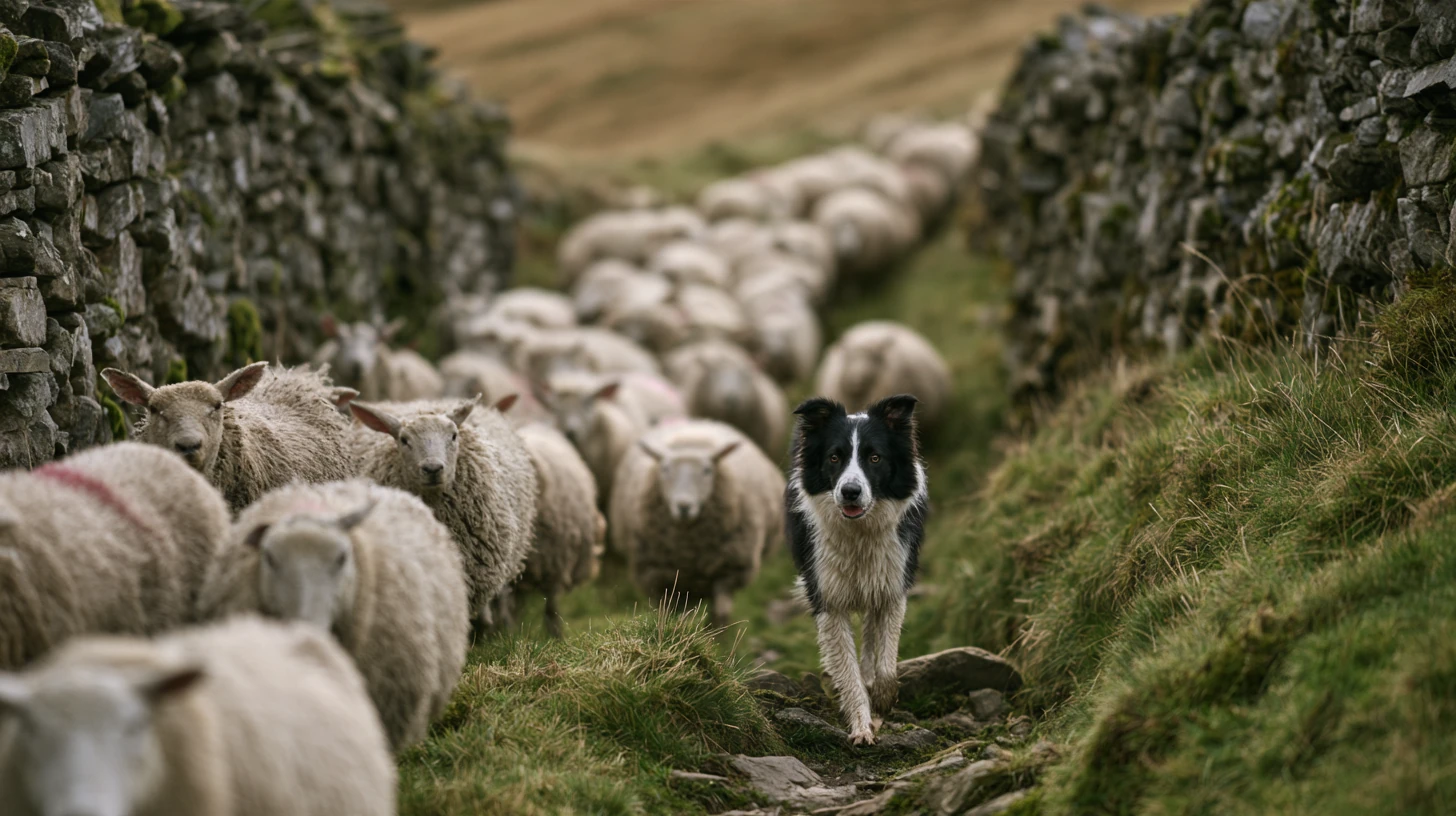
A working sheepdog gathers, drives and holds sheep under a handler’s direction, usually by whistle and voice. On a hill farm that can mean running out a long way to gather ewes off open ground; on a lowland unit it is more often moving groups between fields, working in pens and handling yards, and holding sheep while the shepherd treats them. Trials add precision tasks such as shedding and penning.
Good sheepdogs combine eye (the fixed, controlling stare that moves stock), balance, stamina and a willingness to take commands at a distance. Much of that is inherited, but none of it is finished at eight weeks: every working dog is trained on stock by its handler over months and years.
Who trains and supplies these dogs in the UK
Sheepdogs are bred privately by farmers, shepherds and trial handlers, and trained by the people who buy them. No body certifies farm dogs as trained.
The International Sheep Dog Society (ISDS), founded in 1906 and now a registered charity, has as its main objective promoting the breeding, training and improvement of the shepherd’s dog. Its Stud Book, set up in the late 1940s, holds more than 300,000 registration entries, and the society registers more than 6,000 pups every year. Pups are registered through recorded parentage; dogs over a year old can instead be Registered on Merit if they are of good breeding and have shown sufficient working ability, through trial placings or a working test. The ISDS runs National trials in England, Scotland, Wales and Ireland each summer, the International each September, and the World Trials every three years, the latest scheduled for September 2026.
Breeders usually sell one of three things:
- Pups, sold untrained from working parents.
- Started dogs, young dogs that have been introduced to sheep and show promise.
- Trained dogs, usually sold by handlers. When you see a sheepdog for sale described as trained, ask to watch it work your kind of stock.
Breeds and lines
- Border Collie: by far the most common working sheepdog in Britain and the dog behind most ISDS registrations. Working border collie breeders select for stock sense rather than looks.
- ISDS-registered working sheepdogs: look for trial results and proven workers among the parents and grandparents.
- Bearded Collie: a Scottish herding dog of the Borders and Highlands that worked cattle and sheep, now on the Royal Kennel Club (RKC) vulnerable native breeds list, with 158 registrations in 2025. Most Beardies today come from show and companion lines, so ask whether the parents have worked stock.
- New Zealand Huntaway: a large dog that moves sheep by barking, used on some UK hill farms. It is not recognised by the RKC, so there is no RKC pedigree to check.
What to ask a breeder
- Are both parents working, on what stock and ground, and can I see them work?
- Are the pups and both parents ISDS-registered, and do the parents or grandparents have trial results?
- Which eye examinations (under the BVA/KC/ISDS Eye Scheme) and DNA tests have the parents had? For Border Collies, the DNA tests the RKC recommends include CEA, CL and TNS.
- Are you selling a pup, a started dog or a trained dog, and what exactly has this one done?
- How many litters do you breed a year, and if you need a council breeding licence, what is its number?
Legal and welfare notes
- ISDS registration is separate from RKC registration. An ISDS pedigree records working ancestry; RKC registration is more usual among Border Collies bred for the show ring and some dog sports. A well-bred working pup may have ISDS papers and no RKC papers.
- Breeding licence rules apply on farms as anywhere else. In England, breeding three or more litters in any 12-month period (unless you can show that none of the puppies were sold), or breeding dogs and advertising a business of selling dogs, requires a council licence. The exemptions are narrow, covering breeding assistance dogs for example, and there is none for farm or working dogs. Wales, Scotland and Northern Ireland have their own rules.
Frequently asked questions
What does ISDS registered mean?
The dog is recorded in the International Sheep Dog Society’s Stud Book, through registered parents or Registration on Merit. It tells you about working ancestry. It is not a health certificate and does not mean the dog is trained.
Can I buy a fully trained sheepdog?
Yes. Some handlers sell trained dogs, and good ones are in demand. No scheme certifies them, so see the dog working your kind of stock and, if you can, work it yourself before you pay.
Will a working sheepdog puppy make a good pet?
Working-bred collies are bred for drive and stamina, and without regular work they can become frustrated. Many working breeders prefer to sell to homes where the dog will work.
If you breed working sheepdogs for your own farm, for trials or for other shepherds, list your kennel on Canine Breeder and tell buyers about your stock, registrations and health testing.