Breed dogs for smallholding and farmyard dogs? Advertise here
Buyers and trainers use this page to find breeders whose lines do this work. List your kennel free, tick the industries your dogs work in, and advertise litters and stud dogs from proven working lines.
No breeders are listed here yet, so the first profiles get the page to themselves.
- Free basic profile: your breeder or company name, website, social media, location, breeds and industries.
- Litters and stud dogs advertised in their own sections, never mixed with puppies for sale.
- Premium showcase for your services and prices, previous customers, awards, video, gallery and health certificates, with your phone and email shown to buyers.
- Sponsored articles about your breed or industry, written and published by our team.
- Featured placement at the top of this page, labelled as sponsored.
Is it free to advertise here?
Yes. A breeder profile and your litter and stud dog adverts are free. Premium profiles, featured placement and sponsored articles are optional paid extras; see pricing.
Do I need a licence to advertise puppies?
In England you need a dog breeding licence from your council if you breed three or more litters in 12 months or breed and sell dogs as a business, and Wales, Scotland and Northern Ireland have their own schemes. Licensed breeders show their licence number and issuing council on every advert. Puppies must be at least eight weeks old before they go to new homes.
Is my listing already here?
We add licensed breeders from councils' public registers. Search for your kennel name; if it is listed you can claim it and edit everything.
About smallholding and farmyard dogs
Looking for the best dog for a smallholding? Most smallholders want a dog that is steady around poultry and stock, barks when a stranger pulls into the yard, keeps rats out of the feed store and helps move a few sheep or goats between paddocks. This page explains that work, who breeds dogs for it in the UK and what to ask before you buy a puppy from farm-bred lines.
What this work involves
A farmyard dog is a generalist, and its key trait is calmness. A dog that is good with chickens and livestock has been raised to ignore free-ranging hens and to work stock only when asked.
Typical jobs include light herding of sheep, goats, ducks or a few cattle; vermin control around feed stores and poultry sheds; alerting you to visitors and foxes; and being trustworthy loose in the yard. No puppy arrives able to do this. Instinct comes from breeding; manners and reliability come from months of training by the owner.
Who trains and supplies these dogs in the UK
There is no national scheme that trains or supplies farm dogs. Smallholding dogs are bred by private breeders, many of them farmers, and trained by their owners, sometimes with help from a local sheepdog trainer.
For working collies the key organisation is the International Sheep Dog Society (ISDS), a registered charity founded in 1906. Its Stud Book, set up in the late 1940s, holds more than 300,000 registration entries, and the society registers more than 6,000 Border Collie pups every year, either on parentage or through Registration on Merit, which lets a good working dog be registered on its demonstrated ability rather than its pedigree. ISDS registration tells you about pedigree and working ancestry; it does not certify that an individual puppy will work.
The Royal Kennel Club registers pedigree terriers, gundogs and pastoral breeds and publishes breed information. Many farm-bred dogs are not RKC registered, so check parentage and health testing directly with the breeder.
Breeds and lines
The farm dog breeds UK smallholders most often choose are:
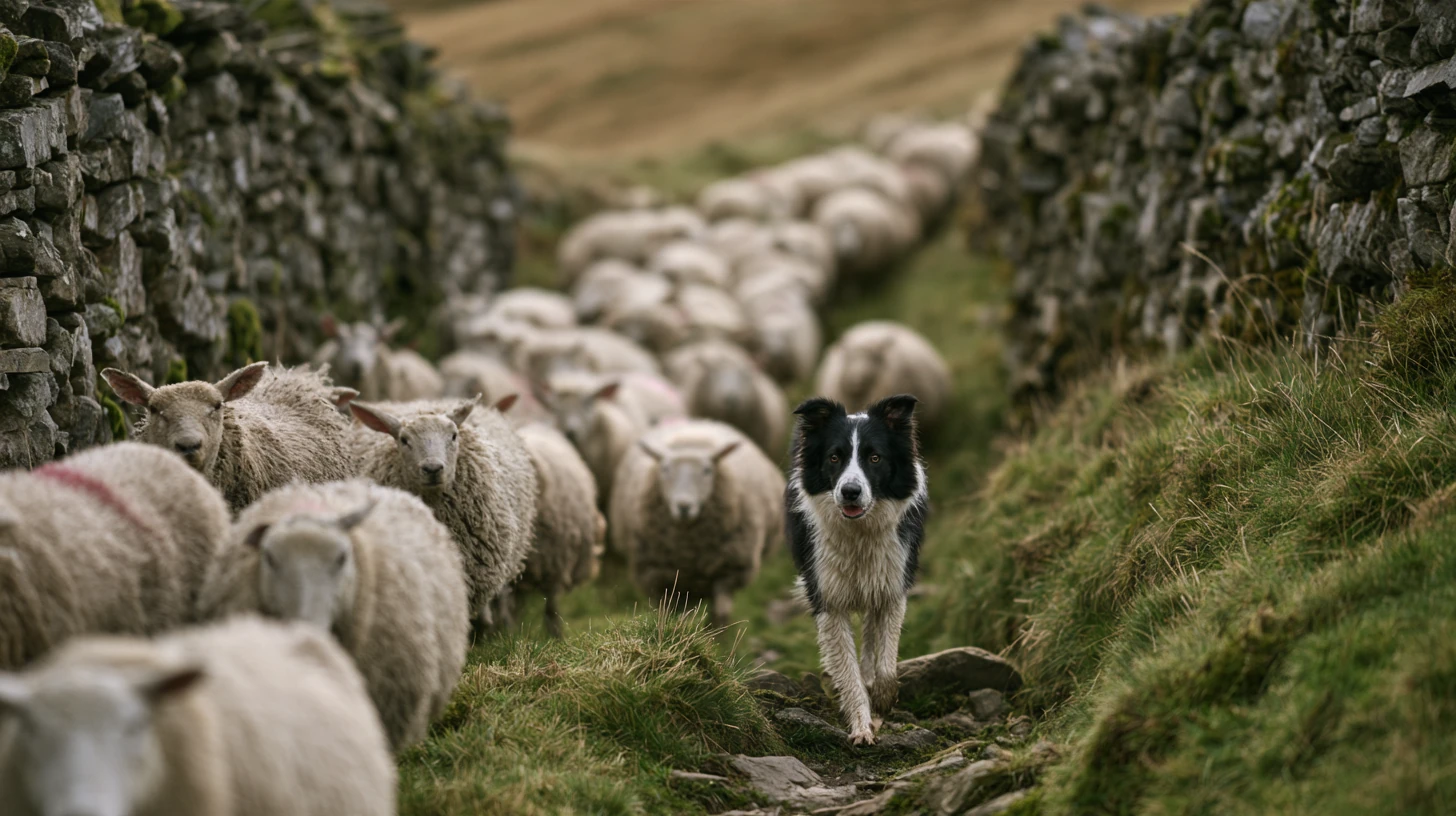
- Border Collie – the classic stock dog. Choose working lines whose parents work sheep. For a dog for a small farm, a steady collie usually suits better than one bred for open trials.
- Lancashire Heeler – a small pastoral breed with both herding and terrier instincts, thought to date from the days when cattle were driven from Wales to the markets around Ormskirk. The RKC lists it as a vulnerable native breed, so few puppies are registered each year.
- Jack Russell Terrier and Border Terrier – vermin specialists that need early, careful introductions to poultry.
- Labrador Retriever – from working gundog lines, a steady all-rounder for households that want a calm yard companion rather than a stock dog.
What to ask a breeder
- Do the parents live and work on a farm or smallholding, and can I see them around poultry and stock?
- Are the parents ISDS or RKC registered, and can I see the documents?
- What health tests have the parents had? For collies, ask about eye examinations, DNA tests such as CEA, TNS and IGS, and hip scores.
- How were the puppies raised: in the house, in a barn, around other animals and farm noise?
- Which puppy would you pick for a quiet smallholding, and why?
- Will you take the dog back if it does not settle?
Legal and welfare notes
Livestock worrying is an offence under the Dogs (Protection of Livestock) Act 1953. In England and Wales, the Dogs (Protection of Livestock) (Amendment) Act 2025, in force from 18 March 2026, extended the offence to roads and paths, added camelids such as alpacas and llamas to the definition of livestock, increased the penalty and gave police new powers, including taking samples and impressions from suspect dogs. In Scotland, the Dogs (Protection of Livestock) (Amendment) (Scotland) Act 2021 raised the maximum fine to £40,000, also brought camelids within the definition of livestock and lets courts disqualify offenders from owning a dog.
Ratting with terriers is lawful. In England and Wales, hunting rats and rabbits with dogs is exempt under the Hunting Act 2004 on land that belongs to you or with the occupier’s permission. In Scotland, rats and mice fall outside the Hunting with Dogs (Scotland) Act 2023, but rabbits and foxes do not, so check the Act’s limited exceptions before using dogs on them. Under the Animal Welfare Act 2006 in England and Wales, and the Animal Health and Welfare (Scotland) Act 2006, you also have a duty of care to meet your dog’s needs for a suitable environment and diet, normal behaviour, suitable company and protection from pain, injury and disease.
Frequently asked questions
What is the best dog for a smallholding?
There is no single best breed. A working-bred Border Collie suits stock work, a terrier suits a rat problem, and a working-line Labrador suits families wanting a calm yard dog. The parents’ temperament matters more than the breed name.
Can a farm dog live safely with free-range chickens?
Yes, if it is introduced young and supervised until reliable. Herding breeds and terriers often have a strong chase instinct, so never assume a puppy is safe loose with poultry.
Do I need an ISDS-registered collie?
Not for light work, but registration gives you a traceable pedigree and working ancestry. A working dog without registered parents can also be registered through the ISDS Registration on Merit route.
Do you breed Border Collies, terriers, heelers or working Labradors from farm-bred lines whose dogs work on smallholdings? List your kennel on Canine Breeder and describe your dogs and their aptitude. A listing is not a certificate of any dog’s working ability.