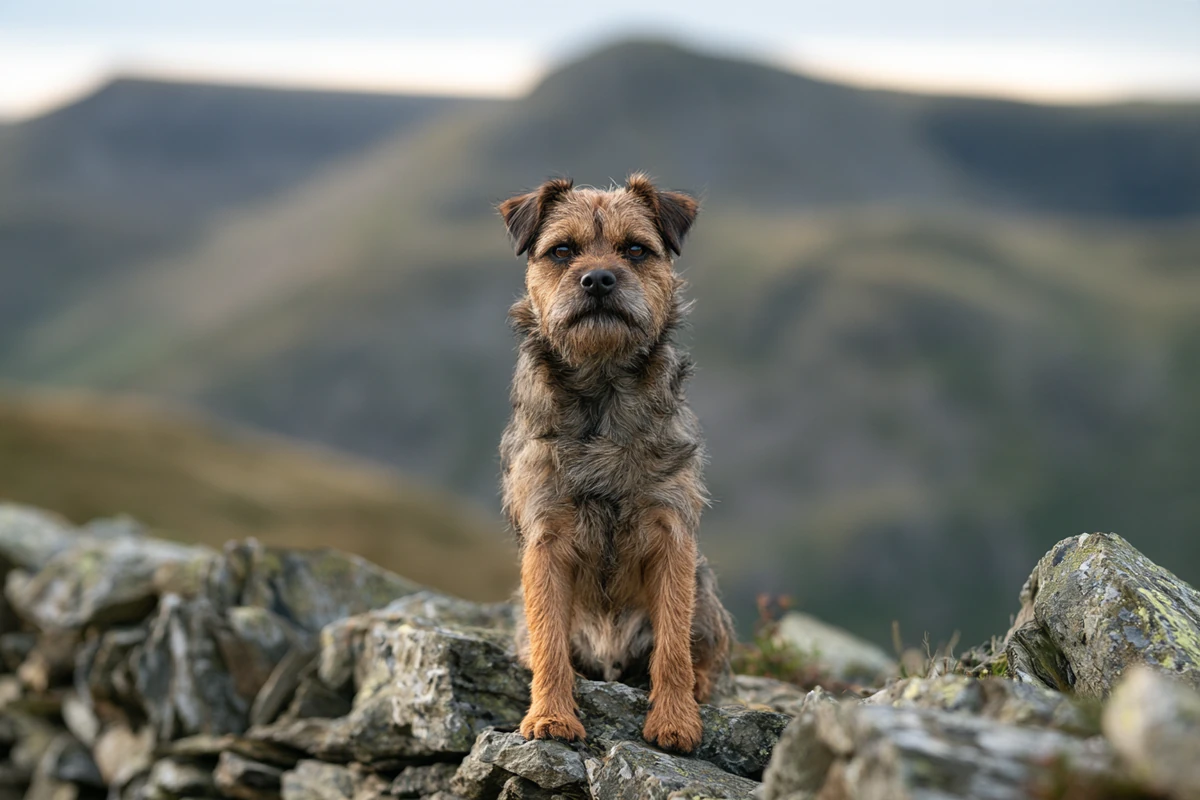
Advertise your Border Terrier puppies, litters and stud dogs
Breed Border Terriers? Put your kennel in front of buyers searching for Border Terrier puppies for sale in your area. List current and planned litters, advertise your Border Terrier stud dog, and show your SLEM results, registrations, breed club membership and any working certificates or show wins. If your kennel is already listed, claim it and add your own details; if not, create a listing. Licensed breeders can show their licence number and issuing council on every advert, so buyers can see who they are dealing with.
No breeders are listed here yet, so the first profiles get the page to themselves.
- Free basic profile: your breeder or company name, website, social media, location, breeds and industries.
- Litters and stud dogs advertised in their own sections, never mixed with puppies for sale.
- Premium showcase for your services and prices, previous customers, awards, video, gallery and health certificates, with your phone and email shown to buyers.
- Sponsored articles about your breed or industry, written and published by our team.
- Featured placement at the top of this page, labelled as sponsored.
Is it free to advertise here?
Yes. A breeder profile and your litter and stud dog adverts are free. Premium profiles, featured placement and sponsored articles are optional paid extras; see pricing.
Do I need a licence to advertise puppies?
In England you need a dog breeding licence from your council if you breed three or more litters in 12 months or breed and sell dogs as a business, and Wales, Scotland and Northern Ireland have their own schemes. Licensed breeders show their licence number and issuing council on every advert. Puppies must be at least eight weeks old before they go to new homes.
Is my listing already here?
We add licensed breeders from councils' public registers. Search for your kennel name; if it is listed you can claim it and edit everything.
About the Border Terrier
The Border Terrier is a small working terrier in the RKC's Terrier group. It took its name around 1880 from the hill country where Northumberland meets Scotland, where it worked as an earth dog with the Border Foxhounds: it had to keep up with hounds and horses, then go underground to bolt a fox. Earlier local names included the Coquetdale Terrier and the Reedwater Terrier. The Kennel Club recognised the breed in 1920, the year The Border Terrier Club was founded; the club still issues working certificates to terriers that prove themselves below ground.
Size and build. The standard calls it essentially a working terrier, with a head likened to an otter's and the soundness to follow a horse. Dogs should weigh 6 to 7 kg and bitches 5 to 6.5 kg. The body is deep, narrow and fairly long, slim enough for a pair of hands to encircle the chest just behind the shoulders.
Coat and grooming. The coat is harsh and dense with a close undercoat, over thick skin. Accepted colours are red, wheaten, grizzle and tan, and blue and tan. The RKC suggests grooming more than once a week, and The Border Terrier Club advises hand-stripping about twice a year rather than clipping, with expert advice for novice owners.
Exercise. The RKC's quick guide lists up to an hour a day, but its breed notes describe the Border's needs as moderate to high for its size, generally at least an hour, with mental stimulation as well. Secure fencing matters, because some Borders will jump over a fence or tunnel under it.
Temperament and suitability. The RKC describes Border Terriers as intelligent, affectionate and good-natured, and one of the easier terriers to train with consistent, reward-based methods started early. They keep a strong urge to chase and dig, so recall needs dedicated training. Many live peacefully with a cat they were raised with, but unfamiliar cats and small pets may be treated as prey. They do not do well left alone for long periods or kept as outdoor dogs. The RKC rates the breed as suitable for a flat with a small or medium garden, in town or country, and expected lifespan is over 12 years.
For related guides, see companion and family dogs and terrier racing and working terrier shows. Browse Border Terrier breeders, puppies and stud dogs.
Border Terrier health tests
Under the RKC Health Standard, the breed's Good Practice test is a DNA test for spongiform leucoencephalomyelopathy (SLEM), known in the breed as shaking puppy syndrome. Affected puppies show severe tremors, mostly in the hind legs, once they start trying to walk. The RKC approved an official DNA testing scheme for SLEM in November 2017, and results are recorded on registration certificates and on the Health Test Results Finder. In 2025 the test was moved up from Best Practice to Good Practice. The breed health group explains that clear and carrier dogs do not develop SLEM, and that a mating in which one parent is clear cannot produce affected puppies, whereas two carriers can.
At the same time, the RKC removed hip scoring from the Health Standard for this breed because of doubts about the clinical value of hip scores in small breeds; breeders may still choose to hip score. The breed health group formed by the seven UK Border Terrier clubs runs Border Terrier Health, which covers canine epileptoid cramping syndrome (CECS), gallbladder mucocoele, Cushing's disease and Perthes disease, collects an ongoing owner health survey and publishes an annual health report. The Border Terrier is in Breed Watch Category 1, meaning no breed-specific points of concern have been flagged for show judges.
- Good Practice: DNA test for spongiform leucoencephalomyelopathy (SLEM)
- Best Practice: no further tests listed by the RKC at the time of writing
- Breed health group guidance: a clear or carrier dog mated to a clear dog will not produce SLEM-affected puppies; a carrier-to-carrier mating can
- Monitored by the breed health group (no RKC test listed): CECS, gallbladder mucocoele, Cushing's disease, Perthes disease
- Breed Watch: Category 1
Choosing a Border Terrier breeder
A careful Border Terrier breeder will show you the SLEM DNA results for both parents; for RKC-registered dogs you can confirm them on the RKC Health Test Results Finder. Expect them to talk openly about the conditions the breed health group monitors, such as CECS, and about any cases in their lines. Temperament deserves as much attention as testing: the breed health group's 2025 report stresses that genes play a large part in temperament, so meet the mother and, where you can, the father.
A good breeder will also ask about your home: whether your garden is securely fenced, what other pets you have and how much time you have for walks and training. In England, a licensed breeder may not sell a puppy under eight weeks old and may only show a puppy to a buyer when it is with its mother, under the licensing conditions. Ask whether the breeder belongs to one of the seven UK breed clubs; The Border Terrier Club, for example, has a code of ethics for its members. Read our guide to buying a puppy safely before you visit.
- Can I see both parents' SLEM DNA test results?
- Have the parents or their close relatives shown signs of CECS or other conditions?
- Do you contribute to the Border Terrier breed health survey?
- Can I meet the mother, and how do the parents behave with people and other dogs?
- Will you show me how to hand-strip the coat, or recommend someone who can?
Border Terrier questions
How big does a Border Terrier get?
The breed standard gives a weight of 6 to 7 kg for dogs and 5 to 6.5 kg for bitches, and the RKC notes that individual dogs may be larger or smaller. The RKC classes the Border Terrier as a small breed with a short coat.
Do Border Terriers need hand-stripping?
Yes. The Border Terrier Club advises hand-stripping about twice a year rather than clipping, and suggests novice owners get expert advice at first. The RKC also recommends grooming more than once a week.
Are Border Terriers good with cats and other pets?
Many live peacefully with a household cat they were introduced to early, but the breed has a strong prey drive and may chase unfamiliar cats and small animals such as rats or rabbits. The RKC says Borders generally get on with other dogs when properly socialised, and the breed club recommends early socialisation classes.
Which health test should a Border Terrier puppy's parents have?
The RKC Health Standard's Good Practice test is a DNA test for spongiform leucoencephalomyelopathy (SLEM), also known as shaking puppy syndrome. It is also worth asking the breeder about CECS and the other conditions the breed health group monitors.
More for Border Terrier owners and breeders
- Border Terrier: breeders
- Border Terrier: puppies for sale
- Border Terrier: stud dogs
- All Terrier group breeds
- Boat and narrowboat dogs
- Gamekeepers’ and estate dogs
- Ratting and pest control terriers
- Smallholding and farmyard dogs
- Terrier racing, lurcher shows and working terrier shows
Official sources
- Border Terrier breed information - The Royal Kennel Club
- Border Terrier breed standard - The Royal Kennel Club
- The Royal Kennel Club Health Standard
- RKC DNA testing scheme for SLEM in Border Terriers (2017)
- Health Test Results Finder - The Royal Kennel Club
- Inbreeding coefficient calculator - The Royal Kennel Club
- The Border Terrier Club
- Is the Border Terrier the right dog for you? - The Border Terrier Club
- Border Terrier Health (UK breed health group)
- Buying a Border Terrier puppy - Border Terrier Health
- Border Terrier 2025 Health Report
- Dog breeding licence (England) - GOV.UK
- Breeding dogs licence conditions, Schedule 6 - legislation.gov.uk