
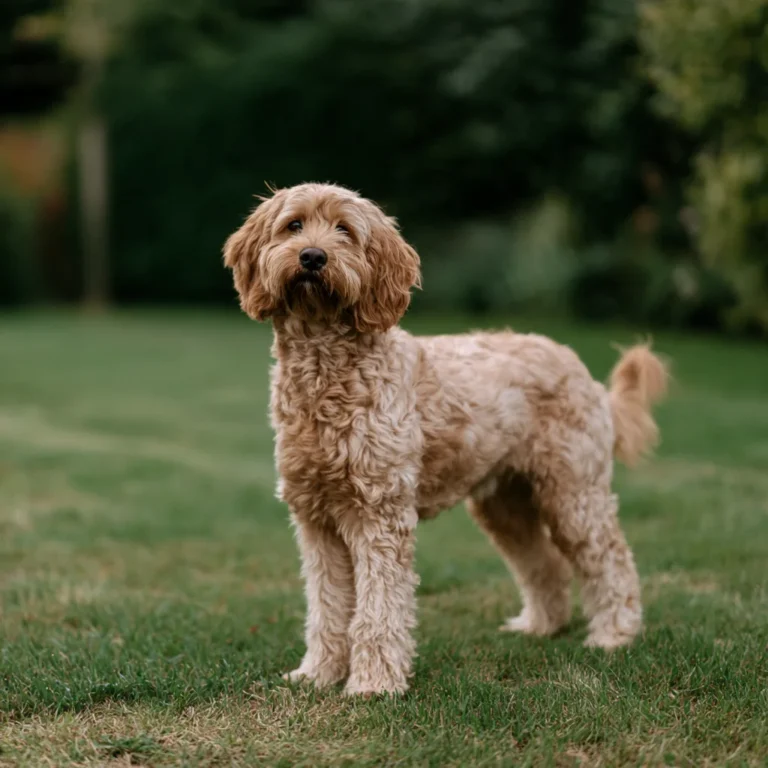
No Cockapoo puppies are listed right now
Breeders add puppies when they have a litter. 36 breeders list the Cockapoo. Ask them about their next litter.
Cockapoo breeders
- Cavapoo · Cockapoo · Cavalier King Charles Spaniel +1Specialities: not listed yet5-star licence (declared)Mixed breeder
Dollysdozen of Cambridgeshire
Cambridgeshire - CockapooSpecialities: not listed yetMixed breeder
Felindre Cockapoos
Aberaeron, Ceredigion - Cavapoo · Cockapoo · Labradoodle +4Specialities: not listed yetMixed breeder
Furry Friends Of Scotland
Lesmahagow, South Lanarkshire - Cockapoo · Cocker SpanielSpecialities: not listed yetMixed breeder
Hollymow
Ollerton, Nottinghamshire - Cockapoo · Maltipoo · Bulldog +2Specialities: not listed yetMixed breeder
Kendricks K9 Services
Saxilby, Lincolnshire - Cockapoo · Cocker SpanielSpecialities: not listed yet5-star licence (declared)Mixed breeder
Rosensam Puppies
Billericay - CockapooSpecialities: not listed yet5-star licence (declared)Mixed breeder
KC Cockapoos
Lincolnshire - Cavapoo · Cockapoo · Maltipoo +4Specialities: not listed yet1-star licence (declared)Mixed breeder
Perfect Pooches
Crowhurst, East Sussex

36 listed. See all
Do you breed the Cockapoo? Add a litter free.
Buying a Cockapoo puppy
Looking at Cockapoo puppies for sale? Start with the parents rather than the puppies. Ask which generation the litter is: the Cockapoo Club of GB regards the F1 cross of a Cocker Spaniel and a Poodle as the most consistent, while later generations can vary more. Ask to see both parents' DNA results for prcd-PRA, plus the other tests the RKC lists for each parent breed. Puppies should be at least eight weeks old, microchipped, and seen with their mother where they were born. Coats range from straight to tightly curled, so plan for regular brushing and professional clipping whatever an advert says about shedding. Cockapoos cannot go on the RKC Breed Register, although crossbreeds can join its Activity Register, and the club's approved breeders register their litters with the Cockapoo Club of GB. Compare breeders listed on caninebreeder.co.uk and read our buyer safety guide first.
Health tests to ask about
The RKC does not publish a health test list for the Cockapoo, because it is not a recognised breed. The sensible approach is to test each parent for the conditions the RKC recommends for its own breed. The BVA canine health schemes accept crossbred as well as pedigree dogs, and the eye scheme does not require RKC registration.
Progressive retinal atrophy (prcd-PRA) appears on the lists for both the Cocker Spaniel and the Miniature Poodle. It is recessive, so a puppy is affected only if it inherits the faulty gene from both parents, which is why both parents should be DNA tested. AMS, FN and AON are listed for the Cocker, and OC for the Poodle. These still matter: in F1b, F2 and later generations both parents can have Cocker or Poodle ancestry, and so can carry the same variants. The Cockapoo Club of GB sets a minimum health testing standard before it will register a litter. Both parent breeds are in Breed Watch Category 1, with no breed-specific points of concern. Testing lowers the risk of inherited disease but cannot guarantee a healthy puppy.
RKC recommendations for the Cocker Spaniel:
- Prioritising genetic diversity: Good Practice
- DNA test for acral mutilation syndrome (AMS): Good Practice
- DNA test for progressive retinal atrophy (prcd-PRA): Good Practice
- DNA test for adult-onset neuropathy (AON): Best Practice
- DNA test for familial nephropathy (FN): Best Practice
- BVA/KC/ISDS Eye Scheme, including gonioscopy for PLA: Best Practice
- BVA/KC Hip Dysplasia Scheme: Best Practice
RKC recommendations for the Miniature Poodle (all Best Practice):
- DNA test for osteochondrodysplasia (OC)
- DNA test for progressive retinal atrophy (prcd-PRA)
- BVA/KC/ISDS Eye Scheme
- BVA/KC Hip Dysplasia Scheme
More for Cockapoo owners and breeders
- Cockapoo: breeders
- Cockapoo: puppies for sale
- Cockapoo: stud dogs
- All Crossbreeds breeds
- Poodle crosses and designer crossbreeds
Official sources
- Spaniel (Cocker) breed information - The Royal Kennel Club
- Poodle (Miniature) breed information - The Royal Kennel Club
- Spaniel (Cocker) breed standard - The Royal Kennel Club
- Poodle (Miniature) breed standard - The Royal Kennel Club
- What is a crossbreed dog? - The Royal Kennel Club
- The Cockapoo Club of GB
- Health Testing - The Cockapoo Club of GB
- Eye screening scheme - The Royal Kennel Club
- BVA/KC/ISDS PLA (gonioscopy) eye testing - The Royal Kennel Club
- Hip dysplasia screening scheme - The Royal Kennel Club
- BVA Eye Scheme for dogs
- BVA Hip Dysplasia Scheme for dogs
- Health Test Results Finder - The Royal Kennel Club
- Inbreeding coefficient calculators - The Royal Kennel Club
- Dog breeding licence (England) - GOV.UK