
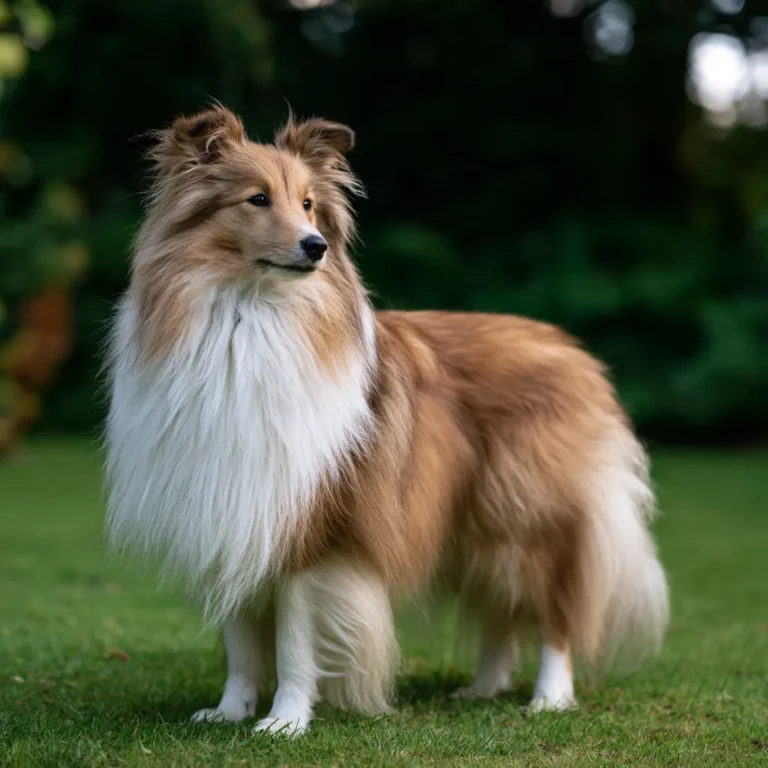
No Shetland Sheepdog puppies are listed right now
Breeders add puppies when they have a litter. 2 breeders list the Shetland Sheepdog. Ask them about their next litter.
Shetland Sheepdog breeders
- Miniature American Shepherd · Shetland SheepdogSpecialities: not listed yet
Lavika Shetland Sheepdogs
Cornwall - Shetland SheepdogSpecialities: not listed yetLicensed breeder5-star licence
Shezaray Shelties
New Forest

Do you breed the Shetland Sheepdog? Add a litter free.
Buying a Shetland Sheepdog puppy
This page brings together Shetland Sheepdog puppies advertised by breeders across the UK. Each listing is written by the breeder, so use it to build a shortlist and then check the details yourself. Ask to see the parents' eye certificates and DNA results, and look up RKC-registered parents on the RKC Health Test Results Finder. Arrange to meet the litter with its mother where the puppies were born; in England, licensed breeders may not sell a puppy under eight weeks old. Plan for the long term too: the RKC gives the breed a lifespan of over 10 years and suggests daily grooming and up to an hour's exercise a day. Be cautious of any seller who will not let you visit. If you would consider an older dog, the English Shetland Sheepdog Club also runs a welfare and rescue service.
Health tests to ask about
The RKC Health Standard sets out the tests it expects before a Sheltie is bred from, split into Good Practice (the minimum) and Best Practice. The Kennel Club's Breed Health and Conservation Plan for the Shetland Sheepdog, available on the English Shetland Sheepdog Club website, names generalised progressive retinal atrophy (GPRA) and Collie eye anomaly (CEA) as the breed's priorities. DNA tests cover CEA/CH and two PRA variants, and are used alongside clinical eye examinations.
MDR1 is an inherited drug sensitivity. In affected dogs, some medicines, including ivermectin and loperamide, can build up in the fluid around the brain and spinal cord and cause serious illness, so a dog's MDR1 result is worth sharing with its vet. The club's health pages also cover dermatomyositis, an uncommon inherited skin disease, and the breed plan discusses gallbladder mucoceles.
The RKC does not register puppies from merle-to-merle matings whelped on or after 6 July 2010, because of the risk of impaired sight and hearing. The breed is in Breed Watch Category 2, with misplaced canine teeth listed as a point of concern for judges. Health testing reduces risk; it cannot guarantee a healthy puppy.
Good Practice (RKC Health Standard)
- Prioritising genetic diversity
- Eye testing using the BVA/KC/ISDS Eye Scheme (including litter screening)
Best Practice (in addition)
- DNA test for Collie eye anomaly/choroidal hypoplasia (CEA/CH)
- DNA test for multi-drug resistance (MDR1)
- DNA test for progressive retinal atrophy (BBS2-PRA)
- DNA test for progressive retinal atrophy (CNGA1-PRA)
- DNA test for von Willebrand disease (vWD3-2)
- Elbow testing for elbow dysplasia (BVA/KC Elbow Dysplasia Scheme)
- Hip testing for hip dysplasia (BVA/KC Hip Dysplasia Scheme)
Breed Watch: Category 2 (misplaced canine teeth)
More for Shetland Sheepdog owners and breeders
- Shetland Sheepdog: breeders
- Shetland Sheepdog: puppies for sale
- Shetland Sheepdog: stud dogs
- All Pastoral group breeds
- Dog agility
- Treibball
Official sources
- Shetland Sheepdog breed information
- Shetland Sheepdog breed standard
- Breed Watch: Shetland Sheepdog (Category 2)
- The Royal Kennel Club Health Standard
- BVA/KC/ISDS Eye Scheme (RKC)
- DNA test: MDR1 (RKC)
- DNA test: CEA/CH (RKC)
- RKC Health Test Results Finder
- RKC inbreeding calculators
- BVA Eye Scheme
- BVA Hip Scheme
- BVA Elbow Scheme
- The English Shetland Sheepdog Club
- English Shetland Sheepdog Club: health issues