
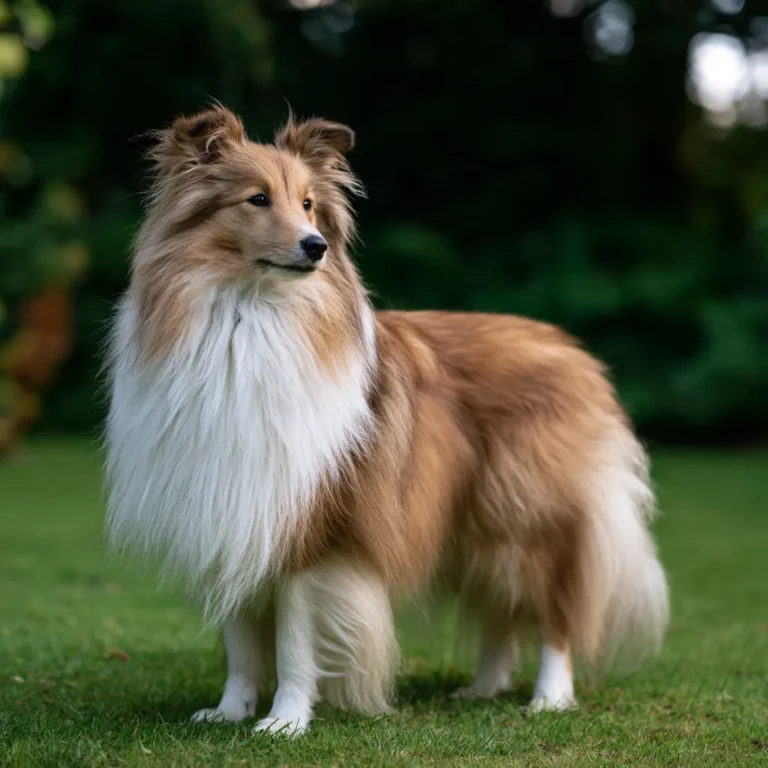
No Shetland Sheepdog stud dogs are listed right now
2 breeders list the Shetland Sheepdog. Ask them if they have a stud dog.
Shetland Sheepdog breeders
- Miniature American Shepherd · Shetland SheepdogSpecialities: not listed yet
Lavika Shetland Sheepdogs
Cornwall - Shetland SheepdogSpecialities: not listed yetLicensed breeder5-star licence
Shezaray Shelties
New Forest

Do you breed the Shetland Sheepdog? Add a stud dog free.
Using a Shetland Sheepdog stud dog
Shetland Sheepdog stud dogs on this page are offered by their owners to breeders planning a litter. Before booking a mating, confirm the dog's RKC registration and review his results on the RKC Health Test Results Finder: a current BVA/KC/ISDS eye certificate, DNA results for CEA/CH, MDR1, BBS2-PRA, CNGA1-PRA and vWD3-2, and a hip score and elbow grade if he has been X-rayed. Use the RKC inbreeding coefficient calculator (Mate Select) to work out the coefficient of inbreeding for the planned litter; the RKC advises aiming at or below the breed average. The breed health plan reported rising inbreeding and the influence of popular sires, so a less widely used dog can help diversity. If your bitch is merle, choose a non-merle stud, as the RKC will not register puppies from a merle-to-merle mating.
Health tests for a Shetland Sheepdog stud
The RKC Health Standard sets out the tests it expects before a Sheltie is bred from, split into Good Practice (the minimum) and Best Practice. The Kennel Club's Breed Health and Conservation Plan for the Shetland Sheepdog, available on the English Shetland Sheepdog Club website, names generalised progressive retinal atrophy (GPRA) and Collie eye anomaly (CEA) as the breed's priorities. DNA tests cover CEA/CH and two PRA variants, and are used alongside clinical eye examinations.
MDR1 is an inherited drug sensitivity. In affected dogs, some medicines, including ivermectin and loperamide, can build up in the fluid around the brain and spinal cord and cause serious illness, so a dog's MDR1 result is worth sharing with its vet. The club's health pages also cover dermatomyositis, an uncommon inherited skin disease, and the breed plan discusses gallbladder mucoceles.
The RKC does not register puppies from merle-to-merle matings whelped on or after 6 July 2010, because of the risk of impaired sight and hearing. The breed is in Breed Watch Category 2, with misplaced canine teeth listed as a point of concern for judges. Health testing reduces risk; it cannot guarantee a healthy puppy.
Good Practice (RKC Health Standard)
- Prioritising genetic diversity
- Eye testing using the BVA/KC/ISDS Eye Scheme (including litter screening)
Best Practice (in addition)
- DNA test for Collie eye anomaly/choroidal hypoplasia (CEA/CH)
- DNA test for multi-drug resistance (MDR1)
- DNA test for progressive retinal atrophy (BBS2-PRA)
- DNA test for progressive retinal atrophy (CNGA1-PRA)
- DNA test for von Willebrand disease (vWD3-2)
- Elbow testing for elbow dysplasia (BVA/KC Elbow Dysplasia Scheme)
- Hip testing for hip dysplasia (BVA/KC Hip Dysplasia Scheme)
Breed Watch: Category 2 (misplaced canine teeth)
More for Shetland Sheepdog owners and breeders
- Shetland Sheepdog: breeders
- Shetland Sheepdog: puppies for sale
- Shetland Sheepdog: stud dogs
- All Pastoral group breeds
- Dog agility
- Treibball
Official sources
- Shetland Sheepdog breed information
- Shetland Sheepdog breed standard
- Breed Watch: Shetland Sheepdog (Category 2)
- The Royal Kennel Club Health Standard
- BVA/KC/ISDS Eye Scheme (RKC)
- DNA test: MDR1 (RKC)
- DNA test: CEA/CH (RKC)
- RKC Health Test Results Finder
- RKC inbreeding calculators
- BVA Eye Scheme
- BVA Hip Scheme
- BVA Elbow Scheme
- The English Shetland Sheepdog Club
- English Shetland Sheepdog Club: health issues