
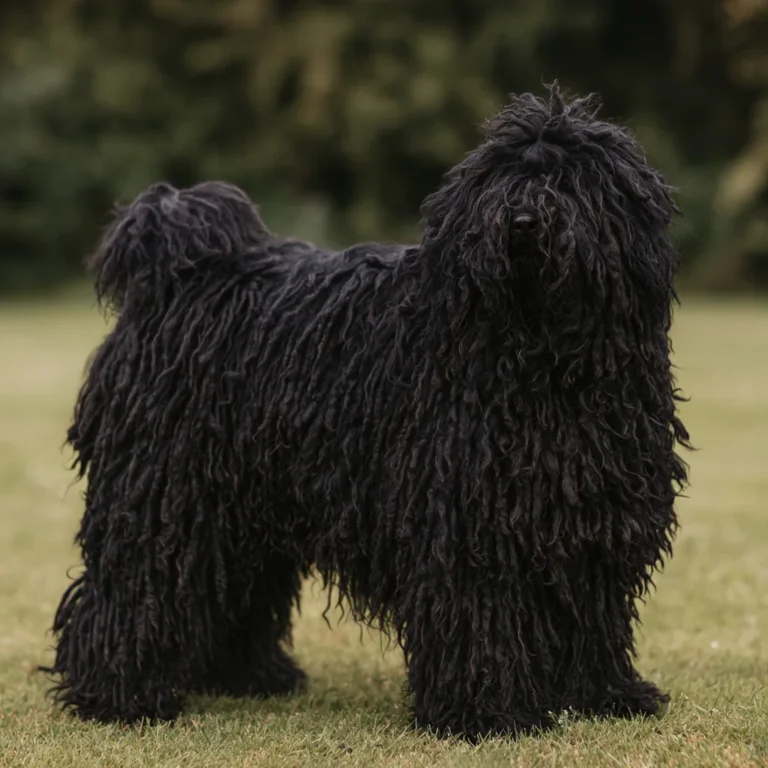
Using a Hungarian Puli stud dog
A Hungarian Puli stud dog should have RKC registration, a BVA/KC hip score and a BVA/KC/ISDS eye certificate, the two Best Practice tests the RKC lists for the breed. The breed club's code of ethics also requires breeding stock to be DNA tested for degenerative myelopathy (DM) and says no dog should be used at stud before 12 months, so expect to be asked for his DM result. Prioritising genetic diversity is the RKC's Good Practice step, so run each proposed pairing through the RKC inbreeding coefficient calculator and aim for a predicted COI at or below the breed average; in a numerically small breed one popular sire can narrow the gene pool quickly. The club notes that coat density, texture and the ability to cord are inherited, so expect questions about the coats in his line as well as temperament. Agree the stud fee and terms in writing, and see our Hungarian Puli puppies page for litters.
Health tests for a Hungarian Puli stud
The RKC lists one Good Practice step for Puli breeders to take before any mating: prioritising genetic diversity. It adds two Best Practice tests, an eye examination under the BVA/KC/ISDS Eye Scheme and hip scoring under the BVA/KC Hip Dysplasia Scheme, and says responsible breeders should complete both tiers. For hip scoring a dog must be at least a year old and microchipped; each hip is scored from 0 to 53, and the BVA and RKC advise breeding from dogs with scores close to, and ideally below, the breed median.
The Hungarian Puli Club of Great Britain asks more of its members. Its code of ethics requires all breeding stock to be hip scored and DNA tested for degenerative myelopathy (DM), which the club describes as a disease of the spinal cord. It also asks for every litter to be eye tested at six to eight weeks for retinal dysplasia, with breeding stock retested before use. These are club rules rather than RKC recommendations. The club points out that UK Puli numbers are small, so keeping inbreeding low matters. The breed is in Breed Watch Category 1, so no breed-specific concerns have been flagged for show judges.
- Prioritising genetic diversity (RKC Good Practice): RKC inbreeding coefficient calculator
- BVA/KC/ISDS Eye Scheme (RKC Best Practice)
- BVA/KC Hip Dysplasia Scheme (RKC Best Practice)
- No RKC breed-specific DNA testing package; individual DNA tests available
- Breed Watch: Category 1
- Results for registered dogs: RKC Health Test Results Finder
More for Hungarian Puli owners and breeders
- Hungarian Puli: breeders
- Hungarian Puli: puppies for sale
- Hungarian Puli: stud dogs
- All Pastoral group breeds
Official sources
- Hungarian Puli - The Royal Kennel Club
- Hungarian Puli breed standard - The Royal Kennel Club
- The Hungarian Puli Club of Great Britain
- Puli health - Hungarian Puli Club of Great Britain
- Code of ethics and club rules - Hungarian Puli Club of Great Britain
- Thinking of buying a Puli puppy? - Hungarian Puli Club of Great Britain
- Is a Puli the breed for me? - Hungarian Puli Club of Great Britain
- Puli coat care - Hungarian Puli Club of Great Britain
- Puli puppy enquiries - Hungarian Puli Club of Great Britain
- Welfare and rescue scheme - Hungarian Puli Club of Great Britain
- Manage and maintain genetic diversity - The Royal Kennel Club
- Eye screening scheme - The Royal Kennel Club
- Hip dysplasia screening scheme - The Royal Kennel Club
- BVA/KC/ISDS Eye Scheme - British Veterinary Association
- BVA/KC Hip Dysplasia Scheme - British Veterinary Association
- Breed Watch Category 1 - The Royal Kennel Club
- Inbreeding coefficient calculator - The Royal Kennel Club
- Dog Health Test Results Finder - The Royal Kennel Club
- Find a Hungarian Puli puppy - The Royal Kennel Club
- Dog breeding licence (England) - GOV.UK