
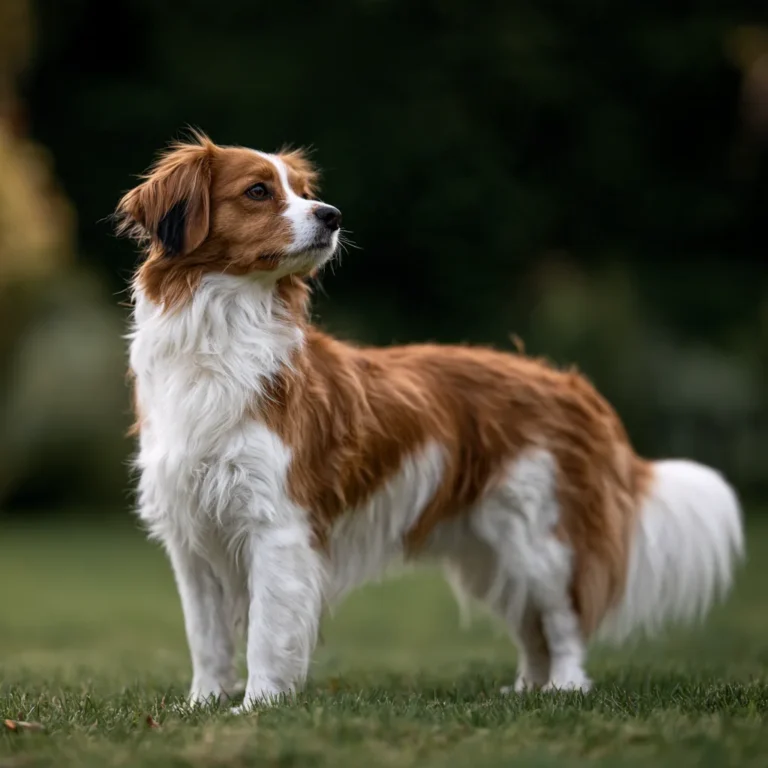
Using a Kooikerhondje stud dog
Kooikerhondje stud dogs
A Kooikerhondje stud should be RKC registered, so the litter can be registered, and have known results for the two RKC Best Practice DNA tests: hereditary necrotising myelopathy (ENM) and von Willebrand disease type III (vWD3). Both are recessive, so a carrier can be mated to a clear partner without producing affected puppies, and the breed club points out that using carriers this way helps keep genetic variation in the breed. Confirm results on the RKC Health Test Results Finder, then check the pairing with the RKC inbreeding coefficient calculator, aiming at or below the breed's annual average and as low as possible. The RKC's genetic diversity guidance warns against overusing popular sires, so a stud owner should limit how often the dog is used. Agree the fee and terms in writing. See current Kooikerhondje puppies.
Health tests for a Kooikerhondje stud
Kooikerhondje health and testing
Breed Watch places the Kooikerhondje in Category 1: the RKC has not identified visible, conformation-related health concerns for show judges to watch in this breed. That covers how the dog is built, not inherited disease.
The RKC Health Standard lists prioritising genetic diversity as Good Practice. Best Practice adds two DNA tests, both for recessive conditions: a dog needs two copies of the faulty gene to be affected, and carriers show no signs.
- Hereditary necrotising myelopathy (ENM) is a degenerative disease of the spinal cord. It causes loss of coordination and paralysis of the hind legs, with early signs usually seen between three and 12 months of age, and there is no cure (RKC ENM test).
- Von Willebrand disease type III (vWD3) is the most severe form of this clotting disorder, causing nosebleeds, bleeding gums and prolonged bleeding after injury, surgery or whelping (RKC vWD3 test).
The Kooikerhondje Club of Great Britain also flags polymyositis, an immune-mediated muscle disease for which no test yet exists and which is being researched. The club has asked owners to report health test results and conditions such as epilepsy and patella luxation to a global breed health register.
Tests and schemes
- Prioritising genetic diversity (RKC Good Practice)
- DNA test: hereditary necrotising myelopathy (ENM) (RKC Best Practice)
- DNA test: von Willebrand disease type III (vWD3) (RKC Best Practice)
- Breed Watch: Category 1
More for Kooikerhondje owners and breeders
- Kooikerhondje: breeders
- Kooikerhondje: puppies for sale
- Kooikerhondje: stud dogs
- All Utility group breeds
Official sources
- Kooikerhondje breed page - The Royal Kennel Club
- Kooikerhondje breed standard - The Royal Kennel Club
- Breed Watch Category 1 - The Royal Kennel Club
- The Royal Kennel Club Health Standard
- DNA test: hereditary necrotising myelopathy (ENM) - The Royal Kennel Club
- DNA test: von Willebrand disease type III - The Royal Kennel Club
- Genetic diversity: managing and maintaining - The Royal Kennel Club
- Inbreeding coefficient calculator - The Royal Kennel Club
- Health Test Results Finder - The Royal Kennel Club
- Kooikerhondje Club of Great Britain
- Kooikerhondje Club of Great Britain - RKC club profile
- The breed - Kooikerhondje Club of Great Britain
- Health - Kooikerhondje Club of Great Britain
- Kooiker health - Kooikerhondje Club of Great Britain
- Planned litters - Kooikerhondje Club of Great Britain
- Find a Club - The Royal Kennel Club
- Breed registration statistics - The Royal Kennel Club
- Dog breeding licence (England) - GOV.UK
- Animal Welfare (Licensing of Activities Involving Animals) (England) Regulations 2018, Schedule 6
- Get your dog or cat microchipped - GOV.UK