
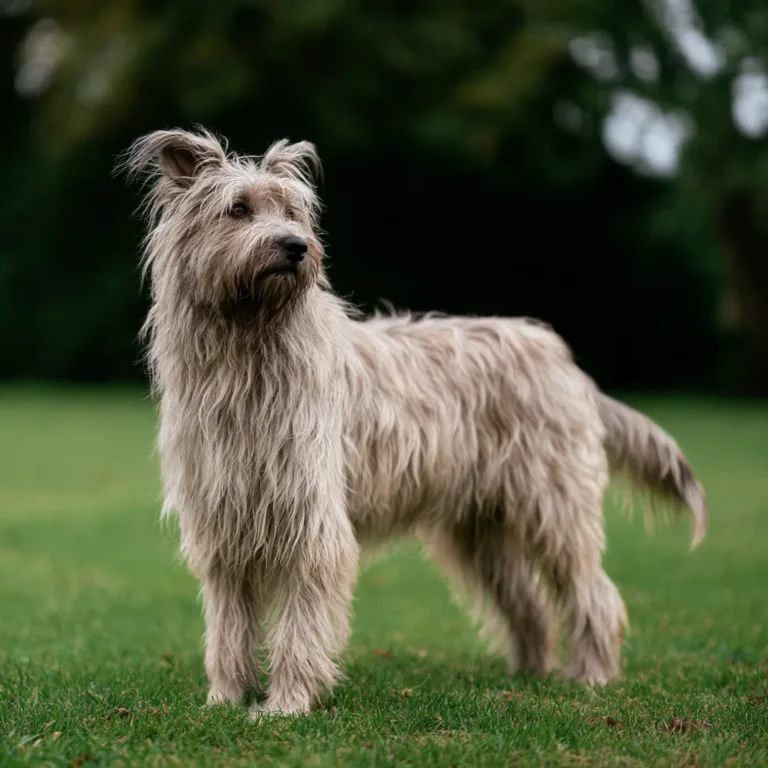
Using a Picardy Sheepdog stud dog
Owners advertise the Picardy Sheepdog stud dogs listed here. Before you agree a mating, ask for his hip score, elbow grade and a current eye certificate under the BVA/RKC/ISDS Eye Scheme. The RKC lists all three at Best Practice level for this breed. Confirm that he is registered with the Royal Kennel Club and that no RKC rule or endorsement would stop the litter being registered. The RKC names genetic diversity as the Good Practice priority for this breed, so check the planned pairing with the RKC inbreeding coefficient calculator. Aim for a figure at or below the breed average, and think about how often he has already been used at stud. If he is a recent import, ask for his overseas pedigree and any health results from his country of origin. Agree the fee and repeat-mating terms in writing.
Health tests for a Picardy Sheepdog stud
On the RKC breed page, the Good Practice entry for the Picardy Sheepdog is prioritising genetic diversity, which is the minimum the RKC expects before breeding. Three screening tests sit at Best Practice level, and the RKC Health Standard lists the same three: hip scoring, elbow grading and an eye examination.
Hip and elbow X-rays can be taken once a dog is at least a year old. Hips are scored from 0 to 106, and lower is better; the BVA notes that breeding from dogs scoring below the published breed mean or median reduces the risk of hip dysplasia but does not remove it. Elbows are graded 0 to 3, and the BVA Canine Health Schemes recommend breeding only from grade 0 dogs. The breed is not on the BVA's January 2026 list of breeds with known inherited eye diseases, but the eye examination still looks for both inherited and non-inherited conditions.
The RKC has no DNA testing package specific to this breed and sets no additional breeding restrictions for it. The breed is in Breed Watch Category 1, meaning no breed-specific points of concern have been flagged for judges. Health testing lowers risk but cannot guarantee a healthy puppy.
Health tests and schemes for the Picardy Sheepdog:
- Prioritising genetic diversity, for example by checking the inbreeding coefficient of a planned mating (RKC Good Practice)
- BVA/RKC Hip Dysplasia Scheme (RKC Best Practice)
- BVA/RKC Elbow Dysplasia Scheme (RKC Best Practice)
- BVA/RKC/ISDS Eye Scheme (RKC Best Practice)
- Breed Watch: Category 1
- Register: RKC Imported Breed Register
More for Picardy Sheepdog owners and breeders
- Picardy Sheepdog: breeders
- Picardy Sheepdog: puppies for sale
- Picardy Sheepdog: stud dogs
- All Pastoral group breeds
Official sources
- Picardy Sheepdog (Imp) breed information - Royal Kennel Club
- Picardy Sheepdog (Imp) breed standard - Royal Kennel Club
- Imported Breed Register policy - Royal Kennel Club
- Breed Watch Category 1 - Royal Kennel Club
- Picardy Sheepdog Club (Provisional) - Royal Kennel Club Find a Club
- Hip Dysplasia Scheme - British Veterinary Association
- Elbow Dysplasia Scheme - British Veterinary Association
- Eye Scheme - British Veterinary Association
- Health Test Results Finder - Royal Kennel Club
- Inbreeding coefficient (COI) calculator - Royal Kennel Club