
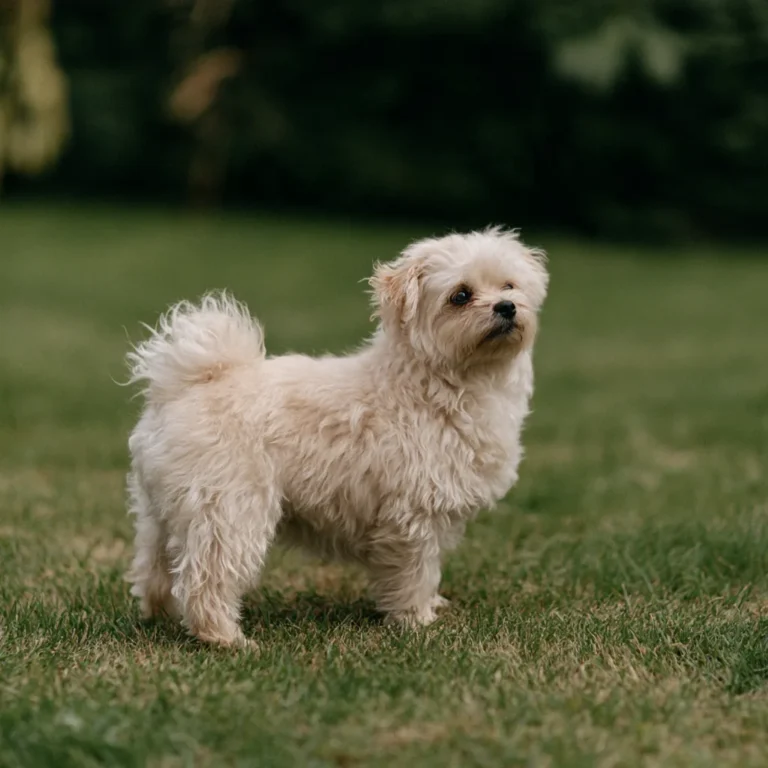
No Pomapoo stud dogs are listed right now
One breeder lists the Pomapoo. Ask them if they have a stud dog.
Pomapoo breeders
- Cavapoo · Cockapoo · Maltipoo +4Specialities: not listed yet1-star licence (declared)Mixed breeder
Perfect Pooches
Crowhurst, East Sussex

Do you breed the Pomapoo? Add a stud dog free.
Using a Pomapoo stud dog
For a first-cross Pomapoo litter the stud is a Toy Poodle or a Pomeranian, ideally RKC registered, and he should meet the health testing the RKC sets for his own breed. A Toy Poodle stud needs a prcd-PRA DNA result; if he tests clear, he cannot pass on that faulty gene. For Best Practice he should also have an eye examination within the 12 months before mating and a BVA/KC hip score, taken once he is at least a year old. A Pomeranian stud should have an up-to-date eye certificate under the BVA/KC/ISDS scheme. Confirm his results on the Health Test Results Finder. The RKC's inbreeding coefficient calculator, once part of its Mate Select service, shows a registered stud's own coefficient against his breed average. A cross litter has no breed average, so treat the figure as background. If the stud is himself a Pomapoo, ask for his own prcd-PRA result and his parents' results as well.
Health tests for a Pomapoo stud
The RKC sets no health tests for the Pomapoo itself, so screening should follow what it recommends for each parent breed. For the Toy Poodle, Good Practice is a DNA test for progressive retinal atrophy (prcd-PRA), an inherited disease in which the retina degenerates. Affected dogs lose their night vision first and later go completely blind, with signs usually appearing from about three years old. Best Practice for the Toy Poodle adds an eye examination and hip scoring. For the Pomeranian, the RKC lists an eye examination under the BVA/KC/ISDS scheme as Best Practice.
prcd-PRA is autosomal recessive, so a puppy can be affected only if it inherits the faulty gene from both parents. In a first cross, a Toy Poodle parent that tests clear cannot pass it on. If the Poodle is a carrier, puppies may inherit one copy, and where both parents are Pomapoos, both should be tested. The BVA eye and hip schemes accept crossbreeds, so a Pomapoo kept for breeding can be screened in its own right.
Breed Watch covers pedigree show dogs, not crossbreeds, but it flags useful points. The Pomeranian is in Category 2, and judges check that the fontanelle, the soft spot on the skull, has fully closed in dogs over 12 months. The Toy Poodle is in Category 1.
- Toy Poodle parent, Good Practice: DNA test for progressive retinal atrophy (prcd-PRA)
- Toy Poodle parent, Best Practice: Eye testing using the BVA/KC/ISDS Eye Scheme
- Toy Poodle parent, Best Practice: Hip testing using the BVA/KC Hip Dysplasia Scheme
- Pomeranian parent, Best Practice: Eye testing using the BVA/KC/ISDS Eye Scheme
- Breed Watch: none for the Pomapoo (not a recognised breed); Pomeranian Category 2 (fontanelle should be fully closed in dogs over 12 months); Poodle (Toy) Category 1
More for Pomapoo owners and breeders
Official sources
- What is a crossbreed dog? - Royal Kennel Club
- Pomeranian - Royal Kennel Club breed information
- Poodle (Toy) - Royal Kennel Club breed information
- Pomeranian breed standard - Royal Kennel Club
- Poodle (Toy) breed standard - Royal Kennel Club
- Pomeranian - Breed Watch Category 2 - Royal Kennel Club
- Breed Watch Category 1 - Royal Kennel Club
- DNA test - prcd-PRA (progressive retinal atrophy) - Royal Kennel Club
- BVA/KC/ISDS Eye Screening Scheme - Royal Kennel Club
- BVA/KC Hip Dysplasia Scheme - Royal Kennel Club
- Eye Scheme - British Veterinary Association
- Hip Dysplasia Scheme - British Veterinary Association
- Health Test Results Finder - Royal Kennel Club
- Inbreeding calculators (COIs) - Royal Kennel Club
- Activity Register - Royal Kennel Club
- Dog breeding licence (England) - GOV.UK
- Get your dog or cat microchipped - GOV.UK