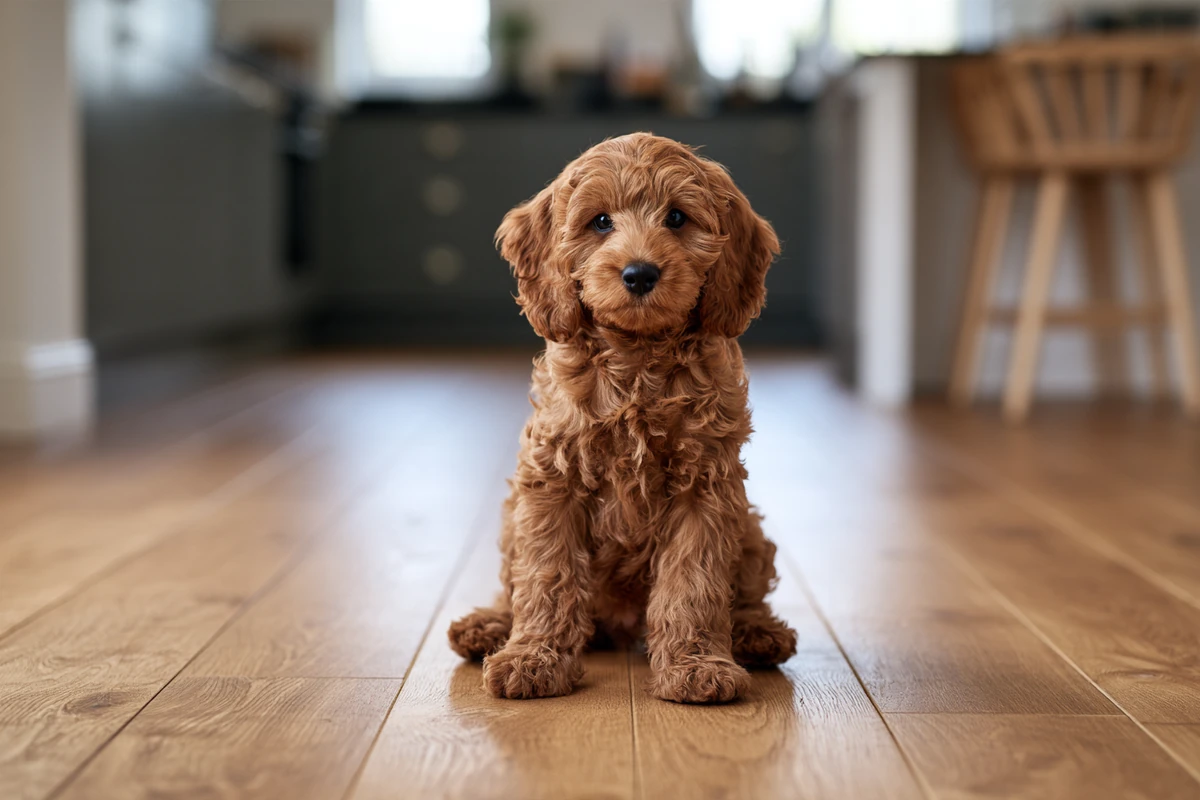
Advertise your Australian Labradoodle puppies, litters and stud dogs
Do you breed Australian Labradoodles? Caninebreeder.co.uk is an independent UK directory where you can list your kennel, advertise Australian Labradoodle puppies for sale and promote your Australian Labradoodle stud dog. Buyers of multi-generation lines want detail, so your listing can show hip, elbow, eye and DNA results, the sizes and coat types you breed and the generations behind each litter. Add planned litters, answer enquiries directly and help families find a breeder who health tests both parents.
No breeders are listed here yet, so the first profiles get the page to themselves.
- Free basic profile: your breeder or company name, website, social media, location, breeds and industries.
- Litters and stud dogs advertised in their own sections, never mixed with puppies for sale.
- Premium showcase for your services and prices, previous customers, awards, video, gallery and health certificates, with your phone and email shown to buyers.
- Sponsored articles about your breed or industry, written and published by our team.
- Featured placement at the top of this page, labelled as sponsored.
Is it free to advertise here?
Yes. A breeder profile and your litter and stud dog adverts are free. Premium profiles, featured placement and sponsored articles are optional paid extras; see pricing.
Do I need a licence to advertise puppies?
In England you need a dog breeding licence from your council if you breed three or more litters in 12 months or breed and sell dogs as a business, and Wales, Scotland and Northern Ireland have their own schemes. Licensed breeders show their licence number and issuing council on every advert. Puppies must be at least eight weeks old before they go to new homes.
Is my listing already here?
We add licensed breeders from councils' public registers. Search for your kennel name; if it is listed you can claim it and edit everything.
About the Australian Labradoodle
The Australian Labradoodle is not a breed recognised by the Royal Kennel Club (RKC). It has no RKC breed standard and cannot be placed on the RKC Breed Register, although the RKC's Activity Register accepts crossbreeds for agility, obedience and similar activities.
The Australian Labradoodle Association UK (ALAUK) says the type began in Australia. It dates the first litter to 1989, when the breeding manager of an Australian guide dog service, asked for a dog to suit a visually impaired family with dog allergies, mated Labrador Retrievers with Poodles. Breeders later brought in the English and American Cocker Spaniel and the Irish Water Spaniel, and the association also mentions the Wheaten Terrier. ALAUK describes these breeds as combined through selective breeding, so the name points to only two of the breeds behind today's dogs.
The parent breeds. The RKC traces the Labrador to Newfoundland and rates it a large gundog with a short, dense coat over a weather-resistant undercoat. It sheds, needs grooming once a week and more than two hours of exercise a day. The Standard Poodle was bred in Germany as a water retriever for duck hunters. It stands over 38 cm, has a dense, curly coat that the RKC lists as non-shedding, and needs up to an hour of exercise and daily grooming.
Size. ALAUK describes three sizes: Miniature at about 14–16 in (roughly 36–41 cm) and 7–13 kg, Medium at 17–20 in (about 43–51 cm) and 13–20 kg, and Standard at 21–24 in (about 53–61 cm) and 23–30 kg.
Coat and grooming. The association describes two coat textures: fleece, which is soft and may be straight, wavy or softly curled, and wool, which is usually curly. It advises a groom every five to six weeks and combing at home several times a week, rising to daily combing during the change to the adult coat at around 8–12 months, when mats form quickly. ALAUK calls the dogs low-allergen but says no dog is completely allergy free.
Temperament. The Labrador standard asks for an intelligent, willing dog with a kind nature, and the Poodle standard for a lively, good-tempered one. An individual Australian Labradoodle may take after any of the breeds behind it, so meet the parents and plan for regular training and daily exercise.
Australian Labradoodle health tests
Health advice for the Australian Labradoodle has to come from the breeds behind it. For the Labrador, the RKC's Good Practice list covers six DNA tests plus hip, elbow and eye screening, and Best Practice adds a DNA test for HNPK. For the Standard Poodle, the RKC places DNA tests for two forms of progressive retinal atrophy and for von Willebrand disease, plus eye and hip screening, at Best Practice. Because Cocker Spaniels were added as the type developed, the tests the RKC lists for that breed are also worth asking about. ALAUK's own guidance covers hips, elbows and patellas, a BVA eye examination and DNA tests for PRA, vWD, EIC and degenerative myelopathy (DM), and says a carrier must only be mated to a clear dog.
The BVA/RKC Canine Health Schemes are open to crossbreeds. Hips and elbows are X-rayed from one year old; hip scores run from 0 to 106, lower being better, and the schemes recommend breeding only from dogs with elbow grade 0. The Labrador is in Breed Watch Category 2, flagged for legs too short for the body and for being significantly overweight; the Standard Poodle is in Category 1. Testing lowers risk; it cannot guarantee a healthy puppy.
- Labrador, Good Practice: DNA tests for centronuclear myopathy (CNM), exercise induced collapse (EIC), macular corneal dystrophy (MCD), progressive retinal atrophy (prcd-PRA), skeletal dysplasia (SD2) and Stargardt disease (STGD)
- Labrador, Good Practice: BVA/RKC Hip Dysplasia Scheme, BVA/RKC Elbow Dysplasia Scheme and BVA/RKC/ISDS Eye Scheme
- Labrador, Best Practice: DNA test for hereditary nasal parakeratosis (HNPK)
- Standard Poodle, Best Practice: DNA tests for progressive retinal atrophy (PRA rcd4 and prcd-PRA) and von Willebrand disease (vWD1)
- Standard Poodle, Best Practice: BVA/KC/ISDS Eye Scheme and BVA/KC Hip Dysplasia Scheme
- Cocker Spaniel, Good Practice (relevant where Cocker lines are close up): DNA tests for acral mutilation syndrome (AMS) and prcd-PRA
- Cocker Spaniel, Best Practice: DNA tests for adult-onset neuropathy (AON) and familial nephropathy (FN); BVA/KC/ISDS Eye Scheme with gonioscopy; BVA/KC Hip Dysplasia Scheme
- Breed Watch: Labrador Category 2; Standard Poodle Category 1; the Australian Labradoodle itself is not covered
Choosing an Australian Labradoodle breeder
A good Australian Labradoodle breeder can explain how their lines were built. Expect a written, multi-generation pedigree showing which ancestors are Australian Labradoodles and whether a Labrador, Poodle or Cocker Spaniel has been used recently, because that decides which parent-breed tests matter. Both parents should have hip scores, elbow grades, a current eye certificate and DNA results that fit their background, and the breeder should hand you the paperwork rather than a line in an advert. Where a parent is on the RKC Breed or Activity Register, you can check its results on the RKC Health Test Results Finder.
Responsible breeders are straightforward about coat. They explain fleece and wool, the adult coat change and the cost of grooming, and never promise that a puppy will not trigger an allergy. They let you see the mother with her litter, raise the puppies with everyday household experiences and have them microchipped and registered by eight weeks. In England, anyone breeding three or more litters in 12 months and selling any of the puppies needs a council licence. Expect the breeder to ask about your home and routine too.
- Can I see both parents' hip scores, elbow grades, eye certificates and DNA results?
- How many generations of Australian Labradoodle are behind this litter, and which other breeds appear?
- Which size and coat type do you expect this litter to have as adults?
- How have the puppies been socialised, and can I meet the mother with them?
- Will you take the dog back at any age if I cannot keep it?
Australian Labradoodle questions
Is the Australian Labradoodle recognised by the Royal Kennel Club?
No. It is not an RKC breed, so it has no breed standard and cannot be shown at breed shows or placed on the Breed Register. Crossbreeds can join the RKC Activity Register, which allows entry to licensed agility, flyball, heelwork to music, obedience, rally and working trials events.
What is the difference between a Labradoodle and an Australian Labradoodle?
The RKC uses the Labradoodle as an example of a crossbreed nickname for a Labrador and Poodle mix. The Australian Labradoodle Association UK says the Australian Labradoodle also has English and American Cocker Spaniel and Irish Water Spaniel in its make-up, combined with the Labrador and Poodle through selective breeding.
Is the Australian Labradoodle hypoallergenic?
The Australian Labradoodle Association UK describes the dogs as low-allergen but says no dog is completely allergy free. Coat type varies between fleece and wool and between individuals, so anyone with allergies should spend time with the adult dogs before committing.
How big does an Australian Labradoodle get?
The Australian Labradoodle Association UK lists three sizes: Miniature at about 14u201316 in and 7u201313 kg, Medium at 17u201320 in and 13u201320 kg, and Standard at 21u201324 in and 23u201330 kg. Look at the parents for a guide to an individual puppy's adult size.
More for Australian Labradoodle owners and breeders
- Australian Labradoodle: breeders
- Australian Labradoodle: puppies for sale
- Australian Labradoodle: stud dogs
- All Crossbreeds breeds
Official sources
- Australian Labradoodle Association UK
- Health testing u2013 Australian Labradoodle Association UK
- Retriever (Labrador) u2013 Royal Kennel Club breed information
- Poodle (Standard) u2013 Royal Kennel Club breed information
- Spaniel (Cocker) u2013 Royal Kennel Club breed information
- Retriever (Labrador) Breed Watch Category 2 u2013 Royal Kennel Club
- What is a crossbreed dog? u2013 Royal Kennel Club
- Activity Register u2013 Royal Kennel Club
- Health Test Results Finder u2013 Royal Kennel Club
- Hip Dysplasia Scheme u2013 British Veterinary Association
- Elbow Dysplasia Scheme u2013 British Veterinary Association
- Eye Scheme u2013 British Veterinary Association