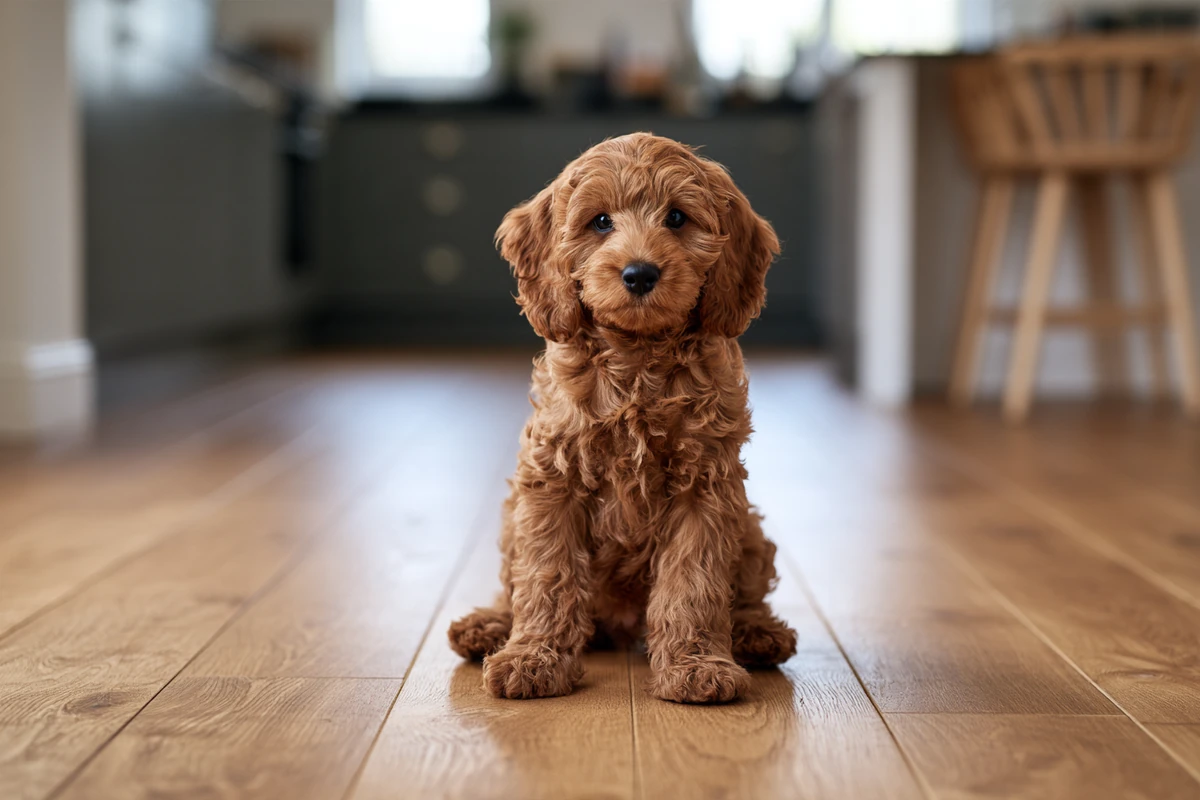
Advertise Australian Labradoodle puppies for sale
Have an Australian Labradoodle litter due or ready? Advertise it here with the mother's details, health test results and your licence number, and link it to your free breeder profile.
No breeders are listed here yet, so the first profiles get the page to themselves.
- Free basic profile: your breeder or company name, website, social media, location, breeds and industries.
- Litters and stud dogs advertised in their own sections, never mixed with puppies for sale.
- Premium showcase for your services and prices, previous customers, awards, video, gallery and health certificates, with your phone and email shown to buyers.
- Sponsored articles about your breed or industry, written and published by our team.
- Featured placement at the top of this page, labelled as sponsored.
Is it free to advertise here?
Yes. A breeder profile and your litter and stud dog adverts are free. Premium profiles, featured placement and sponsored articles are optional paid extras; see pricing.
Do I need a licence to advertise puppies?
In England you need a dog breeding licence from your council if you breed three or more litters in 12 months or breed and sell dogs as a business, and Wales, Scotland and Northern Ireland have their own schemes. Licensed breeders show their licence number and issuing council on every advert. Puppies must be at least eight weeks old before they go to new homes.
Is my listing already here?
We add licensed breeders from councils' public registers. Search for your kennel name; if it is listed you can claim it and edit everything.
Buying an Australian Labradoodle puppy
Australian Labradoodle puppies for sale come in three sizes, Miniature, Medium and Standard, which ALAUK puts at roughly 36–41 cm, 43–51 cm and 53–61 cm tall. At eight weeks, adult size and coat are still an estimate, so ask how the parents and earlier litters turned out. The RKC describes both the Labrador and the Poodle as intelligent, so expect a puppy that needs training and daily exercise from the start. Before paying a deposit, read the parents' hip, elbow, eye and DNA paperwork yourself, meet the mother with her litter and ask how often the adult coat will need a full groom. Every puppy must be microchipped and registered on a database by eight weeks old. Because this is not an RKC breed there are no RKC pedigree papers, but you can put your dog on the RKC Activity Register to try agility, obedience or rally.
Health tests to ask about
Health advice for the Australian Labradoodle has to come from the breeds behind it. For the Labrador, the RKC's Good Practice list covers six DNA tests plus hip, elbow and eye screening, and Best Practice adds a DNA test for HNPK. For the Standard Poodle, the RKC places DNA tests for two forms of progressive retinal atrophy and for von Willebrand disease, plus eye and hip screening, at Best Practice. Because Cocker Spaniels were added as the type developed, the tests the RKC lists for that breed are also worth asking about. ALAUK's own guidance covers hips, elbows and patellas, a BVA eye examination and DNA tests for PRA, vWD, EIC and degenerative myelopathy (DM), and says a carrier must only be mated to a clear dog.
The BVA/RKC Canine Health Schemes are open to crossbreeds. Hips and elbows are X-rayed from one year old; hip scores run from 0 to 106, lower being better, and the schemes recommend breeding only from dogs with elbow grade 0. The Labrador is in Breed Watch Category 2, flagged for legs too short for the body and for being significantly overweight; the Standard Poodle is in Category 1. Testing lowers risk; it cannot guarantee a healthy puppy.
- Labrador, Good Practice: DNA tests for centronuclear myopathy (CNM), exercise induced collapse (EIC), macular corneal dystrophy (MCD), progressive retinal atrophy (prcd-PRA), skeletal dysplasia (SD2) and Stargardt disease (STGD)
- Labrador, Good Practice: BVA/RKC Hip Dysplasia Scheme, BVA/RKC Elbow Dysplasia Scheme and BVA/RKC/ISDS Eye Scheme
- Labrador, Best Practice: DNA test for hereditary nasal parakeratosis (HNPK)
- Standard Poodle, Best Practice: DNA tests for progressive retinal atrophy (PRA rcd4 and prcd-PRA) and von Willebrand disease (vWD1)
- Standard Poodle, Best Practice: BVA/KC/ISDS Eye Scheme and BVA/KC Hip Dysplasia Scheme
- Cocker Spaniel, Good Practice (relevant where Cocker lines are close up): DNA tests for acral mutilation syndrome (AMS) and prcd-PRA
- Cocker Spaniel, Best Practice: DNA tests for adult-onset neuropathy (AON) and familial nephropathy (FN); BVA/KC/ISDS Eye Scheme with gonioscopy; BVA/KC Hip Dysplasia Scheme
- Breed Watch: Labrador Category 2; Standard Poodle Category 1; the Australian Labradoodle itself is not covered
More for Australian Labradoodle owners and breeders
- Australian Labradoodle: breeders
- Australian Labradoodle: puppies for sale
- Australian Labradoodle: stud dogs
- All Crossbreeds breeds
Official sources
- Australian Labradoodle Association UK
- Health testing u2013 Australian Labradoodle Association UK
- Retriever (Labrador) u2013 Royal Kennel Club breed information
- Poodle (Standard) u2013 Royal Kennel Club breed information
- Spaniel (Cocker) u2013 Royal Kennel Club breed information
- Retriever (Labrador) Breed Watch Category 2 u2013 Royal Kennel Club
- What is a crossbreed dog? u2013 Royal Kennel Club
- Activity Register u2013 Royal Kennel Club
- Health Test Results Finder u2013 Royal Kennel Club
- Hip Dysplasia Scheme u2013 British Veterinary Association
- Elbow Dysplasia Scheme u2013 British Veterinary Association
- Eye Scheme u2013 British Veterinary Association