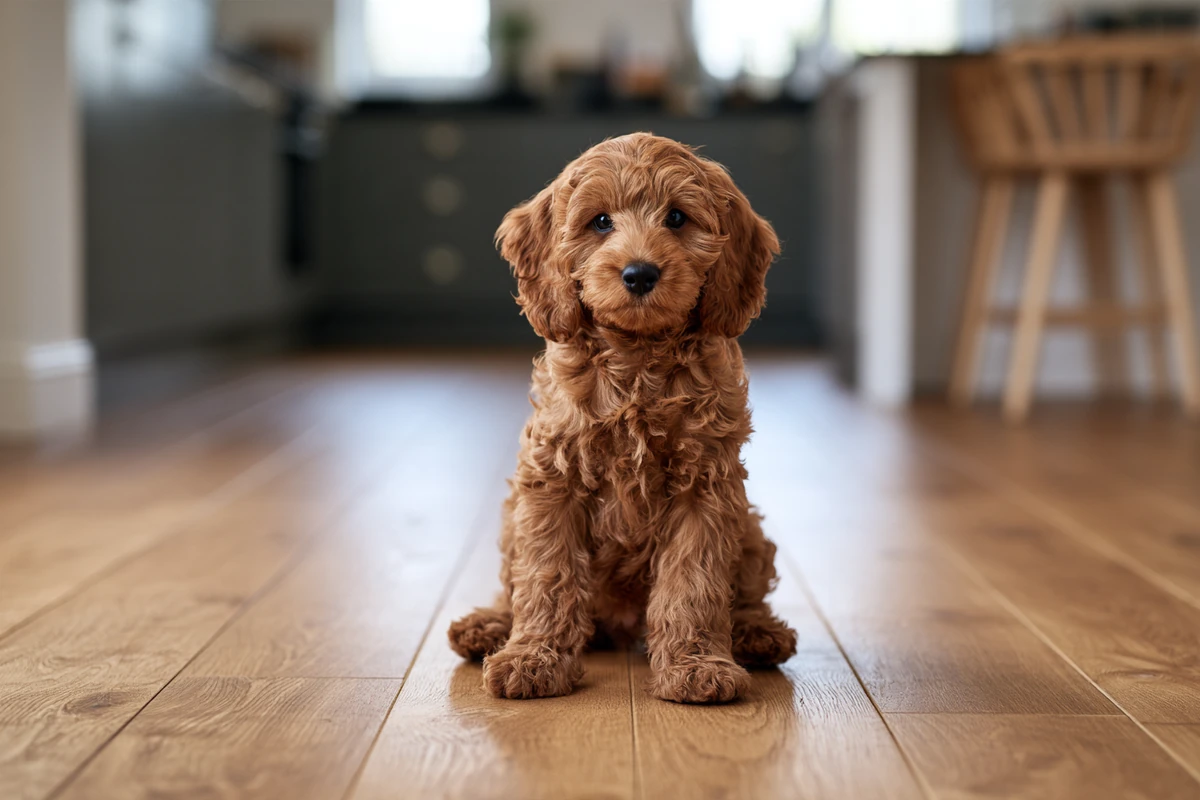
Advertise your Australian Labradoodle stud dog
Offer your Australian Labradoodle at stud to owners of health-tested bitches. Show his registration, health test results and achievements, and link the listing to your free breeder profile.
No breeders are listed here yet, so the first profiles get the page to themselves.
- Free basic profile: your breeder or company name, website, social media, location, breeds and industries.
- Litters and stud dogs advertised in their own sections, never mixed with puppies for sale.
- Premium showcase for your services and prices, previous customers, awards, video, gallery and health certificates, with your phone and email shown to buyers.
- Sponsored articles about your breed or industry, written and published by our team.
- Featured placement at the top of this page, labelled as sponsored.
Is it free to advertise here?
Yes. A breeder profile and your litter and stud dog adverts are free. Premium profiles, featured placement and sponsored articles are optional paid extras; see pricing.
Do I need a licence to advertise puppies?
In England you need a dog breeding licence from your council if you breed three or more litters in 12 months or breed and sell dogs as a business, and Wales, Scotland and Northern Ireland have their own schemes. Licensed breeders show their licence number and issuing council on every advert. Puppies must be at least eight weeks old before they go to new homes.
Is my listing already here?
We add licensed breeders from councils' public registers. Search for your kennel name; if it is listed you can claim it and edit everything.
Using an Australian Labradoodle stud dog
When choosing an Australian Labradoodle stud dog, look at health results before colour or coat. Ask for his BVA hip score and elbow grade, a recent BVA eye certificate and DNA results covering the conditions the RKC lists for the Labrador and the Standard Poodle, plus the Cocker Spaniel tests if Cocker lines are close up. Compare his results with the bitch's so that a carrier is only paired with a clear mate, as ALAUK advises. He cannot be on the RKC Breed Register, but if he is on the Activity Register his results can appear on the Health Test Results Finder. The RKC's inbreeding coefficient calculator, the service breeders once knew as Mate Select, works from RKC pedigree records and breed averages, so it is designed for registered pedigree matings rather than Australian Labradoodle pairings. Compare written pedigrees instead and avoid mating related dogs. Agree the fee and terms in writing.
Health tests for an Australian Labradoodle stud
Health advice for the Australian Labradoodle has to come from the breeds behind it. For the Labrador, the RKC's Good Practice list covers six DNA tests plus hip, elbow and eye screening, and Best Practice adds a DNA test for HNPK. For the Standard Poodle, the RKC places DNA tests for two forms of progressive retinal atrophy and for von Willebrand disease, plus eye and hip screening, at Best Practice. Because Cocker Spaniels were added as the type developed, the tests the RKC lists for that breed are also worth asking about. ALAUK's own guidance covers hips, elbows and patellas, a BVA eye examination and DNA tests for PRA, vWD, EIC and degenerative myelopathy (DM), and says a carrier must only be mated to a clear dog.
The BVA/RKC Canine Health Schemes are open to crossbreeds. Hips and elbows are X-rayed from one year old; hip scores run from 0 to 106, lower being better, and the schemes recommend breeding only from dogs with elbow grade 0. The Labrador is in Breed Watch Category 2, flagged for legs too short for the body and for being significantly overweight; the Standard Poodle is in Category 1. Testing lowers risk; it cannot guarantee a healthy puppy.
- Labrador, Good Practice: DNA tests for centronuclear myopathy (CNM), exercise induced collapse (EIC), macular corneal dystrophy (MCD), progressive retinal atrophy (prcd-PRA), skeletal dysplasia (SD2) and Stargardt disease (STGD)
- Labrador, Good Practice: BVA/RKC Hip Dysplasia Scheme, BVA/RKC Elbow Dysplasia Scheme and BVA/RKC/ISDS Eye Scheme
- Labrador, Best Practice: DNA test for hereditary nasal parakeratosis (HNPK)
- Standard Poodle, Best Practice: DNA tests for progressive retinal atrophy (PRA rcd4 and prcd-PRA) and von Willebrand disease (vWD1)
- Standard Poodle, Best Practice: BVA/KC/ISDS Eye Scheme and BVA/KC Hip Dysplasia Scheme
- Cocker Spaniel, Good Practice (relevant where Cocker lines are close up): DNA tests for acral mutilation syndrome (AMS) and prcd-PRA
- Cocker Spaniel, Best Practice: DNA tests for adult-onset neuropathy (AON) and familial nephropathy (FN); BVA/KC/ISDS Eye Scheme with gonioscopy; BVA/KC Hip Dysplasia Scheme
- Breed Watch: Labrador Category 2; Standard Poodle Category 1; the Australian Labradoodle itself is not covered
More for Australian Labradoodle owners and breeders
- Australian Labradoodle: breeders
- Australian Labradoodle: puppies for sale
- Australian Labradoodle: stud dogs
- All Crossbreeds breeds
Official sources
- Australian Labradoodle Association UK
- Health testing u2013 Australian Labradoodle Association UK
- Retriever (Labrador) u2013 Royal Kennel Club breed information
- Poodle (Standard) u2013 Royal Kennel Club breed information
- Spaniel (Cocker) u2013 Royal Kennel Club breed information
- Retriever (Labrador) Breed Watch Category 2 u2013 Royal Kennel Club
- What is a crossbreed dog? u2013 Royal Kennel Club
- Activity Register u2013 Royal Kennel Club
- Health Test Results Finder u2013 Royal Kennel Club
- Hip Dysplasia Scheme u2013 British Veterinary Association
- Elbow Dysplasia Scheme u2013 British Veterinary Association
- Eye Scheme u2013 British Veterinary Association