Advertise your Basenji puppies, litters and stud dogs
Breed Basenjis? List your kennel
If you breed Basenjis in the UK, add your kennel to caninebreeder.co.uk so buyers searching for Basenji puppies for sale can find you by breed and location. A basic listing shows your kennel or company name, website, social media, location and categories. An upgraded profile lets you advertise a Basenji stud dog, announce planned litters and set out the Fanconi, PRA-BJ1 and eye results behind your dogs. Add your listing or compare plans.
No breeders are listed here yet, so the first profiles get the page to themselves.
- Free basic profile: your breeder or company name, website, social media, location, breeds and industries.
- Litters and stud dogs advertised in their own sections, never mixed with puppies for sale.
- Premium showcase for your services and prices, previous customers, awards, video, gallery and health certificates, with your phone and email shown to buyers.
- Sponsored articles about your breed or industry, written and published by our team.
- Featured placement at the top of this page, labelled as sponsored.
Is it free to advertise here?
Yes. A breeder profile and your litter and stud dog adverts are free. Premium profiles, featured placement and sponsored articles are optional paid extras; see pricing.
Do I need a licence to advertise puppies?
In England you need a dog breeding licence from your council if you breed three or more litters in 12 months or breed and sell dogs as a business, and Wales, Scotland and Northern Ireland have their own schemes. Licensed breeders show their licence number and issuing council on every advert. Puppies must be at least eight weeks old before they go to new homes.
Is my listing already here?
We add licensed breeders from councils' public registers. Search for your kennel name; if it is listed you can claim it and edit everything.
About the Basenji
About the Basenji
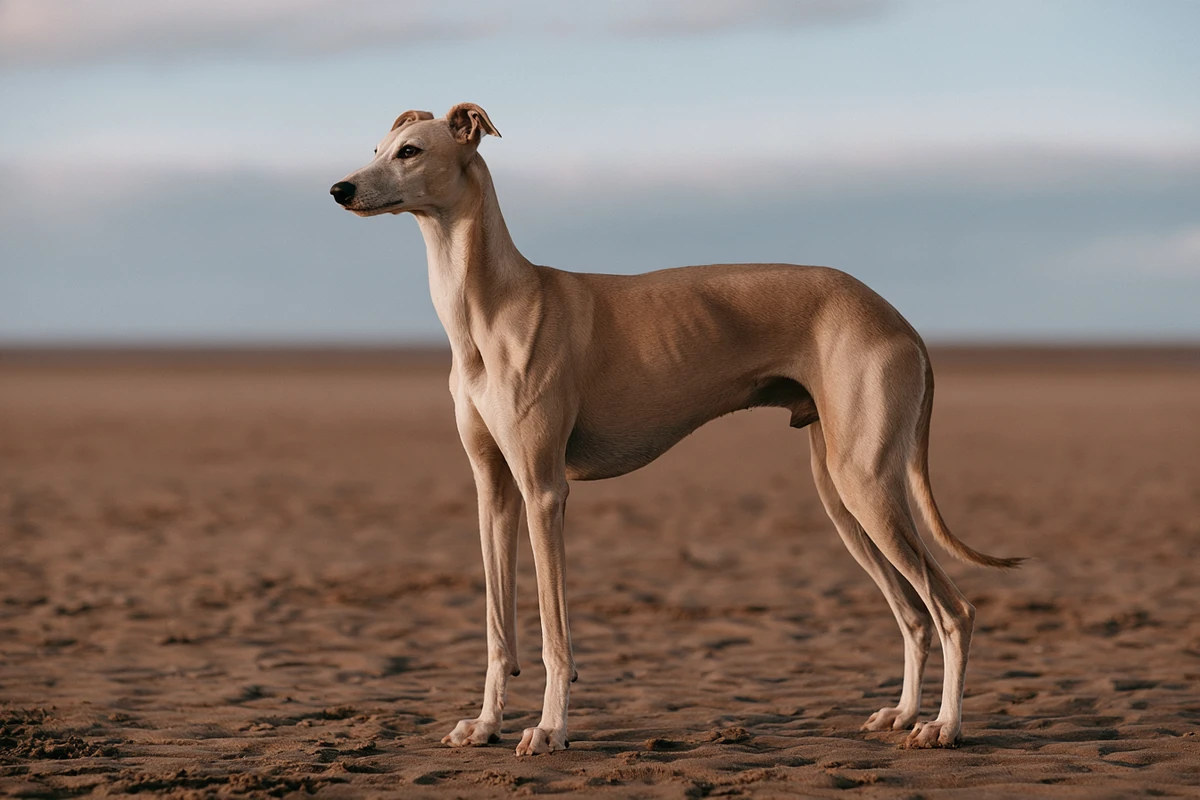
The Basenji is a small, lightly built hound from Central Africa, placed by The Royal Kennel Club (RKC) in the Hound Group. According to the RKC breed page, the breed was set up in England in 1936 with dogs brought over from the Congo, where they had hunted as all-rounders, using both sight and scent. The RKC notes that dogs resembling the breed appear in paintings in the tombs of the Pharaohs, and the Basenji Club of America describes it as an ancient hunting hound. It is known as the barkless dog, but it is far from silent: in place of a bark it makes a distinctive yodelling, chortling sound, and it also growls and whines.
Size and build
The RKC breed standard describes a fine-boned, elegant dog that is tall for its length, with a wrinkled forehead, pricked ears, a deep chest rising to a clear waist and a tightly curled tail. The ideal height is 43 cm (17 in) for dogs and 40 cm (16 in) for bitches, with ideal weights of 11 kg and 9.5 kg. Individual dogs may be larger or smaller.
Coat and grooming
The coat is short, fine and sleek. The standard accepts black and white, red and white, black, tan and white, and brindle and white, with white on the feet, chest and tail tip. The RKC suggests grooming once a week. The breed does shed, and the standard remarks on how clean these dogs keep themselves.
Exercise
The RKC lists up to an hour of exercise a day and says the Basenji can suit a small house with a small or medium garden, in town or country. The Basenji Club of America warns that the breed will chase cats, squirrels and rabbits, and advises keeping it on a lead or behind secure fencing. It suggests lure coursing, tracking and agility as outlets for that energy.
Temperament and suitability
The standard describes an intelligent, independent and affectionate dog that can be aloof with strangers. Independence makes training a matter of patience: the American club encourages puppy and basic obedience classes, favours reward-based methods and says harsh handling does not work. The RKC gives a lifespan of over 12 years. With 64 puppies registered with the RKC in 2025, this is not a common breed in the UK, so allow time to find a litter through our Basenji breeders listings.
Basenji health tests
Basenji health and testing
The RKC's Breed Watch places the Basenji in Category 1, with no breed-specific concerns flagged for show judges. That covers visible conformation only, not inherited disease in individual dogs.
On its Basenji breed page, the RKC lists prioritising genetic diversity as Good Practice before breeding and eye testing under the BVA/KC/ISDS Eye Scheme as Best Practice; its Health Standard explains the two levels. A BVA-appointed veterinary ophthalmologist checks for inherited and non-inherited eye conditions and issues a certificate on the spot. The Basenji is not on the BVA's 2026 list of breeds with a known inherited eye disease, and the RKC's results finder shows eye results only for conditions certified as inherited, so ask to see each parent's certificate.
The Basenji Club of America names Fanconi syndrome, an inherited kidney disorder, and progressive retinal atrophy (PRA) as the breed's two significant inherited diseases, and asks for DNA tests on all breeding stock. UK laboratories offer DNA tests for Fanconi syndrome, a Basenji form of PRA and pyruvate kinase deficiency. All three are recessive, so a carrier is not expected to develop the condition but can pass it on. PRA-BJ1 accounts for only about half of the breed's PRA cases, the club says, so a clear result does not rule out other forms.
What the RKC lists for this breed
- Good Practice: prioritising genetic diversity (litter coefficient of inbreeding at or below the breed average)
- Best Practice: eye testing using the BVA/KC/ISDS Eye Scheme (run by the BVA as the BVA/RKC/ISDS Eye Scheme)
- Breed-specific DNA testing package: none offered by the RKC
- Additional breed-specific breeding restrictions: none
- Breed Watch: Category 1
Choosing a Basenji breeder
Choosing a Basenji breeder
RKC registrations for the Basenji have ranged from 32 to 102 puppies a year over the last decade, so breeders are few and litters infrequent. The Basenji Club of America notes that bitches usually come into season only once a year, so a careful breeder may keep a waiting list rather than always having puppies ready. Expect them to be frank about the breed's chasing instinct, its independence and the secure fencing it needs, and to ask about your home, other pets and daily routine. They should show you DNA results for Fanconi syndrome and PRA-BJ1 for both parents, recent eye certificates and the litter's coefficient of inbreeding. You should see the puppies with their mother where they were born: in England, a licensed breeder may not sell a puppy under eight weeks old or show one to buyers without its mother (Schedule 6 of the 2018 licensing regulations). Every puppy in the UK must be microchipped and registered on a database by eight weeks, and in England anyone breeding three or more litters in 12 months and selling any of the puppies needs a council licence.
Questions to ask
- Can I see both parents' DNA results for Fanconi syndrome and PRA-BJ1, and their BVA/KC/ISDS eye certificates?
- What is the coefficient of inbreeding for this litter, and how does it compare with the breed average?
- How have the puppies been introduced to children, cats and everyday household noise?
- What fencing and lead training would you expect me to have in place?
- Will you take the dog back at any age if I can no longer keep it?
Basenji questions
Do Basenjis bark?
Not in the usual way. The RKC breed standard describes the Basenji as barkless but not mute: it makes a yodelling, chortling sound, and the Basenji Club of America notes that it also growls, whines and whimpers. Expect a vocal dog, just not a barking one.
Can a Basenji live with cats or other small pets?
It needs care. The breed was developed to hunt, and the Basenji Club of America warns that Basenjis will chase cats, squirrels and rabbits, advising that they live on a lead or behind secure fencing. Ask the breeder how the puppies have been raised around other animals, and plan slow, supervised introductions.
What health tests should a Basenji's parents have?
On its breed page the RKC lists prioritising genetic diversity as Good Practice and an eye examination under the BVA/KC/ISDS Eye Scheme as Best Practice. The Basenji Club of America also asks for DNA tests for Fanconi syndrome and PRA-BJ1 on all breeding stock, so ask for those results and for the litter's coefficient of inbreeding.
How much exercise and grooming does a Basenji need?
The RKC lists up to an hour of exercise a day and grooming once a week. The coat is short and the breed keeps itself clean, though it does shed. Much of that exercise will need to be on a lead or in a securely fenced area because of the breed's chasing instinct.
More for Basenji owners and breeders
Official sources
- Basenji breed page - The Royal Kennel Club
- Basenji breed standard - The Royal Kennel Club
- Eye Scheme - British Veterinary Association canine health schemes
- Breed Watch Category 1 - The Royal Kennel Club
- The Royal Kennel Club Health Standard
- Manage and maintain genetic diversity - The Royal Kennel Club
- Inbreeding coefficient calculator - The Royal Kennel Club
- Health Test Results Finder - The Royal Kennel Club
- Basenji health - Basenji Club of America
- Find a Club - The Royal Kennel Club
- Dog breeding licence (England) - GOV.UK
- Animal Welfare (Licensing of Activities Involving Animals) (England) Regulations 2018, Schedule 6