Advertise your Bavarian Mountain Hound puppies, litters and stud dogs
Breed Bavarian Mountain Hounds? List your kennel
If you breed Bavarian Mountain Hounds in the UK, add your kennel to caninebreeder.co.uk so buyers searching for Bavarian Mountain Hound puppies for sale can find you by breed and location. A basic listing shows your kennel name, website, social links, location and categories. An upgraded profile lets you advertise a Bavarian Mountain Hound stud dog, post planned litters and set out the hip scores and tracking qualifications behind your hounds, so buyers can see your health testing before they get in touch.
No breeders are listed here yet, so the first profiles get the page to themselves.
- Free basic profile: your breeder or company name, website, social media, location, breeds and industries.
- Litters and stud dogs advertised in their own sections, never mixed with puppies for sale.
- Premium showcase for your services and prices, previous customers, awards, video, gallery and health certificates, with your phone and email shown to buyers.
- Sponsored articles about your breed or industry, written and published by our team.
- Featured placement at the top of this page, labelled as sponsored.
Is it free to advertise here?
Yes. A breeder profile and your litter and stud dog adverts are free. Premium profiles, featured placement and sponsored articles are optional paid extras; see pricing.
Do I need a licence to advertise puppies?
In England you need a dog breeding licence from your council if you breed three or more litters in 12 months or breed and sell dogs as a business, and Wales, Scotland and Northern Ireland have their own schemes. Licensed breeders show their licence number and issuing council on every advert. Puppies must be at least eight weeks old before they go to new homes.
Is my listing already here?
We add licensed breeders from councils' public registers. Search for your kennel name; if it is listed you can claim it and edit everything.
About the Bavarian Mountain Hound
About the Bavarian Mountain Hound
The Bavarian Mountain Hound is a German scent hound, developed to track wounded game across steep mountain slopes. The Royal Kennel Club (RKC) places it in the Hound Group and suggests it is, in part, a scaled-down form of the Hanoverian Hound (itself a compact German bloodhound type), which contributed heavily to its ancestry. The breed standard describes a hound with a strong nose that works on the lead with persistence and stamina. The Bavarian Mountain Hound Society of GB runs tracking test and training days in the UK.
Size and build
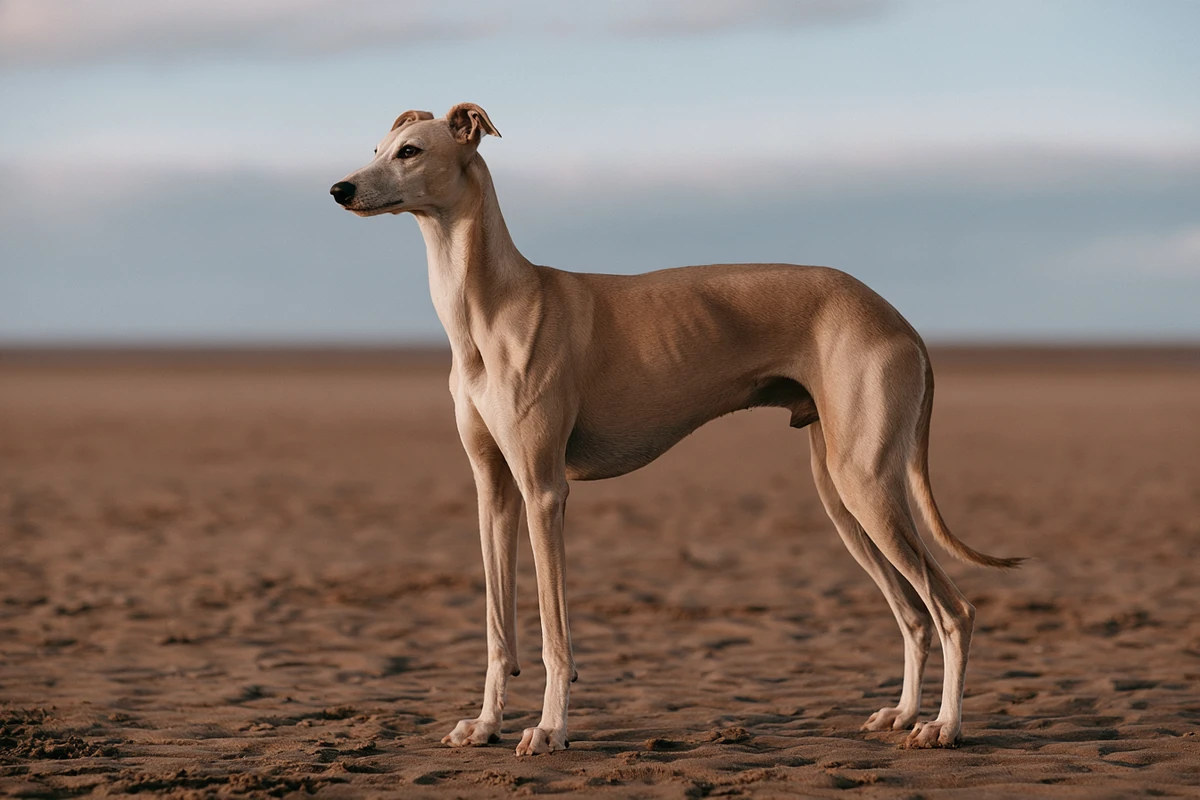
This is a medium-sized, agile and athletic hound: fairly lightly built but well muscled, with a body a little longer than it is tall. The RKC breed standard gives a height at the withers of 47 to 52 cm for dogs and 44 to 48 cm for bitches, with weight in proportion to height.
Coat and grooming
The coat is short, dense and close-lying, slightly harsh to the touch and finer on the head and ears. Permitted colours are deer red, tan and fawn, each of which may be flecked with black hairs, plus brindle. Colour is usually strongest along the back and tail, the muzzle and ears are darker, and a small pale patch on the chest is allowed. The RKC suggests grooming once a week, and the breed sheds.
Exercise
The RKC puts exercise needs at more than two hours a day. It suggests a country home with a large garden, although a small house can be suitable. The society's tracking days give owners a structured way to work their hounds.
Temperament and suitability
The breed standard describes a calm, biddable and self-assured hound that is devoted to its owner, reserved with strangers and never shy or aggressive. The breed society calls Bavarians independent, strong-minded, social and intelligent. It says they need to live as part of the family rather than in a kennel, and that a hound which is not kept mentally content can become bored and destructive. It advises against the breed for people who hunt only occasionally and would not train or condition the hound, and suggests meeting the breed in person, talking to more than one breeder and going to a society tracking event before committing. The RKC gives a lifespan of over 10 years, and the society says the breed can live to between 12 and 15 years.
Bavarian Mountain Hound health tests
Health and testing
The RKC's Breed Watch places the Bavarian Mountain Hound in Category 1: the RKC has not flagged any breed-specific concerns for show judges beyond what the breed standard already covers. That does not mean the breed is free of health problems.
For breeding stock, the RKC lists prioritising genetic diversity under Good Practice, the minimum it strongly recommends, and hip testing under Best Practice, and says responsible breeders should complete both. Hip scoring under the BVA/KC Hip Dysplasia Scheme uses X-rays taken under anaesthesia or heavy sedation once the dog is at least a year old. Each hip is scored from 0 to 53, giving a total of 0 to 106, and a lower score is better. BVA publishes a median score for each breed and recommends breeding only from dogs scoring below or close to it.
The Bavarian Mountain Hound Society of GB says epilepsy is inherited in the breed and usually appears between the ages of one and five. It says the only current way to reduce the risk is to research pedigrees before breeding, and it asks owners to report seizures or a diagnosis so they can be added to its health database.
What the RKC lists for this breed
- Good Practice: Prioritising genetic diversity (the RKC advises a litter inbreeding coefficient at or below the breed average)
- Best Practice: Hip testing (for hip dysplasia) using the BVA/KC Hip Dysplasia Scheme
- Breed Watch: Category 1
Choosing a Bavarian Mountain Hound breeder
Choosing a Bavarian Mountain Hound breeder
The Bavarian Mountain Hound Society of GB advises speaking to several breeders before choosing one, and expects a good breeder to question you as closely as you question them, including about what you plan to do with the hound. Its guidance says both parents should be Kennel Club registered, hip scored under the BVA scheme with certificates you can see, and hold at least the society's Level 1 Schweisshund certificate, or a pass under ISHV or JGHV rules if they were tested abroad. It also suggests that neither parent is bred from before 30 months of age and that a bitch does not whelp a litter after her eighth birthday. A knowledgeable breeder should be open about any epilepsy in their lines, explain how the litter will be raised and socialised, and supply a puppy pack with copies of both parents' health and working certificates and a contract of sale. Puppies must be microchipped and registered by eight weeks old. Many reputable breeders also include a clause giving them first refusal if you ever need to rehome the hound.
Questions to ask
- Can I see both parents' BVA/KC hip score certificates, and how do the scores compare with the breed median?
- Which Schweisshund or other tracking qualifications do the sire and dam hold?
- Has epilepsy appeared in either parent's close family?
- What is the litter's inbreeding coefficient compared with the breed average?
- Will you take the hound back, or help rehome it, if my circumstances change?
Bavarian Mountain Hound questions
Is a Bavarian Mountain Hound a good family pet?
It can be, in the right home. The breed standard describes a calm hound that is devoted to its owner but reserved with strangers, and the breed society says Bavarians need to live as part of the family rather than in a kennel. The RKC lists more than two hours of exercise a day, and the society warns that a bored hound can become destructive. It also advises against buying one to teach children responsibility.
How much exercise does a Bavarian Mountain Hound need?
The RKC lists more than two hours a day and suggests a country home with a large garden. The Bavarian Mountain Hound Society of GB runs tracking training days where owners can learn to work their hounds on a trail.
What health tests should the parents have?
The RKC lists hip testing under the BVA/KC Hip Dysplasia Scheme as Best Practice and prioritising genetic diversity as Good Practice, so ask for both parents' hip scores and the litter's inbreeding coefficient. The breed society also says epilepsy is inherited in the breed, so ask whether it has occurred in either parent's family.
Is the Bavarian Mountain Hound only for people who hunt?
The society's advice centres on commitment: owners need to give the hound attention, patience and continued training for its whole life. It warns against the breed for people who would only take a hound out hunting now and then, with little training or conditioning, and for anyone wanting a kennel dog.
More for Bavarian Mountain Hound owners and breeders
- Bavarian Mountain Hound: breeders
- Bavarian Mountain Hound: puppies for sale
- Bavarian Mountain Hound: stud dogs
- All Hound group breeds
- Deer stalking and deer tracking dogs
Official sources
- Bavarian Mountain Hound breed page - The Royal Kennel Club
- Bavarian Mountain Hound breed standard - The Royal Kennel Club
- Breed Watch Category 1 - The Royal Kennel Club
- BVA/KC Hip Dysplasia Scheme - The Royal Kennel Club
- Hip Dysplasia Scheme - British Veterinary Association
- Manage and maintain genetic diversity - The Royal Kennel Club
- Inbreeding calculators - The Royal Kennel Club
- Inbreeding coefficient calculator - The Royal Kennel Club
- Health Test Results Finder - The Royal Kennel Club
- Bavarian Mountain Hound Society of GB
- Selecting a breeder - Bavarian Mountain Hound Society of GB
- Purchasing a Bavarian Mountain Hound - Bavarian Mountain Hound Society of GB
- Epilepsy - Bavarian Mountain Hound Society of GB
- Hip dysplasia - Bavarian Mountain Hound Society of GB
- Dog breeding licence (England) - GOV.UK
- Get your dog or cat microchipped - GOV.UK