
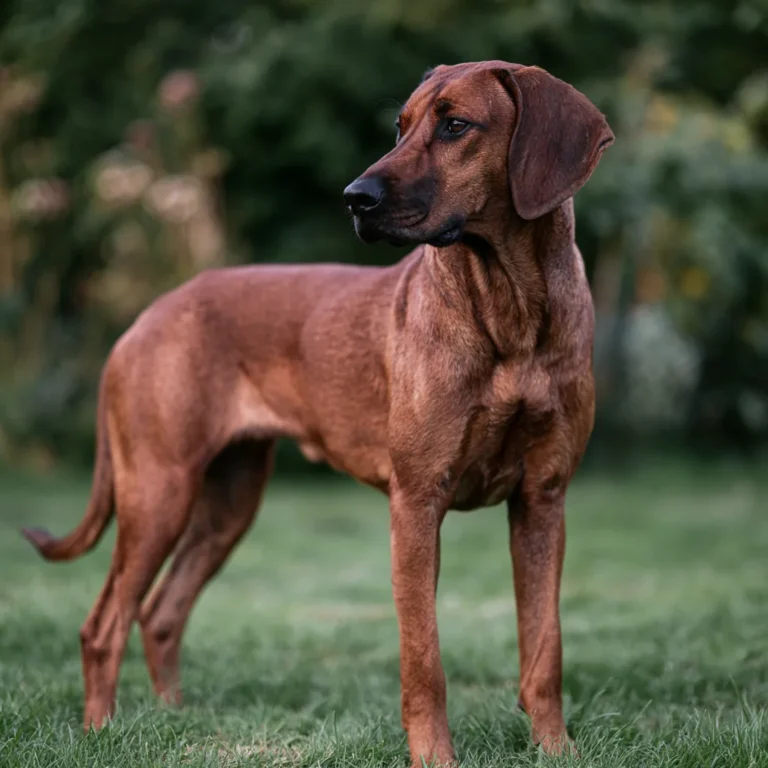
Buying a Bavarian Mountain Hound puppy
Bavarian Mountain Hound puppies for sale
Litters from Bavarian Mountain Hound breeders around the UK are listed here, but a listing is a starting point, not a recommendation. The breed society points out that these puppies become independent, strong-minded adult hounds that need training throughout their lives, so expect a responsible breeder to ask about your plans. Visit, meet the puppies with their mother, and look up both parents' hip scores on the RKC Health Test Results Finder. Ask for the litter's inbreeding coefficient too. Every puppy must be microchipped and registered by eight weeks old. In England, anyone who breeds three or more litters in 12 months and sells any of the puppies, or runs a business breeding and advertising dogs for sale, needs a licence from the local council. Your puppy should come with registration papers, copies of the parents' health and working certificates and a written contract.
Health tests to ask about
Health and testing
The RKC's Breed Watch places the Bavarian Mountain Hound in Category 1: the RKC has not flagged any breed-specific concerns for show judges beyond what the breed standard already covers. That does not mean the breed is free of health problems.
For breeding stock, the RKC lists prioritising genetic diversity under Good Practice, the minimum it strongly recommends, and hip testing under Best Practice, and says responsible breeders should complete both. Hip scoring under the BVA/KC Hip Dysplasia Scheme uses X-rays taken under anaesthesia or heavy sedation once the dog is at least a year old. Each hip is scored from 0 to 53, giving a total of 0 to 106, and a lower score is better. BVA publishes a median score for each breed and recommends breeding only from dogs scoring below or close to it.
The Bavarian Mountain Hound Society of GB says epilepsy is inherited in the breed and usually appears between the ages of one and five. It says the only current way to reduce the risk is to research pedigrees before breeding, and it asks owners to report seizures or a diagnosis so they can be added to its health database.
What the RKC lists for this breed
- Good Practice: Prioritising genetic diversity (the RKC advises a litter inbreeding coefficient at or below the breed average)
- Best Practice: Hip testing (for hip dysplasia) using the BVA/KC Hip Dysplasia Scheme
- Breed Watch: Category 1
More for Bavarian Mountain Hound owners and breeders
- Bavarian Mountain Hound: breeders
- Bavarian Mountain Hound: puppies for sale
- Bavarian Mountain Hound: stud dogs
- All Hound group breeds
- Deer stalking and deer tracking dogs
Official sources
- Bavarian Mountain Hound breed page - The Royal Kennel Club
- Bavarian Mountain Hound breed standard - The Royal Kennel Club
- Breed Watch Category 1 - The Royal Kennel Club
- BVA/KC Hip Dysplasia Scheme - The Royal Kennel Club
- Hip Dysplasia Scheme - British Veterinary Association
- Manage and maintain genetic diversity - The Royal Kennel Club
- Inbreeding calculators - The Royal Kennel Club
- Inbreeding coefficient calculator - The Royal Kennel Club
- Health Test Results Finder - The Royal Kennel Club
- Bavarian Mountain Hound Society of GB
- Selecting a breeder - Bavarian Mountain Hound Society of GB
- Purchasing a Bavarian Mountain Hound - Bavarian Mountain Hound Society of GB
- Epilepsy - Bavarian Mountain Hound Society of GB
- Hip dysplasia - Bavarian Mountain Hound Society of GB
- Dog breeding licence (England) - GOV.UK
- Get your dog or cat microchipped - GOV.UK