Advertise your Deerhound puppies, litters and stud dogs
Do you breed Deerhounds? List your kennel on caninebreeder.co.uk so buyers searching for Deerhound puppies for sale, and owners looking for a Deerhound stud dog, can find you. You can advertise Deerhound puppies for sale, planned litters and stud dogs. A breeder profile, litter adverts and stud dog adverts are free, and an optional Premium profile adds a showcase with space for health test certificates for your breeding dogs, such as DNA results. Add your listing or see pricing.
No breeders are listed here yet, so the first profiles get the page to themselves.
- Free basic profile: your breeder or company name, website, social media, location, breeds and industries.
- Litters and stud dogs advertised in their own sections, never mixed with puppies for sale.
- Premium showcase for your services and prices, previous customers, awards, video, gallery and health certificates, with your phone and email shown to buyers.
- Sponsored articles about your breed or industry, written and published by our team.
- Featured placement at the top of this page, labelled as sponsored.
Is it free to advertise here?
Yes. A breeder profile and your litter and stud dog adverts are free. Premium profiles, featured placement and sponsored articles are optional paid extras; see pricing.
Do I need a licence to advertise puppies?
In England you need a dog breeding licence from your council if you breed three or more litters in 12 months or breed and sell dogs as a business, and Wales, Scotland and Northern Ireland have their own schemes. Licensed breeders show their licence number and issuing council on every advert. Puppies must be at least eight weeks old before they go to new homes.
Is my listing already here?
We add licensed breeders from councils' public registers. Search for your kennel name; if it is listed you can claim it and edit everything.
About the Deerhound
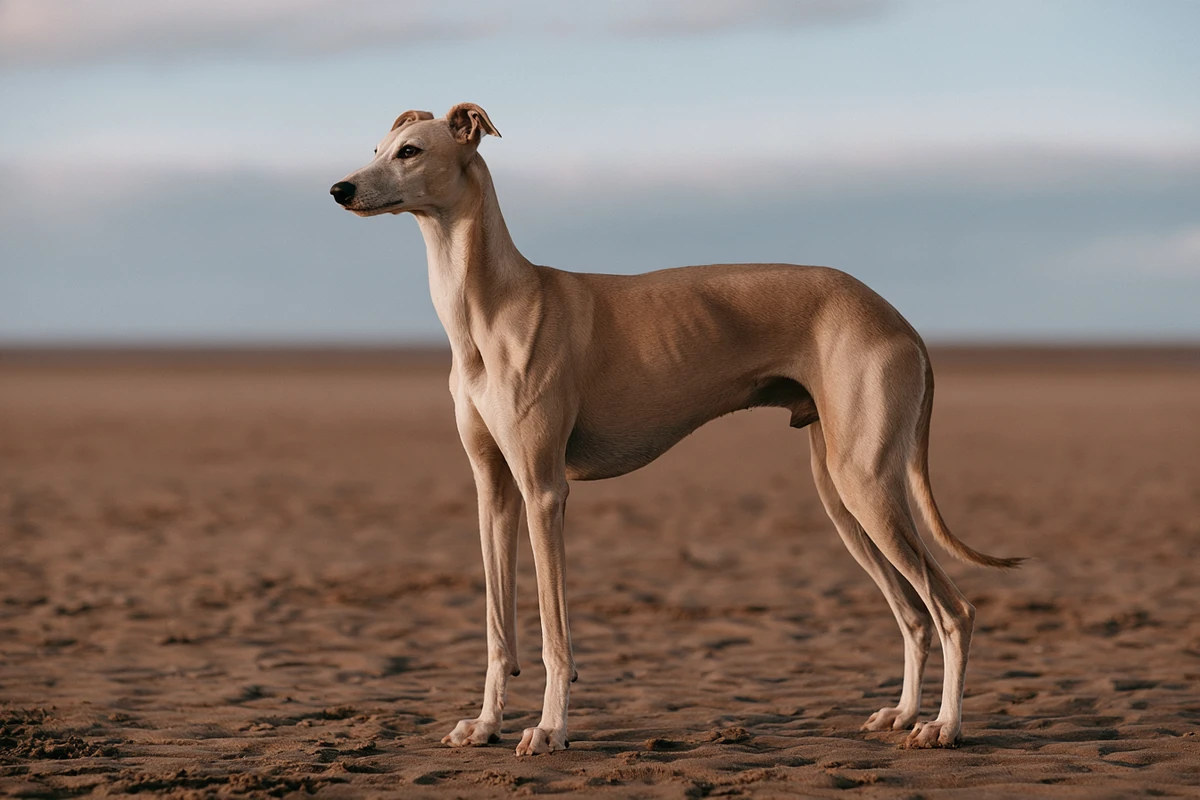
The Deerhound is Scotland's large, rough-coated sighthound, placed by The Royal Kennel Club in the Hound group. The RKC traces rough-coated greyhound-type dogs in Scotland back at least 500 years. First called the Scottish Wolfdog, the breed was developed to course deer as wolves disappeared, and was in demand for that work until huntsmen took up guns in the 18th century; Victorian enthusiasts later revived it. The Deerhound Club, founded in 1886, notes in its history of the breed that the first standard followed in 1892. The Deerhound is on the RKC's list of vulnerable native breeds (British and Irish breeds with fewer than 300 registrations a year), with 128 registrations in 2025. Browse other hound breeders, related sighthounds such as the Irish Wolfhound, or our page on vulnerable native breeds.
Size and build. The RKC classes the breed as large. The breed standard gives a minimum desirable height at the withers of 76 cm for dogs and 71 cm for bitches, with weights of about 45.5 kg and 36.5 kg respectively. In outline it is a bigger, heavier-boned Greyhound with a rough coat.
Coat and grooming. The standard asks for a thick, close-lying, ragged coat that is harsh or crisp to the touch, about 8 to 10 cm long on the body and much softer on the head, chest and belly. Accepted colours are dark blue-grey, darker and lighter greys, brindles, and yellows, sandy-reds or red fawns with black points. The RKC suggests grooming more than once a week, and the breed sheds.
Exercise. The RKC recommends more than two hours a day for an adult. The club's ownership guide says Deerhounds are slow to mature, so exercise should be restricted in the first months and built up until about 12 months. Adults need regular free galloping somewhere safe; as sighthounds they will chase distant movement, so use a lead if in doubt. See also our guide to lure coursing.
Temperament and suitability. The standard describes a gentle, friendly, docile and good-tempered hound that is eager to please and should never be suspicious, aggressive or nervous. The club adds that youngsters can be rough in play and need consistent training. The RKC suggests a large house and large garden in the country, though the club says many live happily in small houses given proper exercise and free running. The RKC gives a lifespan of over ten years.
Deerhound health tests
The RKC Deerhound breed page lists a single good-practice item before breeding: prioritising genetic diversity, which matters in a vulnerable native breed with a relatively small gene pool. It lists no screening schemes or DNA tests of its own, offers no breed-specific DNA test package, and refers breeders to the breed club's health scheme. The breed is in Breed Watch Category 1, meaning no breed-specific points of concern have been flagged for judges.
The Deerhound Club's Health Matters pages set out that scheme. The club recommends a single post-feeding bile acid blood test to screen litters for congenital portosystemic shunt before sale and arranges low-cost testing; of 995 puppies tested from 2014 to 2022, 24 (about 2.4%) had raised results. It runs a heart study into dilated cardiomyopathy (DCM) with subsidised echocardiograms for members, keeps a mortality survey, and collects data on delayed post-operative haemorrhage (DEPOH), for which a DNA test is available from a US laboratory. It also points breeders to DNA tests for Factor VII deficiency, a clotting disorder, and for a form of hairlessness caused by an SGK3 variant, and stresses that Factor VII testing is for informed mating choices rather than for excluding hounds from breeding. Its ownership guide urges owners to learn the signs of bloat.
- Prioritising genetic diversity (RKC good practice), using the RKC inbreeding coefficient calculators
- Breed club health scheme (referred to by the RKC): bile acid screening of puppies for liver shunt before sale
- Breed club heart screening (echocardiogram) for DCM
- DNA test for Factor VII deficiency (breed club; not an RKC-listed test)
- DNA test for hairlessness, SGK3 variant (breed club; not an RKC-listed test)
- DNA test for the DEPOH mutation (breed club data project; US laboratory)
- Breed Watch: Category 1
Choosing a Deerhound breeder
A careful Deerhound breeder should be able to show you a bile acid result for each puppy. The Deerhound Club only adds a litter to its puppy register if the breeder has been a paid-up member for three years and the puppies are Kennel Club registered, liver shunt tested, vaccinated and microchipped. The club says puppies usually go to new homes at around 12 weeks, with 10 weeks as the minimum. Expect the breeder to explain which heart scans and DNA tests the parents have had and how the pairing was chosen to keep inbreeding low. Under the club's code of ethics, members give written feeding advice and all Kennel Club documents, sell only where a dog can expect a happy and healthy life, and help rehome a dog if circumstances change. A good breeder will also ask about your space, fencing and how you will exercise a sighthound safely. In England, a council licence is needed to breed three or more litters in 12 months and sell any of the puppies, or to run a business breeding and advertising dogs, and the licence number must appear in adverts. Read our buyer safety guide before paying anything.
- Can I see this puppy's bile acid (liver shunt) result?
- Have both parents been heart scanned, and when?
- What are the parents' Factor VII deficiency and hairlessness DNA results?
- What is the inbreeding coefficient for this mating, and how does it compare with the breed average?
- Will the puppy be registered with The Royal Kennel Club, microchipped and at least 10 weeks old when it leaves?
Deerhound questions
How much exercise does a Deerhound need?
The Royal Kennel Club suggests more than two hours a day for an adult, including the chance to gallop freely somewhere safe. The Deerhound Club advises restricting exercise while a puppy is growing and building up to full exercise by about 12 months. As a sighthound it may chase anything moving in the distance, so use a lead where that could be a risk.
Is the Deerhound a rare breed?
Yes. The Royal Kennel Club lists it as a vulnerable native breed, meaning fewer than 300 registrations a year; there were 128 in 2025. Litters are infrequent, so you may need to wait for a puppy.
What health tests should Deerhound puppies and parents have?
The RKC's good-practice advice is to prioritise genetic diversity; it lists no screening schemes or DNA tests for the breed and refers breeders to the breed club's health scheme. The Deerhound Club recommends bile acid screening of puppies for liver shunt before sale, offers subsidised heart scans for DCM and points breeders to DNA tests for Factor VII deficiency and hairlessness. Its puppy register only accepts litters that have been liver shunt tested.
Are Deerhounds good family dogs?
The breed standard describes a gentle, friendly, docile hound that is eager to please. The Deerhound Club notes that young hounds can be rough in play and need consistent training, and the RKC suggests a large house and garden in the country. The RKC gives a lifespan of over ten years.
More for Deerhound owners and breeders
- Deerhound: breeders
- Deerhound: puppies for sale
- Deerhound: stud dogs
- All Hound group breeds
- Lure coursing for sighthounds
Official sources
- Deerhound breed information u2013 The Royal Kennel Club
- Deerhound breed standard u2013 The Royal Kennel Club
- Vulnerable native breeds u2013 The Royal Kennel Club
- Breed Watch Category 1 u2013 The Royal Kennel Club
- Manage and maintain genetic diversity u2013 The Royal Kennel Club
- Health Test Results Finder u2013 The Royal Kennel Club
- Inbreeding calculators u2013 The Royal Kennel Club
- Using your dog as stud u2013 The Royal Kennel Club
- Dog breeding licence (England) u2013 GOV.UK