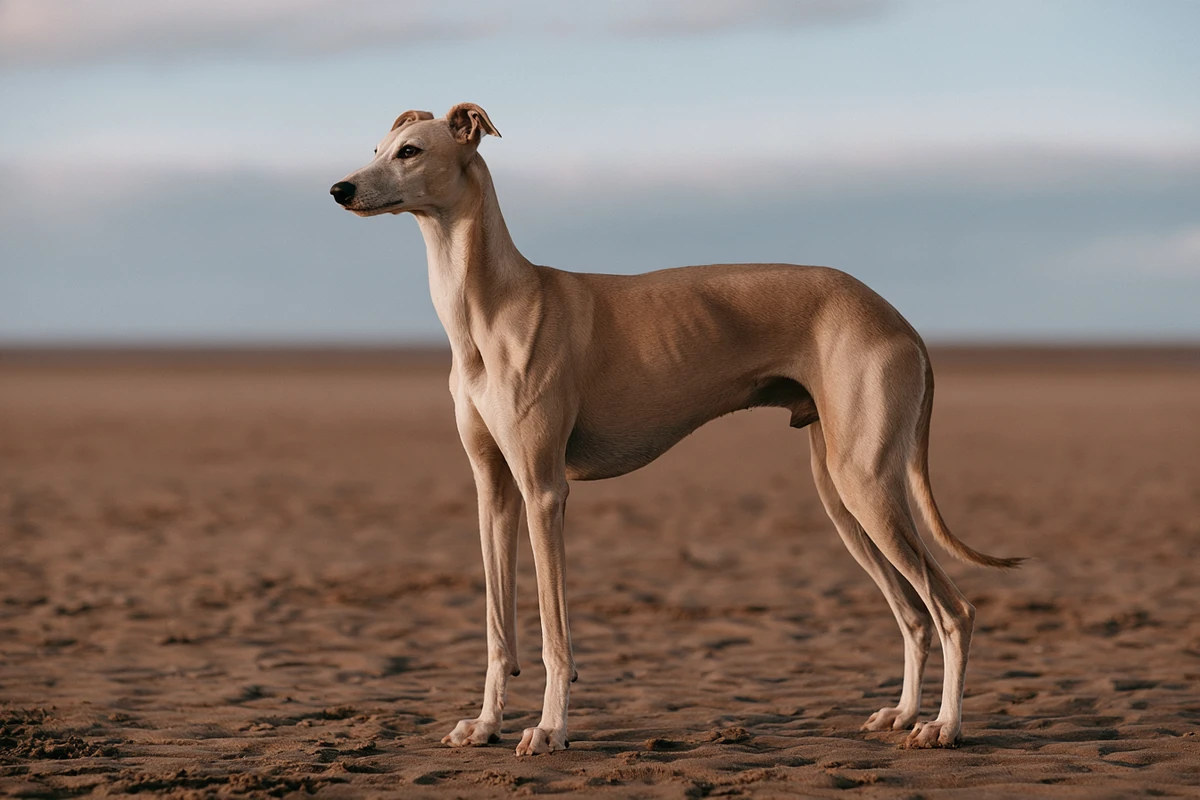
Advertise your Irish Wolfhound puppies, litters and stud dogs
Do you breed Irish Wolfhounds? List your kennel on caninebreeder.co.uk so buyers searching for Irish Wolfhound puppies for sale, and owners looking for an Irish Wolfhound stud dog, can find you. You can advertise Irish Wolfhound puppies for sale, planned litters and stud dogs, and share your heart screening certificates and liver shunt results. A basic listing shows your kennel name, location, website, social media and categories. Paid plans unlock more showcase features. Add your listing or see pricing.
No breeders are listed here yet, so the first profiles get the page to themselves.
- Free basic profile: your breeder or company name, website, social media, location, breeds and industries.
- Litters and stud dogs advertised in their own sections, never mixed with puppies for sale.
- Premium showcase for your services and prices, previous customers, awards, video, gallery and health certificates, with your phone and email shown to buyers.
- Sponsored articles about your breed or industry, written and published by our team.
- Featured placement at the top of this page, labelled as sponsored.
Is it free to advertise here?
Yes. A breeder profile and your litter and stud dog adverts are free. Premium profiles, featured placement and sponsored articles are optional paid extras; see pricing.
Do I need a licence to advertise puppies?
In England you need a dog breeding licence from your council if you breed three or more litters in 12 months or breed and sell dogs as a business, and Wales, Scotland and Northern Ireland have their own schemes. Licensed breeders show their licence number and issuing council on every advert. Puppies must be at least eight weeks old before they go to new homes.
Is my listing already here?
We add licensed breeders from councils' public registers. Search for your kennel name; if it is listed you can claim it and edit everything.
About the Irish Wolfhound
The Irish Wolfhound is a giant, rough-coated hound in the RKC Hound group, and The Royal Kennel Club calls it a gentle giant and the tallest of all breeds. As the RKC tells its history, greyhound-type dogs thought to have been brought to Ireland by Phoenician sailors were crossed with mastiffs, giving a hound big, fast and strong enough to see off the wolves that threatened livestock. Once wolves had died out in Ireland in the late 1700s numbers fell, and after the Great Famine of the 1840s the breed was very rare. A group led by the Scotsman Captain George Augustus Graham revived it, crossing the surviving hounds with heavier Deerhounds, the Great Dane and the Tibetan Mastiff. Graham founded the Irish Wolfhound Club in 1885. The breed once came in both smooth and rough coats, but only the rough-coated form remains.
It is a vulnerable native breed, meaning a British or Irish breed with fewer than 300 registrations a year; 197 puppies were registered in 2025. See our vulnerable native breeds page and other Hound group breeders.
Size and build. The breed standard wants a big, powerful, well-balanced hound with an imposing presence, heavily muscled but graceful. Minimum heights are 79 cm (31 in) for dogs and 71 cm (28 in) for bitches, and minimum weights are 54.5 kg (120 lb) and 40.9 kg (90 lb). The standard aims for dogs averaging 81 to 86 cm (32 to 34 in), and the RKC classes the breed as extra large.
Coat and grooming. The coat is rough and harsh all over, with longer, wirier hair above the eyes and beneath the jaw. The standard accepts grey, steel grey, brindle, red, black, pure white, fawn and wheaten. The RKC suggests grooming more than once a week and says the breed sheds.
Exercise and home. For an adult, the RKC suggests more than two hours of exercise a day, a large house with a large garden, and a country setting.
Temperament. The standard pairs great power, speed and courage with a gentle, friendly temperament. The RKC gives a lifespan of under 10 years. Compare the related Deerhound and Great Dane, or see our guide to breed preservation and rare breeds.
Irish Wolfhound health tests
For the Irish Wolfhound, the RKC's pre-breeding screening lists prioritising genetic diversity as Good Practice and eye examination under the BVA/KC/ISDS Eye Scheme as Best Practice, and notes that the breed has its own breed club health scheme. The RKC points to the Irish Wolfhound Health Group for that scheme; the Irish Wolfhound Club says the Group was set up in 2004 with representatives of the four UK breed clubs and is now independent. The Group runs a subsidised heart screening scheme that any Wolfhound owner can use each year, and its liver shunt page explains that breeders usually test puppies with a bile acid test at six to eight weeks, before they go home. The Irish Wolfhound Club requires its members to heart test parents before breeding and to test puppies for portosystemic shunt.
The Group's A to Z of health information covers conditions including heart disease (dilated cardiomyopathy and atrial fibrillation), bloat (gastric dilatation-volvulus), osteosarcoma, pneumonia and primary ciliary dyskinesia, which is often called rhinitis in the breed. The Irish Wolfhound is in Breed Watch Category 2, with misplaced canine teeth listed as the point of concern for judges.
- Eye examination under the BVA/KC/ISDS Eye Scheme: RKC Best Practice (RKC eye screening guidance)
- Prioritising genetic diversity: RKC Good Practice
- Breed club health scheme: Irish Wolfhound Health Group heart screening, with both parents tested within the year before mating
- Liver shunt (portosystemic shunt) bile acid test for each puppy before it goes home
- Breed Watch Category 2: misplaced canine teeth
- RKC vulnerable native breed
Choosing an Irish Wolfhound breeder
The Irish Wolfhound Health Group's puppy buyer's guide (2018) notes that many Wolfhound breeders do not advertise and often keep waiting lists, and suggests contacting a breed club first. The Irish Wolfhound Club has puppy co-ordinators who keep a record of members who are breeding, and other clubs can be found through the RKC's club finder. The guide says you should visit the breeder and the place where the puppy was born, see the puppies with their mother, and be shown where the adult hounds live. Ask for copies of both parents' heart certificates, from tests within the year before the mating, and your puppy's clear liver shunt result. The guide adds that puppies should not leave before nine or ten weeks. You should receive a receipt or contract, the vaccination record, registration papers, a diet sheet and written advice on exercise, housing and feeding through puppyhood. Expect close questions about your time, space and experience. Read our buyer safety guide before paying any deposit.
- Were both parents heart screened within the year before the mating, and may I see the certificates?
- Has this puppy had a clear liver shunt (bile acid) test?
- How long have dogs in your lines typically lived?
- What exercise and feeding plan do you recommend while the puppy is growing?
- Will you take the hound back if I can no longer keep it?
Irish Wolfhound questions
How big does an Irish Wolfhound get?
The breed standard sets a minimum height of 79 cm (31 in) and weight of 54.5 kg (120 lb) for dogs, and 71 cm (28 in) and 40.9 kg (90 lb) for bitches. It aims for dogs averaging 81 to 86 cm (32 to 34 in). The RKC classes the breed as extra large and calls it the tallest of all breeds.
How long do Irish Wolfhounds live?
The RKC gives a lifespan of under 10 years. Ask breeders how long dogs in their lines have lived. The Irish Wolfhound Health Group keeps a Longevity Recognition Register, and its heart screening scheme offers reduced-fee screens for older hounds.
What health tests should an Irish Wolfhound puppy's parents have?
The UK breed clubs expect both parents to be heart screened under the Irish Wolfhound Health Group scheme within the year before breeding, and each puppy to have a liver shunt (bile acid) test before it leaves. The RKC also lists eye examination under the BVA/KC/ISDS Eye Scheme as Best Practice, and prioritising genetic diversity as Good Practice.
Is the Irish Wolfhound a vulnerable breed?
Yes. It is on the RKC's list of vulnerable native breeds, which covers British and Irish breeds with fewer than 300 registrations a year. There were 197 Irish Wolfhound puppies registered in 2025.
More for Irish Wolfhound owners and breeders
- Irish Wolfhound: breeders
- Irish Wolfhound: puppies for sale
- Irish Wolfhound: stud dogs
- All Hound group breeds
- Vulnerable native breeds
Official sources
- Irish Wolfhound breed information - The Royal Kennel Club
- Irish Wolfhound breed standard - The Royal Kennel Club
- Irish Wolfhound Breed Watch Category 2 - The Royal Kennel Club
- Vulnerable native breeds - The Royal Kennel Club
- Eye screening scheme - The Royal Kennel Club
- Manage and maintain genetic diversity - The Royal Kennel Club
- Health Test Results Finder - The Royal Kennel Club
- Inbreeding coefficient calculator - The Royal Kennel Club
- Find a club - The Royal Kennel Club
- BVA/KC/ISDS Eye Scheme - British Veterinary Association
- The Irish Wolfhound Club
- Health - The Irish Wolfhound Club
- Thinking of a puppy? - The Irish Wolfhound Club
- Puppy buyer's guide (2018) - Irish Wolfhound Health Group, hosted by The Irish Wolfhound Club
- Irish Wolfhound Health Group
- Breed heart screening scheme - Irish Wolfhound Health Group
- Livershunt testing - Irish Wolfhound Health Group
- A to Z of health information - Irish Wolfhound Health Group