
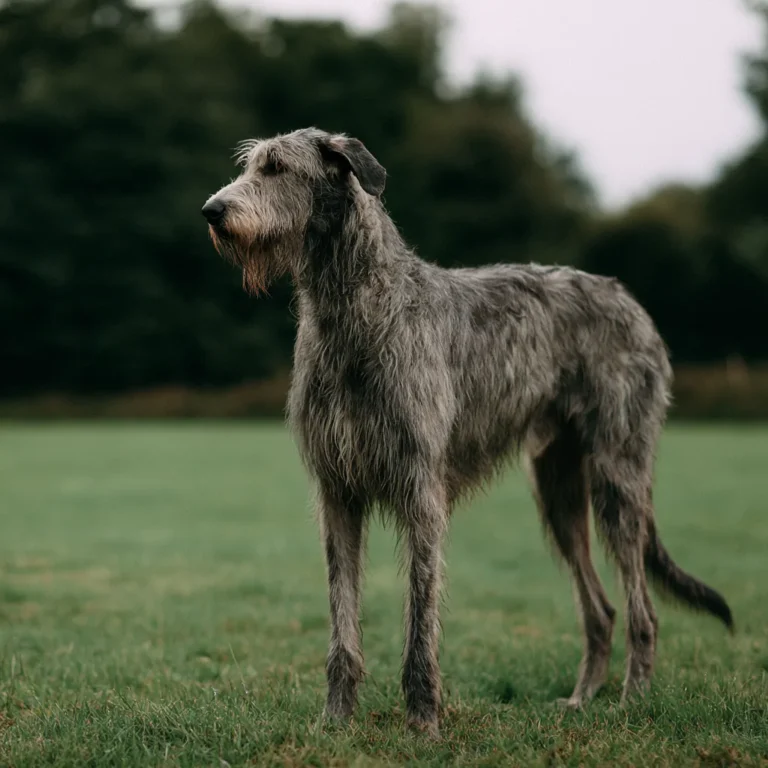
No Irish Wolfhound stud dogs are listed right now
2 breeders list the Irish Wolfhound. Ask them if they have a stud dog.
Irish Wolfhound breeders
- Irish WolfhoundSpecialities: not listed yet5-star licence (declared)
Bonaforte Irish Wolfhounds
Ashbourne, Derbyshire - Irish WolfhoundSpecialities: not listed yet
Cairnstorm Irish Wolfhounds
Yarnscombe, Devon

Do you breed the Irish Wolfhound? Add a stud dog free.
Using an Irish Wolfhound stud dog
If you are considering an Irish Wolfhound stud dog, ask to see his heart screening results under the Irish Wolfhound Health Group scheme, from a test within the year before the mating; the UK breed clubs expect this of both parents. Ask too whether he has been examined under the BVA/KC/ISDS Eye Scheme, which the RKC lists as Best Practice. Confirm his registration with The Royal Kennel Club and check his recorded results on the Health Test Results Finder. Fewer than 200 Wolfhound puppies have been registered in each of the last three years, so genetic diversity matters. Run the pairing through the RKC's Mate Select inbreeding coefficient calculator, aim at or below the breed's annual average, and avoid over-using a popular sire. Agree the fee and terms in writing, and remember that the puppies will need liver shunt tests before they go home. See stud dogs and stud services.
Health tests for an Irish Wolfhound stud
For the Irish Wolfhound, the RKC's pre-breeding screening lists prioritising genetic diversity as Good Practice and eye examination under the BVA/KC/ISDS Eye Scheme as Best Practice, and notes that the breed has its own breed club health scheme. The RKC points to the Irish Wolfhound Health Group for that scheme; the Irish Wolfhound Club says the Group was set up in 2004 with representatives of the four UK breed clubs and is now independent. The Group runs a subsidised heart screening scheme that any Wolfhound owner can use each year, and its liver shunt page explains that breeders usually test puppies with a bile acid test at six to eight weeks, before they go home. The Irish Wolfhound Club requires its members to heart test parents before breeding and to test puppies for portosystemic shunt.
The Group's A to Z of health information covers conditions including heart disease (dilated cardiomyopathy and atrial fibrillation), bloat (gastric dilatation-volvulus), osteosarcoma, pneumonia and primary ciliary dyskinesia, which is often called rhinitis in the breed. The Irish Wolfhound is in Breed Watch Category 2, with misplaced canine teeth listed as the point of concern for judges.
- Eye examination under the BVA/KC/ISDS Eye Scheme: RKC Best Practice (RKC eye screening guidance)
- Prioritising genetic diversity: RKC Good Practice
- Breed club health scheme: Irish Wolfhound Health Group heart screening, with both parents tested within the year before mating
- Liver shunt (portosystemic shunt) bile acid test for each puppy before it goes home
- Breed Watch Category 2: misplaced canine teeth
- RKC vulnerable native breed
More for Irish Wolfhound owners and breeders
- Irish Wolfhound: breeders
- Irish Wolfhound: puppies for sale
- Irish Wolfhound: stud dogs
- All Hound group breeds
- Vulnerable native breeds
Official sources
- Irish Wolfhound breed information - The Royal Kennel Club
- Irish Wolfhound breed standard - The Royal Kennel Club
- Irish Wolfhound Breed Watch Category 2 - The Royal Kennel Club
- Vulnerable native breeds - The Royal Kennel Club
- Eye screening scheme - The Royal Kennel Club
- Manage and maintain genetic diversity - The Royal Kennel Club
- Health Test Results Finder - The Royal Kennel Club
- Inbreeding coefficient calculator - The Royal Kennel Club
- Find a club - The Royal Kennel Club
- BVA/KC/ISDS Eye Scheme - British Veterinary Association
- The Irish Wolfhound Club
- Health - The Irish Wolfhound Club
- Thinking of a puppy? - The Irish Wolfhound Club
- Puppy buyer's guide (2018) - Irish Wolfhound Health Group, hosted by The Irish Wolfhound Club
- Irish Wolfhound Health Group
- Breed heart screening scheme - Irish Wolfhound Health Group
- Livershunt testing - Irish Wolfhound Health Group
- A to Z of health information - Irish Wolfhound Health Group