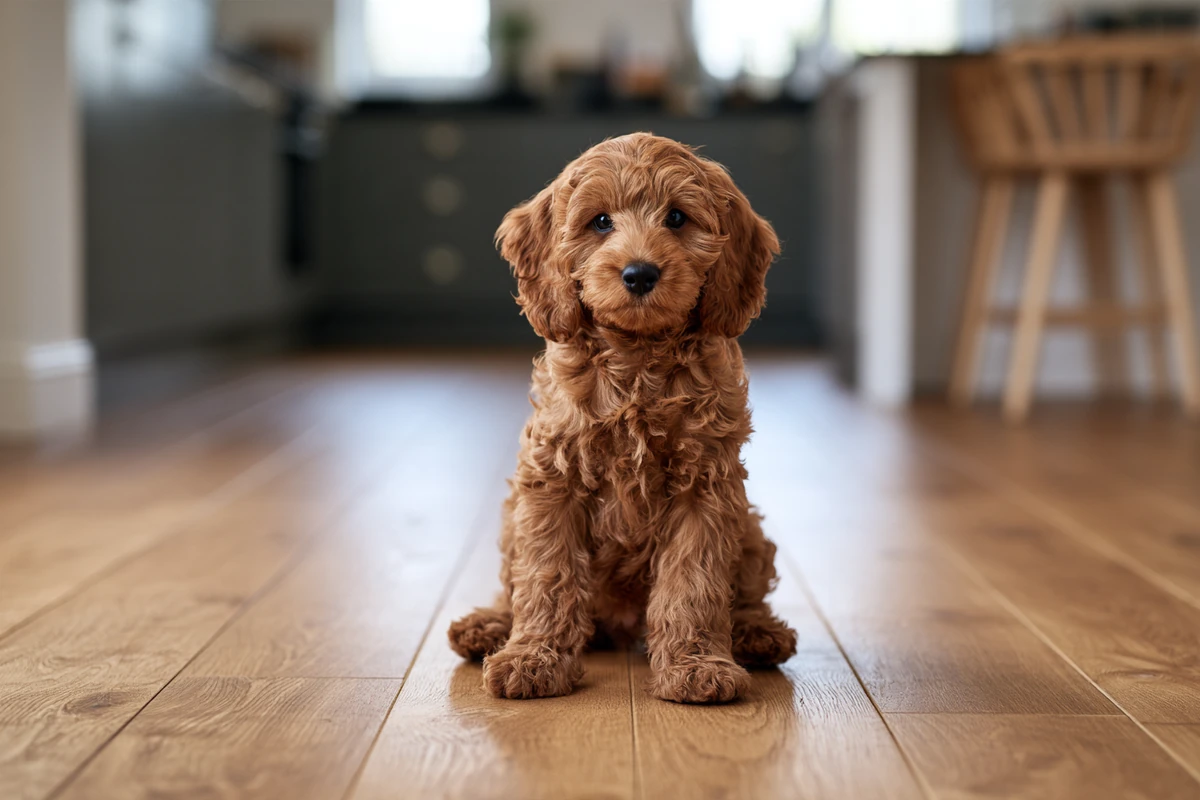
Advertise your Cavapoochon puppies, litters and stud dogs
Do you breed Cavapoochons? Caninebreeder.co.uk is an independent UK directory where you can list your kennel, advertise Cavapoochon puppies for sale and promote your Cavapoochon stud dog. Buyers want to know how each litter was bred, so your listing can show which breeds sit behind the pairing, eye and DNA results, heart checks and the adult size you expect. Add planned litters, take enquiries directly and help families find a breeder who health tests both parents.
No breeders are listed here yet, so the first profiles get the page to themselves.
- Free basic profile: your breeder or company name, website, social media, location, breeds and industries.
- Litters and stud dogs advertised in their own sections, never mixed with puppies for sale.
- Premium showcase for your services and prices, previous customers, awards, video, gallery and health certificates, with your phone and email shown to buyers.
- Sponsored articles about your breed or industry, written and published by our team.
- Featured placement at the top of this page, labelled as sponsored.
Is it free to advertise here?
Yes. A breeder profile and your litter and stud dog adverts are free. Premium profiles, featured placement and sponsored articles are optional paid extras; see pricing.
Do I need a licence to advertise puppies?
In England you need a dog breeding licence from your council if you breed three or more litters in 12 months or breed and sell dogs as a business, and Wales, Scotland and Northern Ireland have their own schemes. Licensed breeders show their licence number and issuing council on every advert. Puppies must be at least eight weeks old before they go to new homes.
Is my listing already here?
We add licensed breeders from councils' public registers. Search for your kennel name; if it is listed you can claim it and edit everything.
About the Cavapoochon
The Cavapoochon is a crossbreed, not a breed recognised by the Royal Kennel Club (RKC), so it has no breed standard and cannot be placed on the RKC Breed Register. It combines three breeds: the Cavalier King Charles Spaniel, the Bichon Frise and a Poodle. A litter can come from a Cavachon (Cavalier and Bichon) mated to a Poodle, a Cavapoo (Cavalier and Poodle) mated to a Bichon, or two Cavapoochons, so the share of each breed can vary from one litter to the next.
The parent breeds. The RKC traces the Cavalier to the toy spaniels kept at the Tudor and Stuart courts. Breeders set out to revive the older, longer-muzzled type in the late 1920s, and the breed was recognised in its own right in 1945. Its standard gives a weight of 5.4–8.2 kg and a long, silky coat, and the RKC lists it as a shedding breed. The Bichon Frise comes from a family of small white Mediterranean dogs and was developed in France; its ideal height is 23–28 cm and its soft, corkscrew-curled coat is listed as non-shedding. The Poodle was bred in Germany as a water retriever and comes in three sizes. The Toy stands under 28 cm and the Miniature 28–38 cm, and both have a dense, curly coat the RKC lists as non-shedding.
Size and coat. Adult size depends on the Poodle used and on how the three breeds combine, so ask to see both parents. Because the Cavalier sheds, a Cavapoochon may shed to some degree, and no puppy can be guaranteed to suit someone with allergies.
Grooming and exercise. The RKC suggests daily grooming for the Bichon and Poodle and grooming more than once a week for the Cavalier, so expect regular brushing and coat care. Exercise needs are modest: up to 30 minutes a day for the Bichon and up to an hour for the Cavalier and Poodle, according to the RKC.
Temperament. The breed standards describe the Cavalier as friendly with no aggression or nervousness, the Bichon as friendly and outgoing, and the Poodle as good-tempered. The RKC describes its Toy group, which includes the Cavalier and Bichon, as companion dogs that like attention, so early socialisation and learning to spend short spells alone are worth building in from the start.
Cavapoochon health tests
Health advice for the Cavapoochon comes from its three parent breeds. For the Cavalier, the RKC's Good Practice list is DNA tests for curly coat/dry eye (CC/DE) and episodic falling (EF) plus heart grading for mitral valve disease under the RKC heart scheme, with eye screening at Best Practice. The RKC also names syringomyelia as one of the main conditions screened for in Cavaliers; it is diagnosed by MRI, and the BVA Chiari malformation/syringomyelia scheme is open to crossbreeds. For the Bichon Frise, eye testing is Good Practice. The Toy Poodle has a DNA test for prcd-PRA at Good Practice, with eye and hip screening at Best Practice, while the Miniature Poodle's list, all at Best Practice, adds a DNA test for osteochondrodysplasia (OC).
The BVA eye and hip schemes accept crossbreeds, and hip X-rays are taken from one year old. The RKC heart scheme starts at 18 months and asks for the dog's RKC registration certificate, so it is used for registered Cavaliers. The Cavalier is in Breed Watch Category 2, with eye irritation, protruding eyes and poor hind movement flagged; the Bichon and both small Poodles are in Category 1. Testing lowers risk but cannot guarantee a healthy puppy.
- Cavalier, Good Practice: DNA tests for curly coat/dry eye (CC/DE) and episodic falling (EF)
- Cavalier, Good Practice: heart screening for mitral valve disease (MVD) under the RKC heart scheme for Cavalier King Charles Spaniels
- Cavalier, Best Practice: BVA/KC/ISDS Eye Scheme; the RKC also points to MRI screening for syringomyelia (BVA CM/SM Scheme)
- Bichon Frise, Good Practice: BVA/KC/ISDS Eye Scheme
- Poodle (Toy): DNA test for progressive retinal atrophy (prcd-PRA) at Good Practice; BVA/KC/ISDS Eye Scheme and BVA/KC Hip Dysplasia Scheme at Best Practice
- Poodle (Miniature), Best Practice: DNA tests for osteochondrodysplasia (OC) and prcd-PRA; BVA/KC/ISDS Eye Scheme and BVA/KC Hip Dysplasia Scheme
- Breed Watch: Cavalier Category 2; Bichon Frise and Poodle (Toy and Miniature) Category 1; the Cavapoochon itself is not covered
Choosing a Cavapoochon breeder
A careful Cavapoochon breeder can tell you exactly how the litter was bred: which parent is the Cavachon, Cavapoo or Cavapoochon, and which size of Poodle is in the background. That matters because the relevant health tests come from the Cavalier, Bichon and Poodle behind the pairing. Expect eye certificates for both parents, DNA results for CC/DE and EF where there is Cavalier ancestry and prcd-PRA where there is Poodle, and hip scores. The RKC heart scheme grades registered Cavaliers, so where a Cavalier sits in the pedigree, ask for that dog's heart grading and whether each parent has had its heart checked by a vet. You can also ask whether any Cavalier in the pedigree has been MRI-screened for syringomyelia.
Good breeders raise puppies in the home, show you the mother with her litter and have every puppy microchipped and registered by eight weeks. In England, anyone breeding three or more litters in 12 months and selling puppies needs a council licence. Expect honesty that adult size and coat vary.
- Which three breeds are behind this litter, and is the Poodle a Toy or a Miniature?
- Can I see eye certificates and DNA results for both parents?
- Has the Cavalier in the pedigree been heart graded, and have both parents had heart checks?
- What adult size and coat do you expect, based on the parents and earlier litters?
- Can I meet the mother with her puppies, and will you take the dog back if I cannot keep it?
Cavapoochon questions
Is the Cavapoochon a Royal Kennel Club breed?
No. The Cavapoochon is a crossbreed with no RKC breed standard, and it cannot be placed on the RKC Breed Register or shown at breed shows. It can join the RKC Activity Register, which is open to crossbreeds for activities such as agility, obedience and rally.
What breeds make up a Cavapoochon?
Three breeds: the Cavalier King Charles Spaniel, the Bichon Frise and a Poodle. A litter might come from a Cavachon and a Poodle, a Cavapoo and a Bichon, or two Cavapoochons, so the mix varies. Ask the breeder which Poodle size is in the background.
Does a Cavapoochon shed, and is it hypoallergenic?
The RKC lists the Bichon Frise and the Poodle as non-shedding and the Cavalier as a shedding breed, so a Cavapoochon's coat depends on the mix it inherits. No puppy can be guaranteed not to trigger allergies; spend time with the parents first.
How big does a Cavapoochon get?
There is no standard size. For guidance, the RKC standards give the Cavalier a weight of 5.4u20138.2 kg, the Bichon Frise an ideal height of 23u201328 cm, the Toy Poodle a height under 28 cm and the Miniature Poodle 28u201338 cm. Seeing both parents gives a better idea.
More for Cavapoochon owners and breeders
Official sources
- Cavalier King Charles Spaniel u2013 Royal Kennel Club breed information
- Bichon Frise u2013 Royal Kennel Club breed information
- Poodle (Toy) u2013 Royal Kennel Club breed information
- Poodle (Miniature) u2013 Royal Kennel Club breed information
- Heart Scheme for Cavalier King Charles Spaniels u2013 Royal Kennel Club
- Cavalier King Charles Spaniel Breed Watch Category 2 u2013 Royal Kennel Club
- What is a crossbreed dog? u2013 Royal Kennel Club
- Activity Register u2013 Royal Kennel Club
- Health Test Results Finder u2013 Royal Kennel Club
- Eye Scheme u2013 British Veterinary Association
- Hip Dysplasia Scheme u2013 British Veterinary Association
- Chiari Malformation/Syringomyelia Scheme u2013 British Veterinary Association