
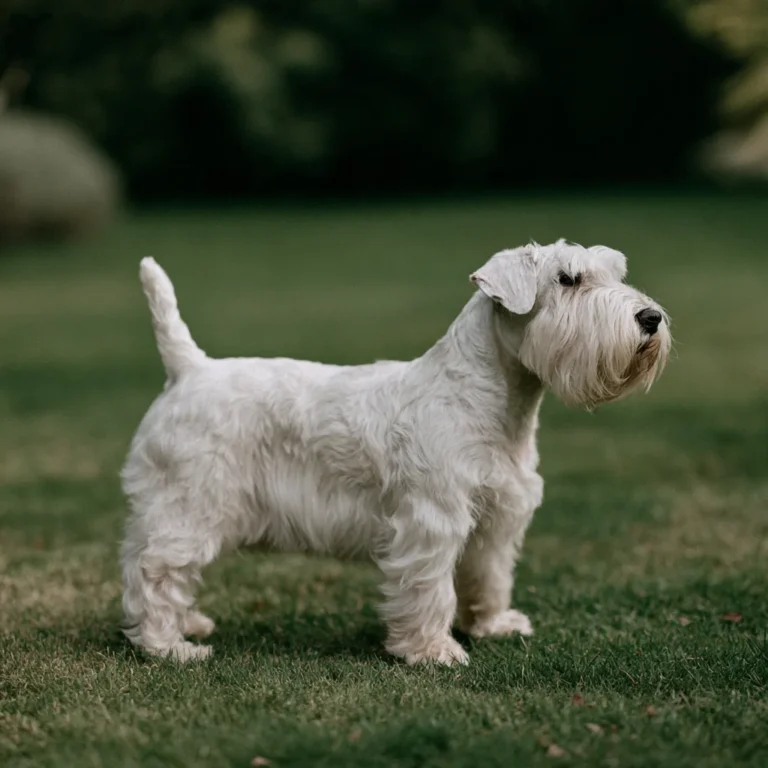
About the Sealyham Terrier
The Sealyham Terrier is a Welsh member of the Royal Kennel Club (RKC) Terrier group, named after Sealyham, the Pembrokeshire estate where Captain John Edwardes developed it from the mid-nineteenth century. The RKC says he wanted a short-legged white terrier to work alongside his Otterhounds against otter, badger, fox and polecat, and that he kept only dogs that proved their courage. Accounts of its ancestry vary: the RKC mentions Jack Russell-type white terriers with West Highland White, Dandie Dinmont and Bull Terrier blood, while the Midland Sealyham Terrier Club names the Welsh Corgi, Wire Fox Terrier and extinct English White Terrier. The first breed club was founded in 1908 and the RKC recognised the breed in 1911.
A vulnerable native breed
The RKC says Sealyhams were much in demand in the show ring and as pets during the 1930s and 1940s. The Midland Sealyham Terrier Club records more than 2,000 puppies registered in the 1920s and an all-time low of 43 in 2008. The RKC links part of the decline to the work of maintaining and trimming the coat. It now lists the Sealyham as a vulnerable native breed, meaning fewer than 300 registrations a year, with 111 registered in 2025.
Size and build
The breed standard asks for a sturdy, workmanlike dog with plenty of substance for its size, rectangular rather than square in outline. Height should not exceed 31 cm at the shoulder; dogs weigh around 9 kg and bitches around 8 kg.
Coat, colour and grooming
A long, harsh, wiry outer coat covers a weatherproof undercoat. The dog is white, or white with lemon, brown, blue or badger markings on the head and ears. The RKC lists the breed as non-shedding and suggests grooming every day. The Sealyham Terrier Breeders Association explains that dead hair has to be removed by stripping, or by clipping at the cost of some weather resistance.
Exercise, home and temperament
The RKC suggests up to an hour of exercise a day and says a small house with a small or medium garden, in town or country, can suit. The standard describes a terrier that is alert and brave yet friendly. The Breeders Association calls it outgoing, a good watchdog and easy to train, though like most terriers it will try to take charge. The RKC gives a typical lifespan of over 10 years.
Sealyham Terrier health tests
The RKC places the Sealyham Terrier in Breed Watch Category 1, so no conformation-related points of concern are currently flagged for show judges. Its breed page sets out pre-breeding screening in two tiers. As Good Practice, breeders should prioritise genetic diversity and DNA test for primary lens luxation (PLL). As Best Practice, they should also have breeding dogs eye tested under the BVA/KC/ISDS Eye Scheme.
In PLL the fibres that hold the lens in place break down, so the lens slips out of position. The RKC describes it as painful and blinding; it can cause glaucoma, and full luxation usually happens between three and eight years of age. It is autosomal recessive: a dog with two copies of the faulty gene is affected, while one copy makes a carrier without signs. The RKC's Sealyham DNA package covers PLL, and the RKC records PLL results for the breed. Under the BVA eye scheme, a BVA-appointed panellist examines the eyes and certifies the dog as clinically affected or unaffected; the RKC advises examining breeding dogs within 12 months before mating. The Midland Sealyham Terrier Club also mentions degenerative myelopathy among conditions seen in the breed.
- DNA test for primary lens luxation (PLL): RKC Good Practice
- Prioritising genetic diversity: RKC Good Practice
- Eye testing under the BVA/KC/ISDS Eye Scheme: RKC Best Practice
- Breed Watch: Category 1
- RKC status: vulnerable native breed
Choosing a Sealyham Terrier breeder
Only around a hundred Sealyham puppies are registered each year, so start contacting breeders and clubs early. The Sealyham Terrier Club, which describes itself as the parent club of the breed, has puppy co-ordinators who act as a first point of contact for buyers. A careful breeder will have DNA tested both parents for PLL, had their eyes examined under the BVA/KC/ISDS Eye Scheme, and thought about keeping inbreeding low in such a small population. The club's finding a puppy page says a good breeder will want to meet your household, let you visit and see the dam, and will not let puppies go before eight weeks. Expect RKC registration papers, a microchip certificate, vaccination and worming records, the parents' health results, a written contract and care advice. In England, anyone breeding three or more litters in 12 months and selling any puppies, or running a business breeding and advertising dogs for sale, needs a licence from the local council.
- What were both parents' PLL DNA results?
- When were the parents last eye tested under the BVA/KC/ISDS Eye Scheme?
- What is the litter's coefficient of inbreeding compared with the breed average?
- Do you strip or clip your dogs, and will you show me how to care for the coat?
- Will you take the dog back at any age if my circumstances change?
Sealyham Terrier questions
Is the Sealyham Terrier rare?
Yes. The RKC lists it as a vulnerable native breed, which means fewer than 300 registrations a year, and it recorded 111 Sealyham registrations in 2025. Expect to join a waiting list and to contact breeders or the breed clubs well ahead.
Do Sealyham Terriers shed?
The RKC lists the Sealyham as a breed that does not shed, which means dead hair stays in the coat until it is removed. The RKC suggests grooming every day, and the Sealyham Terrier Breeders Association explains that the coat needs stripping, or clipping, which it notes reduces the coat's weather resistance.
What health tests should a Sealyham's parents have?
The RKC recommends a DNA test for primary lens luxation (PLL) and prioritising genetic diversity as Good Practice, and eye testing under the BVA/KC/ISDS Eye Scheme as Best Practice. You can check recorded results on the RKC Health Test Results Finder.
How long do Sealyham Terriers live?
The RKC gives a typical lifespan of over 10 years. The Sealyham Terrier Breeders Association says that, with good care, Sealyhams will often live to between 12 and 15 years.
More for Sealyham Terrier owners and breeders
- Sealyham Terrier: breeders
- Sealyham Terrier: puppies for sale
- Sealyham Terrier: stud dogs
- All Terrier group breeds
Official sources
- Sealyham Terrier breed information - The Royal Kennel Club
- Sealyham Terrier breed standard - The Royal Kennel Club
- Vulnerable native breeds - The Royal Kennel Club
- Breed Watch Category 1 - The Royal Kennel Club
- DNA test - PLL (primary lens luxation) - The Royal Kennel Club
- BVA/KC/ISDS Eye Scheme - The Royal Kennel Club
- Sealyham Terrier DNA testing package - The Royal Kennel Club
- CHS Eye Scheme - British Veterinary Association
- Dog Health Test Results Finder - The Royal Kennel Club
- Inbreeding coefficient calculator - The Royal Kennel Club
- Sealyham Terrier Club (parent club)
- Health - Sealyham Terrier Club
- Finding a puppy - Sealyham Terrier Club
- About Sealyham Terriers - Midland Sealyham Terrier Club
- About - Sealyham Terrier Breeders Association