
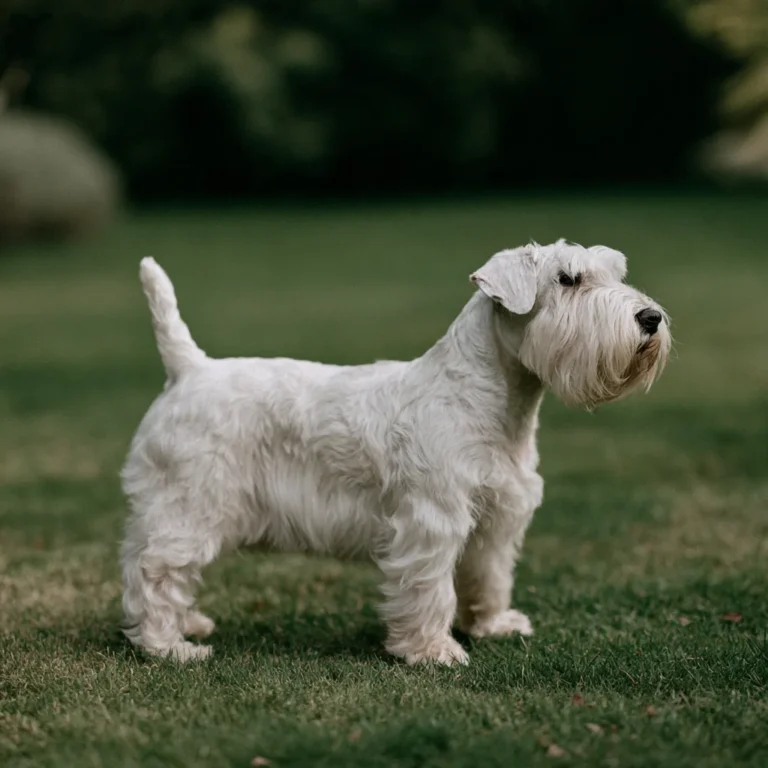
Using a Sealyham Terrier stud dog
A Sealyham Terrier stud dog should be RKC registered, with a PLL DNA result on record and a current eye certificate from the BVA/KC/ISDS Eye Scheme, in line with the RKC's Good Practice and Best Practice advice for the breed. His PLL status decides which bitches suit him, and the RKC's breeding advice explains how to choose a mate so that no affected puppies are produced. In a breed this small, prioritising genetic diversity is itself an RKC Good Practice step. Breeders may know the RKC's inbreeding checks from its Mate Select service, launched in 2011; today its online inbreeding coefficient calculator predicts the figure for any proposed mating, and the RKC advises aiming at or below the breed average. Spreading matings across several dogs rather than relying on one popular sire helps keep the gene pool open.
Health tests for a Sealyham Terrier stud
The RKC places the Sealyham Terrier in Breed Watch Category 1, so no conformation-related points of concern are currently flagged for show judges. Its breed page sets out pre-breeding screening in two tiers. As Good Practice, breeders should prioritise genetic diversity and DNA test for primary lens luxation (PLL). As Best Practice, they should also have breeding dogs eye tested under the BVA/KC/ISDS Eye Scheme.
In PLL the fibres that hold the lens in place break down, so the lens slips out of position. The RKC describes it as painful and blinding; it can cause glaucoma, and full luxation usually happens between three and eight years of age. It is autosomal recessive: a dog with two copies of the faulty gene is affected, while one copy makes a carrier without signs. The RKC's Sealyham DNA package covers PLL, and the RKC records PLL results for the breed. Under the BVA eye scheme, a BVA-appointed panellist examines the eyes and certifies the dog as clinically affected or unaffected; the RKC advises examining breeding dogs within 12 months before mating. The Midland Sealyham Terrier Club also mentions degenerative myelopathy among conditions seen in the breed.
- DNA test for primary lens luxation (PLL): RKC Good Practice
- Prioritising genetic diversity: RKC Good Practice
- Eye testing under the BVA/KC/ISDS Eye Scheme: RKC Best Practice
- Breed Watch: Category 1
- RKC status: vulnerable native breed
More for Sealyham Terrier owners and breeders
- Sealyham Terrier: breeders
- Sealyham Terrier: puppies for sale
- Sealyham Terrier: stud dogs
- All Terrier group breeds
Official sources
- Sealyham Terrier breed information - The Royal Kennel Club
- Sealyham Terrier breed standard - The Royal Kennel Club
- Vulnerable native breeds - The Royal Kennel Club
- Breed Watch Category 1 - The Royal Kennel Club
- DNA test - PLL (primary lens luxation) - The Royal Kennel Club
- BVA/KC/ISDS Eye Scheme - The Royal Kennel Club
- Sealyham Terrier DNA testing package - The Royal Kennel Club
- CHS Eye Scheme - British Veterinary Association
- Dog Health Test Results Finder - The Royal Kennel Club
- Inbreeding coefficient calculator - The Royal Kennel Club
- Sealyham Terrier Club (parent club)
- Health - Sealyham Terrier Club
- Finding a puppy - Sealyham Terrier Club
- About Sealyham Terriers - Midland Sealyham Terrier Club
- About - Sealyham Terrier Breeders Association