Breed dogs for search and rescue dogs? Advertise here
Buyers and trainers use this page to find breeders whose lines do this work. List your kennel free, tick the industries your dogs work in, and advertise litters and stud dogs from proven working lines.
No breeders are listed here yet, so the first profiles get the page to themselves.
- Free basic profile: your breeder or company name, website, social media, location, breeds and industries.
- Litters and stud dogs advertised in their own sections, never mixed with puppies for sale.
- Premium showcase for your services and prices, previous customers, awards, video, gallery and health certificates, with your phone and email shown to buyers.
- Sponsored articles about your breed or industry, written and published by our team.
- Featured placement at the top of this page, labelled as sponsored.
Is it free to advertise here?
Yes. A breeder profile and your litter and stud dog adverts are free. Premium profiles, featured placement and sponsored articles are optional paid extras; see pricing.
Do I need a licence to advertise puppies?
In England you need a dog breeding licence from your council if you breed three or more litters in 12 months or breed and sell dogs as a business, and Wales, Scotland and Northern Ireland have their own schemes. Licensed breeders show their licence number and issuing council on every advert. Puppies must be at least eight weeks old before they go to new homes.
Is my listing already here?
We add licensed breeders from councils' public registers. Search for your kennel name; if it is listed you can claim it and edit everything.
About search and rescue dogs
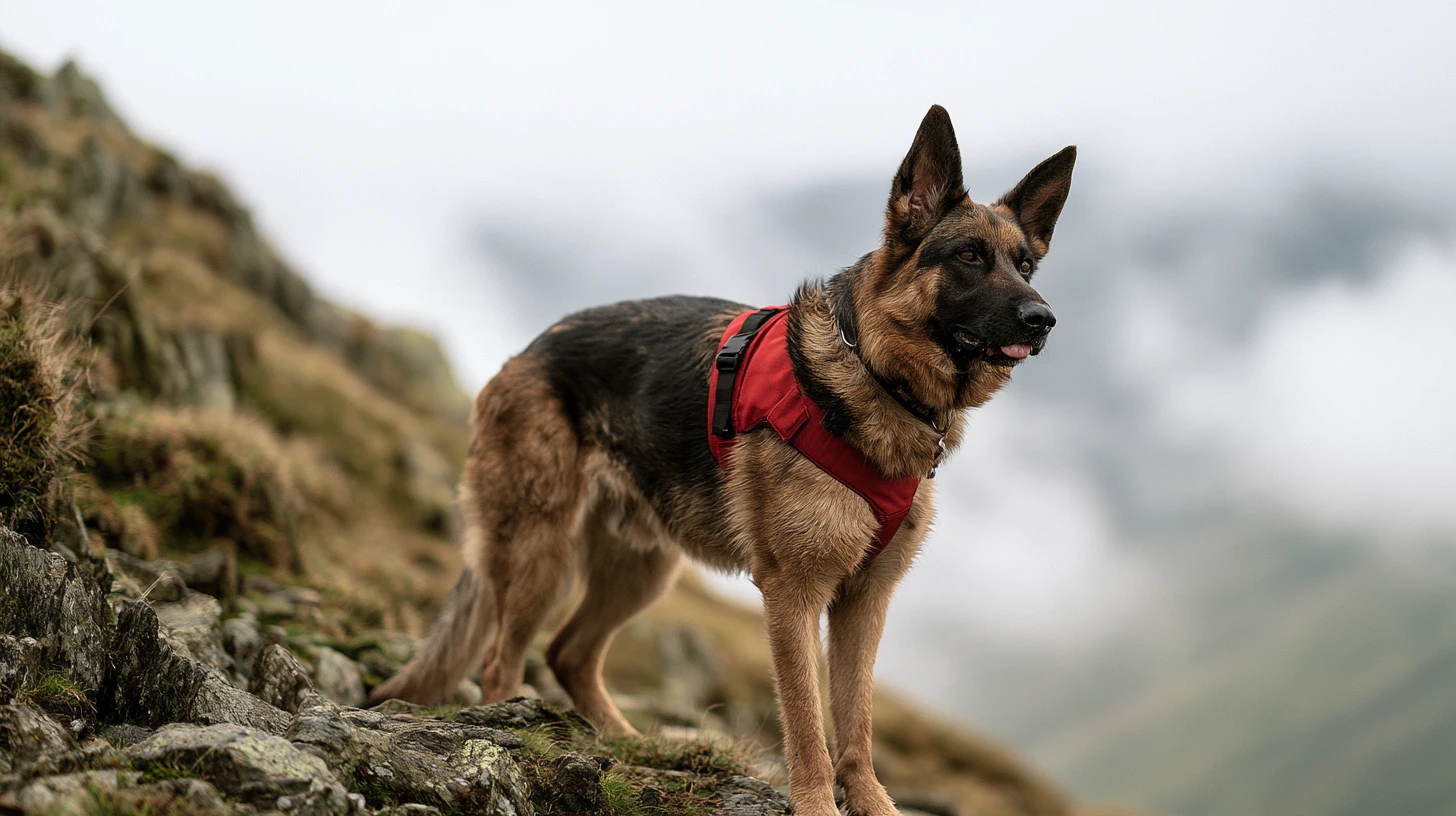
Britain’s search and rescue dogs are volunteers’ pets. They live at home, train for two years or more with their owner, and are called out at any hour to find missing people on moors, in woods, along rivers and in towns. No organisation buys search dogs from breeders, and none sells them. What a breeder can offer is a puppy with the nose, drive, fitness and steadiness that a search dog handler needs, and this hub explains what that means.
What this discipline is
Search dogs find people. The National Search and Rescue Dog Association (NSARDA) describes four types: air-scenting dogs, which range across an area and find any person in it; trailing dogs, which follow a specific person’s scent from an article; water search dogs, which locate scent rising from water; and scent-specific air-scenting dogs, a newer category. NSARDA notes that one search dog can do the work of roughly 20 foot searchers in good conditions.
Dogs are graded through assessments before they are operational and are re-assessed to stay so. The standard is the team’s, not a certificate a breeder could confer.
Who trains or supplies these dogs in the UK
NSARDA is the umbrella body for search dog associations in the UK, Isle of Man and Ireland and sets the standards by which dogs are trained and qualified. Its member associations are voluntary charities that train and deploy dogs with Mountain Rescue and Lowland Rescue teams or directly for the police, free of charge.
Mountain search dogs are organised regionally: Mountain Rescue Search Dogs England, Lake District Mountain Rescue Search Dogs, SARDA Wales and SARDA South Wales cover England and Wales, and two SARDA associations cover Scotland. A mountain search dog handler must first be a full member of a mountain rescue team and is graded to operate with that team.
Lowland Rescue teams train their own search dogs too. Its dogs are “pets first”, trained by owners who must already be experienced team members; the organisation says most dogs need more than two years of training to pass its assessment, and it currently fields over 34 operational dogs across the UK, mostly air-scenting, with trailing dogs in development. Police forces and fire and rescue services also run search dogs, including the urban search and rescue teams that deploy overseas after earthquakes, and those services source and train their own.
Nobody in this list buys trained dogs. Handlers choose a puppy, or occasionally a young rescue dog, and start from scratch.
Breeds and lines
Handlers generally pick from Border Collies and Working Sheepdogs, Labradors and Golden Retrievers, English Springer and Cocker Spaniels, German Shepherds and Belgian Shepherds (Malinois), and crosses of these. Air-scenting work rewards a dog that will range independently, keep hunting for hours, indicate clearly and return to the handler; trailing work rewards a methodical nose. Fitness on rough ground and a coat that copes with weather both count, which is why heavy, short-nosed or very small breeds rarely appear.
Working lines are preferred for the same reason they are preferred in gundog and detection work: drive and nose have been selected for. Health testing is the usual RKC Health Standard set for the breed, with hip and elbow scores especially relevant for a dog that will cover fells for a decade.
What a buyer should ask a breeder
- Have dogs from your lines gone to search and rescue, police or detection handlers?
- What do the parents do: trial, work, compete?
- What are the parents’ hip, elbow, eye and DNA results?
- Can I see the puppies’ hunt and retrieve drive, and how they cope with new surfaces and noise?
- Are you licensed by your council if your breeding requires it?
A handler will usually be an existing team member with a clear specification. A breeder who understands that specification, and is honest about which puppy fits it, is worth more than one who calls every puppy a “search dog”.
What breeders can list here
Breeders may list their breed, working lines, health results and any dogs from their kennel known to be operational with a NSARDA association, Lowland Rescue team, police force or fire service. They may not describe puppies as search dogs, trained or certified, and Canine Breeder does not supply or vet search dogs. This site is independent of NSARDA, Mountain Rescue, Lowland Rescue and every team.
If you breed the collies, spaniels, retrievers or shepherds that search dog handlers look for, list your kennel in this discipline.