Breed dogs for lowland search dogs? Advertise here
Buyers and trainers use this page to find breeders whose lines do this work. List your kennel free, tick the industries your dogs work in, and advertise litters and stud dogs from proven working lines.
No breeders are listed here yet, so the first profiles get the page to themselves.
- Free basic profile: your breeder or company name, website, social media, location, breeds and industries.
- Litters and stud dogs advertised in their own sections, never mixed with puppies for sale.
- Premium showcase for your services and prices, previous customers, awards, video, gallery and health certificates, with your phone and email shown to buyers.
- Sponsored articles about your breed or industry, written and published by our team.
- Featured placement at the top of this page, labelled as sponsored.
Is it free to advertise here?
Yes. A breeder profile and your litter and stud dog adverts are free. Premium profiles, featured placement and sponsored articles are optional paid extras; see pricing.
Do I need a licence to advertise puppies?
In England you need a dog breeding licence from your council if you breed three or more litters in 12 months or breed and sell dogs as a business, and Wales, Scotland and Northern Ireland have their own schemes. Licensed breeders show their licence number and issuing council on every advert. Puppies must be at least eight weeks old before they go to new homes.
Is my listing already here?
We add licensed breeders from councils' public registers. Search for your kennel name; if it is listed you can claim it and edit everything.
About lowland search dogs
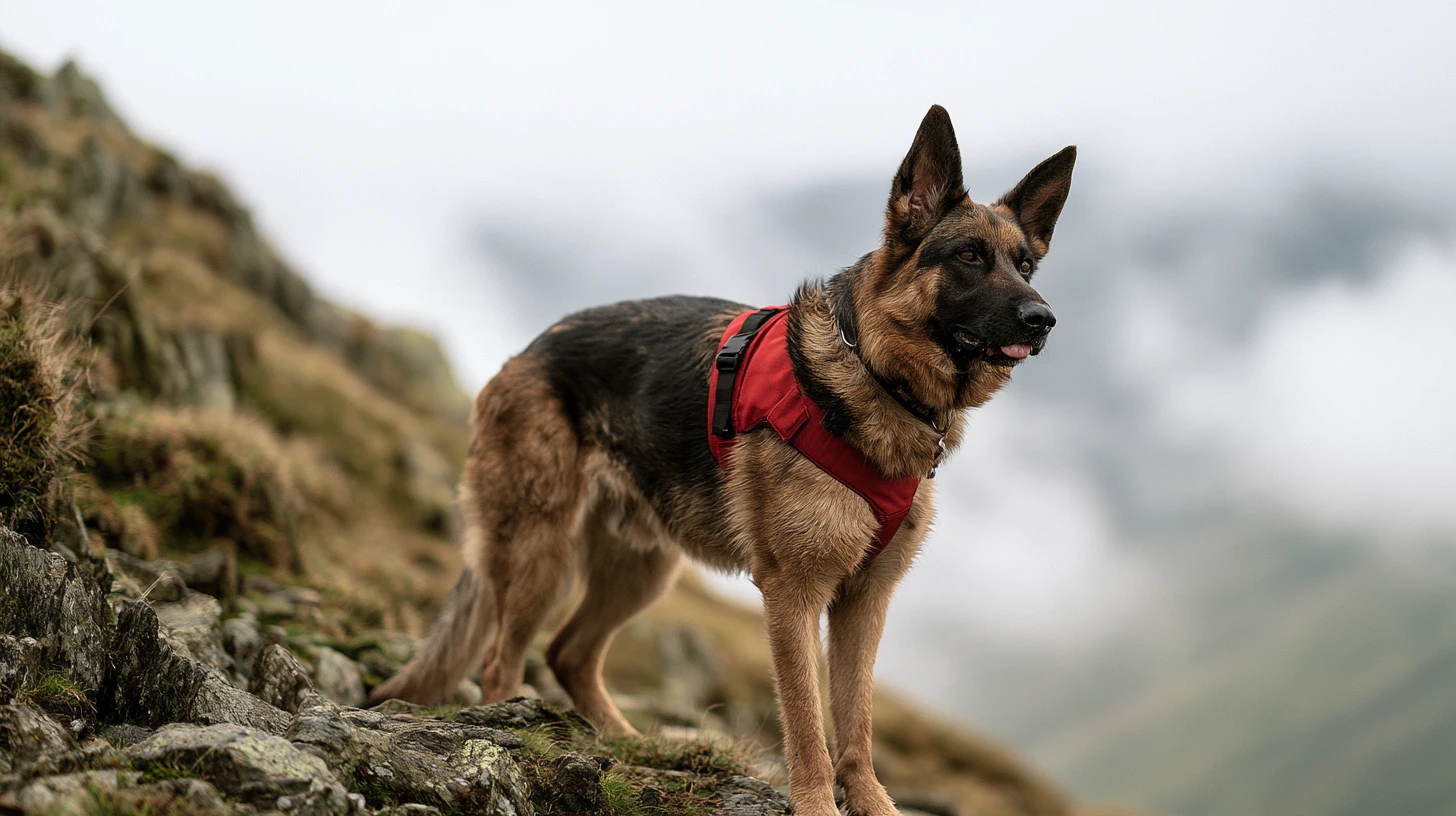
Not every missing person is lost on a mountain. Many searches take place in farmland, woodland, parks and the edges of towns, and that is where lowland search dogs work. This page explains how a lowland rescue dog is trained in the UK, who the handlers are and how to find a puppy from lines with the right aptitude.
What this work involves
Lowland search dogs work with volunteer search and rescue teams that assist the police in looking for vulnerable missing people. Lowland Rescue says its dogs can work in any environment, from farmland to woodland, and NSARDA estimates that a search dog can typically do the work of around 20 searchers on foot in good weather, and many more in poor conditions.
Most are air-scenting dogs. They range freely, pick up any human scent on the air and indicate a find by barking, by body language such as sitting or lying down, by jumping up, or less often by picking up a bringsel (a tab on the collar). A dog that alerts back at its handler then leads the handler to the person, known as a refind. Some teams also train trailing dogs, which follow the scent of one particular person from a scent article. Lowland Rescue says it is also developing dogs that work by ground-scenting.
Berkshire Search and Rescue Dogs, a Lowland Rescue team, publishes its assessment tasks: an air-scenting route search of 2 km in 60 minutes, an area search of 50 acres of woodland in 90 minutes, and for trailing dogs a 1.5 km trail aged for five hours, to be completed in 60 minutes. Lowland Rescue says most dogs need more than two years of training to pass its assessment. In Berkshire, a single assessment gives a two-year qualification.
Who trains and supplies these dogs in the UK
Lowland search dogs are pets first. Lowland Rescue says they are trained as search dogs by their owners, who must be experienced Lowland Rescue team members. Handlers are volunteers who are not paid for their time, fuel or personal equipment.
- Lowland Rescue, the Association of Lowland Search and Rescue, is the UK’s governing body for lowland rescue and produces governing standards for its member teams, of which there are more than 30. Its air-scenting search dogs are trained to national standards.
- The National Search And Rescue Dog Association (NSARDA) is a charity that brings together search dog associations, including lowland ones such as NSARDA Kent and NSARDA Suffolk, and oversees assessment through its local and national assessors. Every NSARDA member is a volunteer.
Neither body supplies trained dogs. A search dog volunteer trains their own dog with the team, usually for two years or more, and the dog has to meet the team’s rules: Berkshire Search and Rescue Dogs, for example, requires a positive response to unfamiliar people and removes dogs that show nervousness or direct aggression towards other dogs. The breeder’s role ends with a healthy, well-socialised puppy with the drive to learn.
Breeds and lines
Berkshire Search and Rescue Dogs notes that breed does not decide a dog’s discipline, except that hounds are currently used only for trailing. Across NSARDA’s member associations, collies and Labrador Retrievers make up most of the listed search dogs, followed by spaniels and German Shepherd Dogs, with smaller numbers of pointers, Hovawarts, Malinois, a Golden Retriever and crossbreeds. Look for strong play drive (the reward is usually a game with a ball or a favourite toy), good health, confidence with strangers, and calm behaviour around other dogs, livestock and traffic.
What to ask a breeder
- Are the parents from working lines, and have any relatives worked in search, gundog or scent work?
- What health results do the parents have? For Labradors the Royal Kennel Club recommends hip, elbow and eye screening plus DNA tests including CNM, EIC and prcd-PRA. For Springers it recommends hip, elbow and eye screening plus DNA tests such as PRA (cord1) and fucosidosis.
- How toy- and food-motivated are the parents, and how do the puppies respond to play and new people?
- How were the puppies socialised to traffic, livestock and other dogs?
- Will you support me, or take the dog back, if it is not suitable for search work?
Frequently asked questions
How do I become a search dog volunteer?
Contact your nearest Lowland Rescue team and join as a searcher first. Handlers must be experienced team members before they train a dog, and the dog must be their own.
Do lowland rescue dogs live in kennels?
No. Lowland Rescue describes them as pets first, trained by the owners they live with.
Can I buy a qualified lowland search dog?
No. Qualification belongs to the dog and handler as a team and is earned through assessment. Breeders can offer puppies from lines with aptitude, not qualified dogs.
Breeders whose dogs work in lowland search, or whose working lines have produced search dogs, can list on the site to reach prospective handlers.