
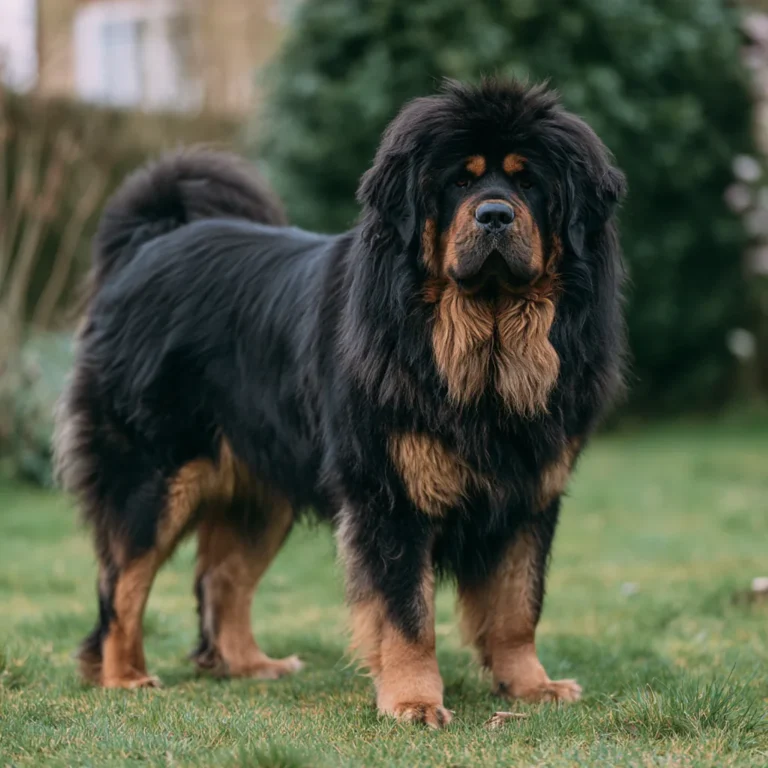
Using a Tibetan Mastiff stud dog
Before using a Tibetan Mastiff stud dog, ask the owner for his hip score and elbow grade under the BVA/KC Hip Dysplasia and Elbow Dysplasia Schemes, and check them on the RKC Health Test Results Finder. The BVA advises choosing dogs whose hip score is under or near the breed median and whose elbows are graded 0. Neither X-ray can be taken for the schemes before a dog is one year old, so a younger dog will not yet have results. Temperament matters in a guardian breed, so meet the dog if you can. Confirm both dogs' registrations and that neither carries an endorsement stopping the litter being registered, and use the RKC inbreeding coefficient calculator (the tool breeders knew as Mate Select) to see the predicted figure for the puppies, aiming at or below the breed average. Agree fees and terms in writing.
Health tests for a Tibetan Mastiff stud
The RKC does not list any DNA tests for the Tibetan Mastiff. Its pre-breeding advice concentrates on the joints: it asks breeders, as a minimum, to screen for hip and elbow dysplasia and to give priority to genetic diversity, saying the evidence points to these being significant concerns in the breed.
Hips and elbows are X-rayed under BVA schemes once a dog is at least one year old. Hip scores range from 0 to 106 (up to 53 for each hip), with lower scores better, and the BVA recommends breeding from dogs scoring below or close to the breed median. Elbows are graded from 0 to 3, and the BVA advises breeding only from dogs graded 0. Both conditions are influenced by more than genetics, so screening lowers the risk in puppies rather than removing it.
The PDSA also lists bloat (gastric dilatation-volvulus), ear infections, eye conditions such as entropion and ectropion, skin problems and hypothyroidism among conditions owners should know about. The breed is not on the BVA Eye Scheme's 2026 list of inherited eye diseases.
On Breed Watch the breed is Category 1: no breed-specific points of concern have been flagged for judges.
Tests and schemes the RKC lists for the breed
- Good practice: prioritising genetic diversity
- Good practice: elbow testing (for elbow dysplasia) using the BVA/KC Elbow Dysplasia Scheme
- Good practice: hip testing (for hip dysplasia) using the BVA/KC Hip Dysplasia Scheme
- No breed-specific DNA tests are listed
More for Tibetan Mastiff owners and breeders
- Tibetan Mastiff: breeders
- Tibetan Mastiff: puppies for sale
- Tibetan Mastiff: stud dogs
- All Working group breeds
Official sources
- Tibetan Mastiff breed information u2013 The Royal Kennel Club
- Tibetan Mastiff breed standard u2013 The Royal Kennel Club
- Hip Scheme u2013 BVA Canine Health Schemes
- Elbow Scheme u2013 BVA Canine Health Schemes
- Health Test Results Finder u2013 The Royal Kennel Club
- Inbreeding coefficient calculator u2013 The Royal Kennel Club